

You make incredible food. Your repeat customers tell you all the time. But every market day, you watch other vendors draw crowds while your booth stays quiet for the first hour.
The problem is not your product. The problem is that not enough people know about it yet. And every marketing article you find talks about Facebook ads, influencer partnerships, and branding agencies — none of which make sense when you are selling $15 jars of jam at a Saturday market.
Here is what does make sense: free marketing tactics built specifically for small food vendors. No ad budget required. No marketing degree needed. Just simple things you can do this week to get more people buying your food.
The short version: The best free marketing for a food vendor starts at your booth. Make your display clean and full, offer samples, and collect every customer's email or phone number. Post on Instagram or Facebook 2-3 times a week with behind-the-scenes photos and "what is available this week" updates. Ask happy customers to leave a Google review and tell a friend. Pick two marketing channels, show up consistently, and let your food do most of the talking.
Free marketing outperforms paid advertising for small food vendors because your business runs on trust and relationships, not reach and impressions. A Facebook ad might show your jam to 5,000 strangers, but a friend telling a friend "you have to try this jam at the Saturday market" is worth more than all of them combined.
Research backs this up. Around 92 percent of consumers trust recommendations from friends and family more than any form of advertising. For local food businesses, referred customers stick around 37 percent longer than customers who find you through ads.
Paid ads also require a budget you probably do not have — and even when they work, they tend to attract one-time buyers, not the kind of repeat customers who show up every week and bring their neighbors. Free marketing builds that loyal base organically.
Here is the other thing: most of the best marketing channels for food vendors are already free. You already have a booth at the market. You already have a phone with a camera. You already talk to customers every week. The tactics below just help you do all of that more intentionally.
Your farmers market booth is the most powerful free marketing tool you own. Every week, hundreds of potential customers walk past your table. The goal is not just to sell to the people who stop — it is to make sure they come back, bring friends, and find you between market days.
Your booth is your storefront, your billboard, and your brand — all at once. A clean, full, well-organized display tells people "this vendor is serious" before they ever taste your product.
Stack products high so your booth looks abundant. Use clear, readable signs with your prices and product names. Keep your tablecloth clean and your setup consistent week to week so regular customers recognize you from across the market.
If your signage needs work, check out these farmers market signage ideas that actually drive sales.
Sampling is not just a sales tactic. It is the best conversation starter you have. When someone tries your product, you get 30 seconds of their attention — and that is enough time to tell them what makes it special, hand them a card, or point them to your online store.
Keep samples small, fresh, and easy to grab. Position them at the front edge of your table where foot traffic is heaviest. And always have a follow-up ready: "If you like that, I take pre-orders for next week — want me to add you to the list?"
A solid sampling strategy can turn casual browsers into weekly regulars.
This is the single most important marketing habit you can build: get every customer's email address or phone number before they leave your booth. Without it, you are starting from zero every Saturday.
Here is how to do it without being pushy:
Even 5 new sign-ups per market adds up to 250 contacts in a year. That is 250 people you can reach for free anytime you want.
For a deeper dive into list building, read how to build a customer email list as a food vendor.
Social media is free, but your time is not. The biggest mistake food vendors make is trying to be on every platform. You do not need to be everywhere. You need to be consistent in one or two places where your customers already spend time.
Instagram is the best free platform for food vendors because food is visual, and Instagram is built for visuals. You do not need professional photos or a content calendar. You need three things:
Post 2-3 times per week. Stories count. Reels help but are not required. Consistency matters more than polish.
For platform-specific tips, check out Instagram tips for farmers market vendors.
Your own Facebook page probably has 200 followers and gets 3 likes per post. That is normal — and it is not where you should focus your energy.
Instead, join local Facebook groups where your customers already hang out:
These groups already have the audience you want. A simple post that says "Fresh sourdough available this Saturday at the downtown market — first 10 loaves go fast" gets more traction than anything you post on your own page.
Follow the group rules. Do not spam. Share genuinely useful posts and only promote when it fits naturally.
TikTok can work for food vendors, but only if you genuinely enjoy making short videos. A 15-second clip of you pulling bread from the oven or packaging orders can get thousands of views. But if creating video content feels like a chore, your time is better spent on Instagram and email.
The vendors who do well on TikTok treat it as a bonus channel, not their primary one. If you try it, post 2-3 times a week for a month and see what happens. If it does not gain traction or you dread doing it, move on.
Word of mouth is the most valuable marketing channel for any local food vendor. It costs nothing, it builds trust instantly, and it brings you exactly the kind of customer you want — someone who already heard good things about your food from someone they trust.
But word of mouth does not just happen. You have to make it easy for people to talk about you.
Most vendors never ask. Just say it out loud: "If you know anyone who would love this, I would really appreciate you sending them my way." People want to help — they just need a nudge.
Do this at checkout when the customer is happiest. You just handed them something they are excited about. That is the perfect moment to say "tell your friends."
A plain brown bag is forgettable. A bag with your brand name, a recipe card inside, and a sticker they can put on their water bottle — that gets noticed. That starts conversations.
You do not need expensive packaging. A printed label, a small card with your story on it, or a "share with a friend" coupon tucked inside the bag all give customers a reason to talk about you.
The best word-of-mouth happens when your product is so good or so distinctive that people cannot help but mention it. A unique flavor, a signature look, or an unusual ingredient gives people something specific to say: "You have to try this lavender honey" is more shareable than "You should check out this vendor."
For more on building that repeat customer base, read how to get repeat customers for your food business.
You do not need to be a content creator. You need 15 minutes and a phone. Here are five types of free content that actually drive sales for food vendors:
The key is consistency, not perfection. One imperfect post every few days beats a perfectly curated feed that goes silent for weeks.
A Google Business Profile is one of the most underused free marketing tools for food vendors. When someone searches "homemade jam near me" or "fresh bread [your town]," a Google Business Profile puts your name, photos, and reviews right in front of them. Searches for "food near me" have increased 99 percent year over year, and more than 75 percent of local searches lead to a visit or purchase.
Here is how to set one up in 20 minutes:
Once your profile is live, ask your best customers to leave a review. Five genuine reviews with specific details ("best sourdough I have found in the area") do more for your visibility than any ad.
Other vendors at your market are not your competition — they are your best marketing partners. Cross-promotion costs nothing and gives both of you access to each other's customers.
Here are the easiest ways to do it:
The vendors who build strong relationships at the market end up getting more referrals, more bundle sales, and more support when they need it. Read more about networking with other vendors at the farmers market to build those connections.
You do not need to pay for marketing software. These free tools cover everything a small food vendor needs:
You can run a solid marketing operation with just these tools. Do not let anyone tell you that you need a $200-per-month marketing platform to sell food locally.
Free marketing only works if you avoid the common traps that waste your limited time. Here are the mistakes that cost food vendors the most:
Marketing works when it becomes a habit, not a project. Here is a simple routine that takes about 2 hours per week:
That is about 2 hours total. It is not glamorous. But done consistently, this routine builds a customer base that grows every single week.
Start with the free tools you already have: your phone camera, your farmers market booth, and your voice. Post on Instagram 2-3 times per week with behind-the-scenes photos and product updates. Collect email addresses at every market using a clipboard sign-up sheet. Ask happy customers to leave a Google review and tell their friends. These three habits alone — social media, email collection, and word of mouth — cover the marketing needs of most small food vendors without spending a dollar.
Instagram is the best starting platform for most food vendors because food is inherently visual and Instagram is built for photos and short videos. Behind-the-scenes content, product photos, and market day Stories perform well without requiring professional quality. Facebook Groups are a strong second choice, especially local buy/sell/trade groups and community pages where your target customers already spend time.
The fastest way to get more customers at the market is to make your booth more visible and engaging. Stack products high, use clear signage with prices, and offer samples at the front edge of your table. Talk to every person who slows down near your booth. Beyond the booth itself, post on social media before market day so followers know to look for you, and ask current customers to bring a friend. For a complete breakdown, read how to get more customers at a farmers market.
You do not need a traditional website. A Google Business Profile, an Instagram page, and a simple online storefront give you everything most food vendors need for free. Your Google profile handles local search. Your Instagram handles discovery and engagement. And your ordering page handles pre-orders and product listings. A full website is nice to have eventually, but it is not where you should start.
Two to three times per week is enough for most food vendors. Consistency matters more than frequency. It is better to post twice a week every week than to post daily for two weeks and then go silent for a month. Focus on three post types: what is available this week, behind-the-scenes process shots, and customer testimonials. Use Stories for quick, casual updates that do not need to be permanent.
Ask for them directly at checkout. After a customer buys and compliments your product, say: "That means a lot — would you mind leaving me a quick Google review? It really helps." You can also include a small card in your packaging with a QR code that links directly to your Google review page. Most customers are happy to help — they just need to be asked. Five detailed reviews on Google are worth more than 50 generic social media followers.
Email marketing is the highest-ROI marketing channel available, returning an average of $36 for every $1 spent. For food vendors, a simple weekly email listing what is available and how to pre-order can drive 20 to 40 percent of your weekly sales. Free email platforms like Mailchimp handle up to 500 contacts at no cost. Even if your email is just a few sentences with a photo and a link, it keeps you in front of customers who already bought from you — and that is where most of your repeat sales come from.
You do not need a marketing budget to grow your food business. You need a phone, a sign-up sheet, and the discipline to show up consistently. The vendors who sell out every week are not running ads or hiring consultants. They are posting on Instagram, sending a weekly email, asking for referrals, and making their booth impossible to walk past.
Pick two tactics from this article and start using them this week. Build your email list. Post behind-the-scenes photos. Ask for reviews. These small habits compound over time — and six months from now, you will have a customer base that grows itself.
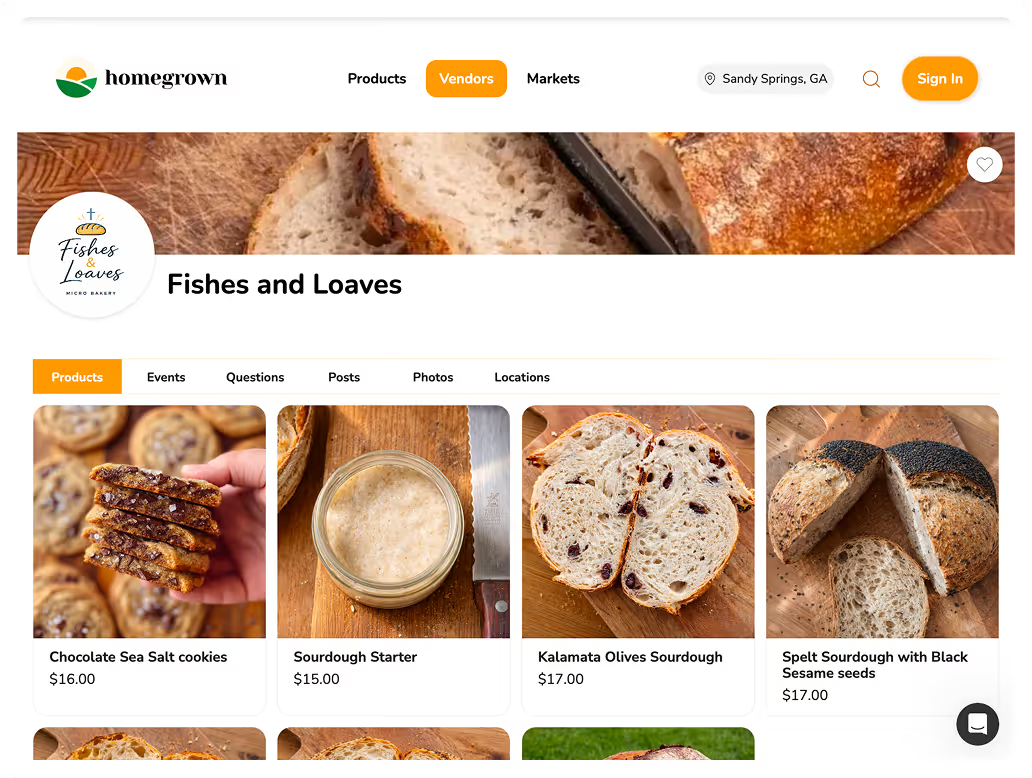
Ready to give your customers a place to find and order from you online? Set up your free Homegrown storefront and start turning market visitors into repeat buyers.