You show up to the market, set up your booth, sell for a few hours, pack up, and go home. The vendor next to you does the same. You have been ten feet apart every Saturday for three months, and you have never said more than "good morning."
That vendor could be your best source of customer referrals, market advice, someone to watch your booth while you take a break, or even a collaboration partner for bundled products. But none of that happens unless you start talking to them.
The short version: The vendors around you at the farmers market are not your competition — they are your most valuable business network. Vendor relationships lead to customer referrals, shared resources, booth coverage during breaks, honest feedback, and market manager goodwill. Start by introducing yourself during setup and using slow periods to have real conversations. Build from casual friendliness to active collaboration: cross-promote each other's products, share equipment, cover each other's booths, and form group texts to share market updates. The vendors who invest in relationships at the market do better than the ones who work in isolation.
Why Do Vendor Relationships Matter More Than You Think?
Vendors who actively network at the farmers market report 15 to 30 percent higher sales than those who work in isolation, largely through customer referrals and cross-promotion. It is not about collecting contacts or handing out business cards — it is about the practical, week-after-week relationships that make your market experience better and your business stronger.
Here is what strong vendor relationships actually give you:
- Customer referrals — When a customer at the honey booth asks if anyone sells homemade bread, the honey vendor is going to point to the person they know and like — not the stranger three booths down. Referrals from other vendors are some of the highest-converting sales you will get because they come with built-in trust.
- Booth coverage — You need a bathroom break, a coffee run, or five minutes to deal with a phone call. If you know the vendor next to you, they can keep an eye on your booth. If you do not, you either close up or rush back and hope nothing happened.
- Learning from experienced vendors — A vendor who has been at the market for five years knows things you will not figure out on your own for another three. They know which market days are worth showing up for, how to handle the market manager, which seasonal events bring the best crowds, and what display tricks actually increase sales.
- Emotional support — Market life has tough days. Slow traffic, bad weather, difficult customers, equipment failures. Having vendors around you who understand what you are going through makes those days manageable instead of miserable.
- Market manager goodwill — Market managers notice vendor dynamics. A vendor community that gets along, helps each other, and creates a positive atmosphere is good for the market. Vendors who contribute to that community are more likely to get favorable booth placement, season renewals, and flexibility on policies.
How Do You Start Conversations With Other Vendors?
If you are not naturally outgoing, starting conversations with strangers can feel awkward. Here are specific approaches that work at the market.
Before the Market Opens
The 30 to 60 minutes before the market opens is the best window for vendor networking. Everyone is busy but not stressed yet. The market is not open, so you are not interrupting sales.
- Introduce yourself during your first week — Walk over, say your name, tell them what you sell, and ask what they sell. That is it. "Hey, I am Sarah. I sell jams and preserves — this is my first week here. What do you sell?" Simple, direct, and gives them something to respond to.
- Offer help — If you see someone struggling to set up their canopy or unload heavy boxes, offer a hand. This is the fastest trust-builder at the market. You do not need a conversation starter — just walk over and help.
- Comment on their products — "Those look amazing" is a genuine compliment that opens a door. Vendors put a lot of work into their products and most people never tell them.
During Slow Periods
Slow market hours are networking gold. Both of you are standing at your booths with nothing to do. Use that time.
- Ask about their business — "How long have you been selling here?" and "How did you get started?" are questions every vendor loves to answer. People enjoy talking about their journey.
- Share a market observation — "Did you notice traffic picked up around 10 today?" or "Have you tried the vendor at the end of the row? Their hot sauce is incredible." Shared observations create common ground.
- Ask for advice — "I am thinking about raising my prices — have you ever done that? How did customers react?" Asking for advice is flattering and practical. Most experienced vendors are happy to share what they know.
For more ideas on making the most of quiet hours, see our guide on handling slow days at the market.
What to Say (and What Not to Say)
Good conversation starters:
- "How has your season been going?"
- "Where do you source your [ingredient/material]?"
- "Do you sell anywhere else besides this market?"
- "What is your best-selling product?"
Things to avoid:
- Do not ask other vendors how much they make. Income is personal.
- Do not criticize their pricing, display, or products. Even if you think you are being helpful, unsolicited business advice is not welcome.
- Do not complain about the market, the manager, or the customers in your first few conversations. Negativity is a reputation killer.
- Do not pitch your products to other vendors as if they are customers. Let the relationship develop naturally.
What Are the Best Ways to Collaborate With Other Vendors?
A single cross-promotion partnership can add $50 to $200 per market day in referral sales. Once you have built basic relationships, collaboration becomes possible. These are the most common and effective forms of vendor collaboration at the farmers market.
Cross-Promotion and Bundling
Two vendors selling complementary products can drive sales for both. A jam vendor and a bread vendor can create a "breakfast bundle" at a slight discount. A soap vendor and a candle vendor can offer a gift set during the holiday season.
How to make it work:
- Pick a natural pairing — The products should make sense together. Customers should look at the bundle and immediately understand why these items go together.
- Set clear terms — Agree on pricing, who collects the money, and how to split the revenue. Keep it simple: each vendor provides their product at their wholesale cost, and you split any bundle discount equally.
- Promote each other at your booths — Put a small sign at your booth: "Love our jam? Try it on fresh bread from [vendor name] three booths down." This costs nothing and sends traffic both ways.
Sharing Equipment and Resources
Vendors often own overlapping equipment — canopies, tables, weights, coolers, signage supplies. Sharing resources saves money and builds trust.
- Backup equipment — If your canopy breaks mid-market, a friendly vendor with a spare is worth more than any insurance policy.
- Shared supplies — Buying packaging materials, bags, or labels in bulk with another vendor saves both of you money.
- Transport coordination — If two vendors live near each other and sell at the same market, carpooling or sharing a truck reduces costs and makes setup easier.
Joint Social Media
Tagging and promoting other vendors on social media costs nothing and builds community online the same way it does in person.
- Tag vendors in your market day posts — "Great morning at the market! Stop by and grab some honey from @localhoneyfarm while you are here."
- Share each other's stories and posts — A quick repost takes two seconds and puts their products in front of your audience. Schedule posts ahead of market day with a free tool like Buffer so they go out while you are busy selling.
- Create joint content — A short video walking through the market and highlighting your favorite vendors is engaging content that everyone benefits from. You can also do joint recipe posts — a bread vendor and a jam vendor creating a "perfect toast" reel together gets both audiences engaged and introduces each vendor to the other's following.
Covering Each Other's Booths
This is the most practical form of vendor collaboration, and it requires the most trust. Watching someone's booth while they take a break means handling their money, answering customer questions about their products, and representing their brand.
Start small — five-minute bathroom breaks. Build up to longer breaks as trust grows. Eventually, you may be comfortable enough to have a vendor friend run your booth for an hour while you attend to something else.
What Vendor Networking Mistakes Should You Avoid?
Not all vendor interactions are positive. Understanding farmers market etiquette is the foundation — once you know the unwritten rules, you can avoid the mistakes that damage vendor relationships:
- Complaining constantly — Every market has challenges. But the vendor who complains about the weather, the traffic, the manager, and the customers every single week becomes someone everyone avoids. Save your venting for friends outside the market.
- Badmouthing other vendors — Talking negatively about a vendor to other vendors travels fast. The market community is small, and your words will get back to the person you are talking about. Always assume what you say will be repeated.
- Being overly competitive or territorial — If a new vendor starts selling a product similar to yours, the worst reaction is hostility. Customers have plenty of money to spend at multiple booths. The vendor who sees everyone as competition isolates themselves from the community.
- Only reaching out when you need something — If the only time you talk to the vendor next to you is when you need them to watch your booth, you are not building a relationship — you are using them. Invest in the relationship consistently, not just when it is convenient.
How Do You Build a Vendor Support Network?
Individual relationships are good. A vendor network is better. Here is how to move from one-on-one friendships to a connected vendor community.
- Start a group text, WhatsApp, or GroupMe group — Include the vendors you are closest with. Share market updates, weather forecasts, schedule changes, and general encouragement. Keep the group positive — no complaining threads. Even five or six vendors in a group can create a strong support system.
- Share market intelligence — If you hear about a new market opening, a seasonal event accepting vendors, or a change in your current market's policies, share it with your vendor network. Information is the currency of trust.
- Organize an off-market meetup — A vendor dinner, coffee meetup, or even a group text check-in during the off-season keeps relationships alive between market days. Relationships built only during transactions fade quickly.
- Promote each other online and offline — Recommend other vendors to your customers. Share their social media posts. Mention them in your newsletter. The more you give, the more you get back — not because people are keeping score, but because generosity creates a culture of reciprocity.
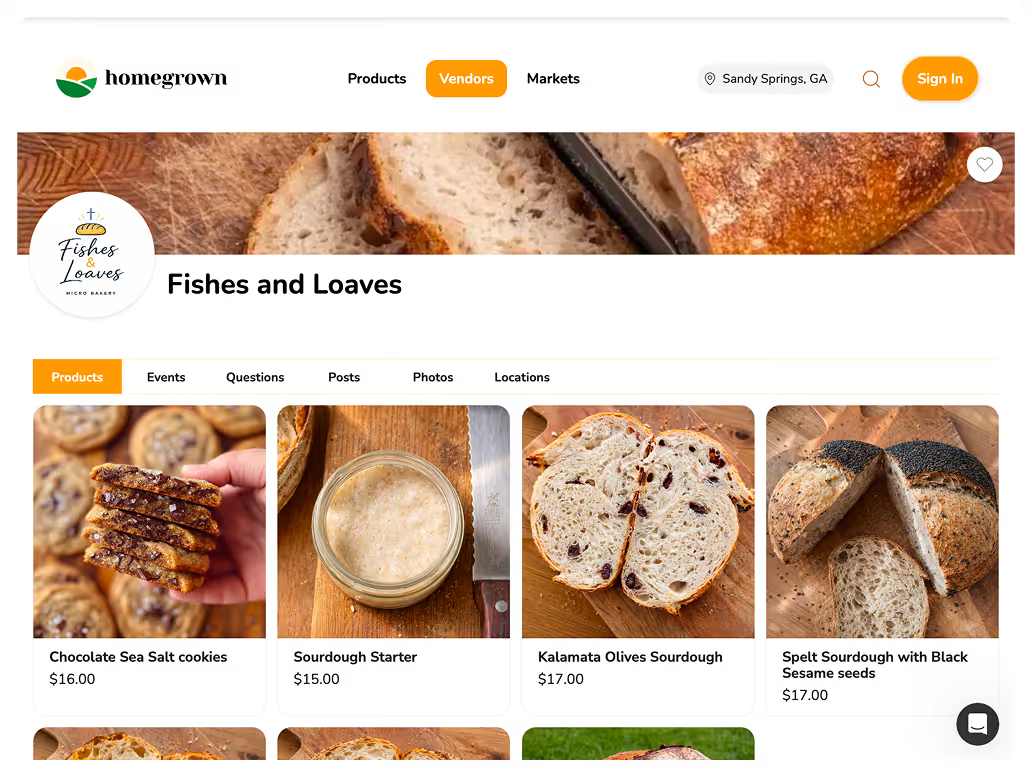
When you start cross-promoting with other vendors, it helps to have a shareable link — somewhere customers can actually browse your products and place an order. Homegrown is $10/month with no percentage fees beyond standard payment processing and gives you an ordering page that turns vendor referrals into real orders, not just "check them out sometime" moments. Compare that to sending people to your Instagram page (where they cannot actually buy anything) or giving out your Venmo handle and hoping they remember to text you. Homegrown does not manage your vendor relationships — it gives you the page that makes those referrals convert. Customers order for pickup or local delivery, whichever they prefer.
- Welcome new vendors — Remember how it felt to be the new person at the market? Be the vendor who walks over, introduces yourself, and makes the new person feel welcome. That one gesture can start a relationship that benefits both of you for years.
If you sell at more than one market, your vendor network multiplies. You learn from different vendor communities and can share insights across markets. For tips on managing multiple markets, see our guide on selling at multiple farmers markets.
Selling at markets or a farm stand? Let customers order ahead online. The easiest way to take local orders and get paid is an online storefront — see the best platform to sell food from home, or set up a Homegrown storefront in about 15 minutes ($10/mo, 0% commission).
Frequently Asked Questions
How Do I Network at the Farmers Market if I Am Introverted?
Start with the vendors immediately next to you — you do not need to work the entire market. A simple introduction during setup and occasional conversation during slow periods is enough. Focus on one or two genuine relationships rather than trying to meet everyone. Most vendor networking happens naturally through proximity and repeated interaction over weeks, not through forced socializing.
Should I View Other Vendors as Competition?
No. Farmers market customers rarely buy from only one vendor. A customer who buys your jam is not choosing between your jam and another vendor's honey — they are likely buying both. Vendors who sell similar products may feel like direct competition, but the market supports variety. Customers come to the market for the experience, not to comparison shop between two identical products. Cooperation almost always produces better results than competition.
How Do I Handle a Difficult Vendor Neighbor?
Stay professional and keep interactions brief. If a vendor is consistently rude, loud, or encroaching on your space, document the issue and bring it to the market manager rather than confronting them directly. Market managers deal with vendor conflicts regularly and have the authority to address them. Do not badmouth the difficult vendor to others — it makes you look bad, not them.
Can Vendor Relationships Help Me Get Into New Markets?
Absolutely. Vendor referrals are one of the most effective ways to learn about and get accepted into new markets. Vendors who sell at multiple markets know which ones are worth applying to, which managers are responsive, and what the application process looks like. A recommendation from an existing vendor can also carry weight with market managers reviewing applications.
What if Other Vendors Are Not Friendly?
Some vendors are naturally reserved, focused on their own business, or just having a bad day. Do not take it personally. Continue being friendly and professional, and give it time. Not every vendor will become your friend, and that is fine. Focus on the ones who are receptive. Even at a market where most vendors keep to themselves, you usually only need two or three good relationships to have a meaningful support network.
How Do I Promote Another Vendor Without Losing My Own Customers?
Promoting complementary vendors (not direct competitors) strengthens both businesses. When you recommend the cheese vendor to a customer buying your crackers, you are adding value to the customer's experience — not sending them away from your booth. Customers appreciate vendors who are generous and community-minded. You will not lose customers by being helpful; you will earn their loyalty.
How Do You Build Your Business Beyond the Booth?
The vendors who do best at the farmers market are the ones who build real relationships — with customers, with other vendors, and with their market community. Those relationships create a support network that makes every market day easier and more profitable.
And the best way to keep those customer relationships going between markets? Set up your ordering page and let customers buy from you between market days. Your vendor network helps you at the market — your ordering page helps you between markets.