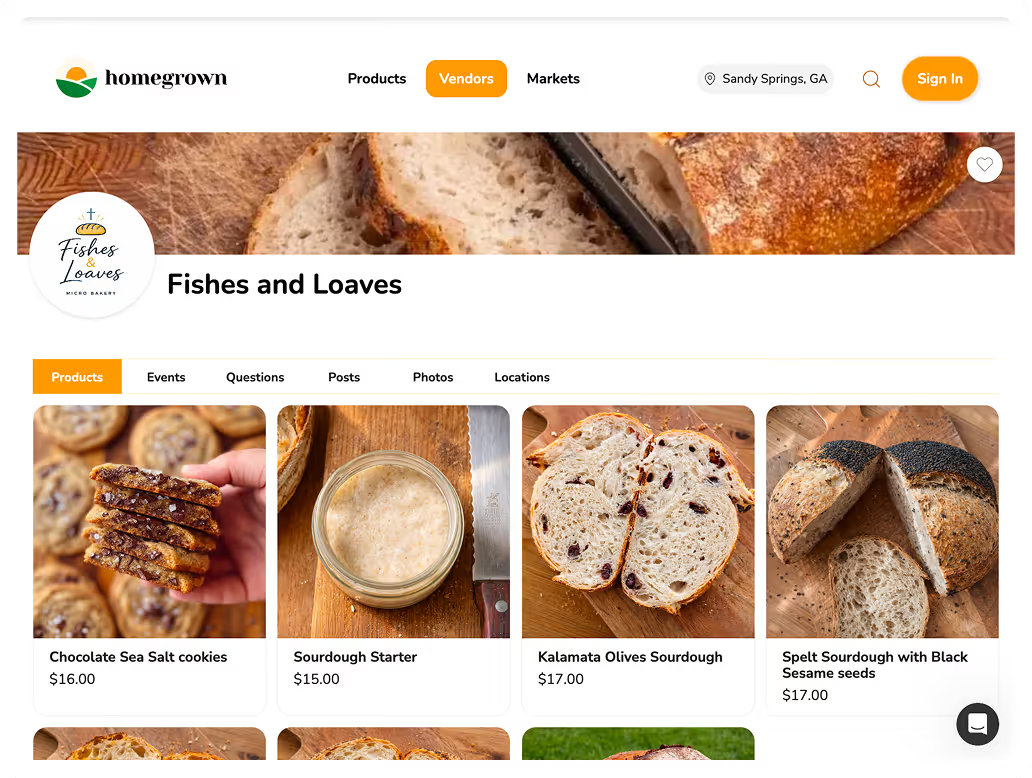


The short version: GrazeCart is farm store software built around selling by weight, which it does better than almost anything else in this category. Its Starter plan is $89 a month, and that is the only price it publishes. Growth and Premium render as "$ . . ." with a "Talk with an expert" button, and as of July 2026 its card processing rate does not appear on its pricing or payments pages at all. Homegrown is $10 a month billed annually or $12.50 monthly, 0% commission, 2.9% plus $0.30 processing, a 7-day trial, and sales tax calculated and remitted in all 50 states, all published before you sign up. If you sell meat by the pound, GrazeCart does something Homegrown genuinely cannot. If you sell fixed-price products, you are paying at least $948 a year for a scale you will never use.
All figures below came off GrazeCart's own pricing and payments pages and Homegrown's signup page in July 2026.
GrazeCart is built for the problem of variable weight. Homegrown is built for the problem of local handoff.
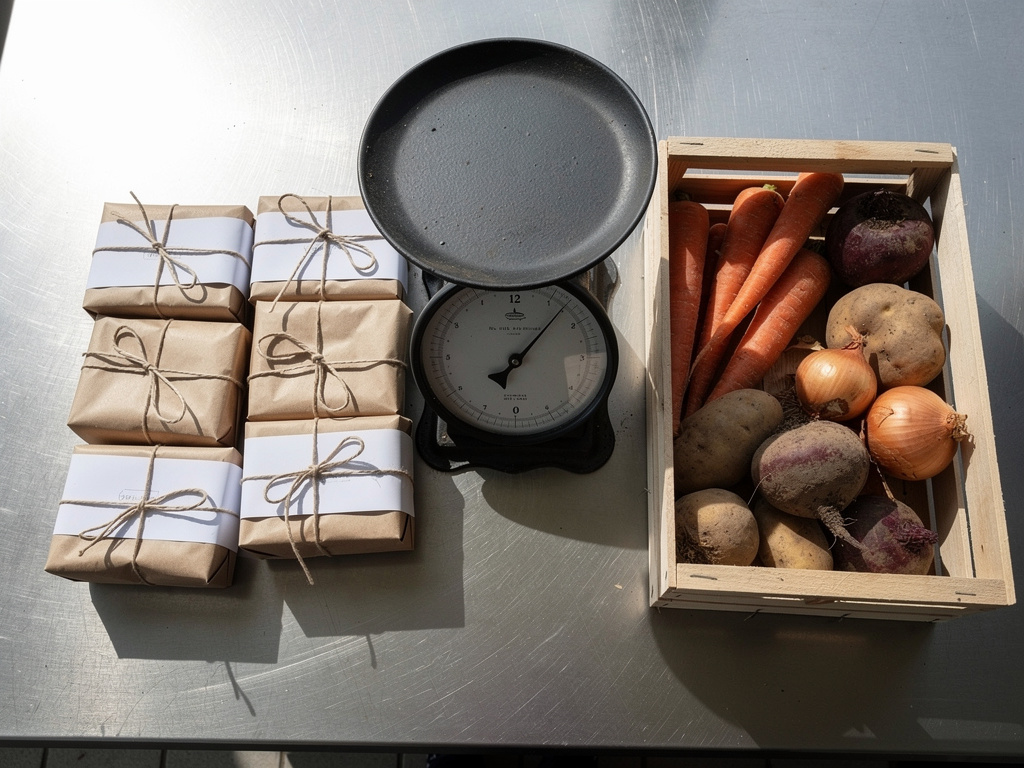
GrazeCart's flagship is selling by weight. Its own description is exact: no more over or undercharging on difficult-to-portion items, actualize the exact weight before charging your customer. If you raise beef and a ribeye comes in at 14.2 ounces rather than the 16 you listed, GrazeCart charges the real number. That is a genuinely hard problem and most platforms simply do not solve it.
Homegrown's flagship is getting the order to the customer. Pickup at every place you sell with its own schedule, local delivery inside a radius with a flat fee you keep and a route to run, four months of pickup dates at checkout, a hidden home address, and sales tax filed on your behalf.
Which means the honest read is:
GrazeCart publishes one price and no processing rate, so half of this comparison runs on what they will tell you in a demo. The trial on our side at least lets you price one of the two options tonight.
Same four disclosures on both. Where a figure is not published, this table says so rather than guessing at it.
| Homegrown | GrazeCart Starter | GrazeCart Growth | |
|---|---|---|---|
| Subscription | $10/mo billed annually, or $12.50/mo billed monthly | $89/mo | Not published, quoted on a call |
| Free trial | 7-day free trial, nothing charged until day eight | Not published | Not published |
| Platform fee | $0, 0% commission | Not published | Not published |
| Card processing | 2.9% + $0.30 | Not published on the pricing or payments pages | Not published |
Five of those cells say "not published," and that is a finding rather than a hole in the research. GrazeCart's pricing page shows Starter at $89 and renders Growth and Premium as placeholder dots. Its payments page describes payment features without stating a rate. The `/faq` path returns a 404 and the help subdomain blocks automated access. Getting a complete number requires a conversation.
That is a legitimate way to sell software. It just means you cannot compare on cost without booking a call, and you should know that before you start.
It is worth being precise about why the missing processing rate matters more than the missing subscription price. On a farm doing $24,000 a year, a subscription is a fixed line you can look up once. Processing is a percentage of everything you sell, and at that volume it is $840 a year at a standard rate. A platform charging half a point more costs you an extra $120 a year without ever appearing on a pricing page. Half a point sounds like nothing and is roughly a month and a half of the subscription you spent an hour comparing. So when a platform publishes its plan price but not its card rate, it has published the smaller number and withheld the larger one, which is exactly backwards from what a buyer needs. Ask for it first, not last. Our guide to selling farm products online covers the operational questions worth having ready for that same call.
Only the entry tier, and only partially. At $2,000 a month across 40 orders, a $50 average order and $24,000 a year:
GrazeCart Starter
Homegrown, billed annually
The gap is at least $948 a year, and you cannot narrow the range without asking. On $24,000 of sales, GrazeCart Starter is roughly 8% of revenue and Homegrown roughly 4%.
Reading the full feature table rather than just the headline, Starter gives you:
That is a lot for $89, and it is more than the price alone suggests. The catch is what sits one tier up.
Worth flagging one item on that Starter list specifically, because it is the kind of limit that only bites later: three delivery zones. That sounds generous until you map it against how farms actually deliver. A farm serving its own town, the next town over, a nearby city neighborhood, and a drop point at a workplace has four, and each of those wants its own fee, minimum, and schedule. Zones tend to multiply as customers ask, not as you plan, so the cap is likelier to be reached by accident than by ambition. When it is, the fix is a tier with no published price.
GrazeCart's Growth tier adds the things a growing farm tends to discover it needs:
Premium adds advanced reporting, Zapier, and a pickup manager module for drivers.
So the planning risk is specific: on GrazeCart, subscriptions, coupons, point of sale, and more than three delivery zones are all on a tier with no public price. A farm that delivers into four areas, or wants a CSA, needs Growth on day one and cannot budget for it without a call. That is the single most important thing to know before you start evaluating GrazeCart, and it is not obvious from the pricing page.
The dividing line is the product. Custom-cut meat with hanging-weight pricing needs the GrazeCart machinery; everything else a small farm sells does not.
Nothing here is a criticism of the product. It is built for a specific kind of farm and it serves that farm well. The preorder-then-charge-by-weight feature in particular is the sort of thing that only exists because someone who actually sells turkeys asked for it, and it solves a problem that has no clean workaround anywhere else. Our fuller look at GrazeCart for local food sellers covers who outgrows Starter and how quickly.
The honest bounds are the same as with every farm platform here: Homegrown does not sell by weight and does not do subscriptions or CSA boxes. Both are on the roadmap and neither is live. If you sell beef by the pound, GrazeCart does something Homegrown cannot, and that is the right reason to pay its price.
This comes up across the farm software category, so it is worth a method rather than a complaint.
None of that is adversarial. A good salesperson will answer all seven quickly and a good product survives the questions easily. The point is simply that a quoted-price conversation is one you should enter prepared, because the person on the other end has had it hundreds of times and you have had it twice.
USDA's local and regional food research program describes a direct-marketing sector made up overwhelmingly of small operations selling at markets and farm stands. Most of them are closer to the $24,000 example above than to the volume where an 8% software cost becomes invisible, which is worth remembering when a $1,068 floor starts to feel like the normal price of selling online. The 2022 Census of Agriculture tells the same story from the production side.
If you are in that majority, the cheapest possible first step is to put your real products on a storefront and take live orders for a week before you book anything. Our comparison of Local Line against GrazeCart is also worth reading if both are on your list, since one of those two publishes considerably more of its pricing than the other.
Starter is $89 a month, which is the only price published on its site. Growth and Premium show as placeholders with a "Talk with an expert" button. The card processing rate is not published on either the pricing or payments page as of July 2026, so a complete cost requires a call.
$10 a month billed annually, or $12.50 billed monthly, with 0% commission and 2.9% plus $0.30 card processing. The trial is 7 days and nothing is charged until day eight.
At least $948 a year on subscription alone, comparing GrazeCart Starter at $1,068 to Homegrown at $120. Because GrazeCart's processing rate is unpublished, the true all-in gap could be larger and cannot be pinned down without asking them.
GrazeCart, without qualification. Charging actual weight rather than an estimate is its core feature and it handles that workflow more directly than most of the category. Homegrown does not sell by weight at all.
Not at Starter. On GrazeCart, subscriptions, coupons, gift cards, Express POS, and unlimited delivery zones all start at the Growth tier, which has no published price. If you need any of those, budget for a call before you budget a number.
Three. Beyond that you need Growth. If you deliver into four or more distinct areas, Starter's published $89 is not your real price.
Homegrown calculates, files, and remits in all 50 states, including states that exempt qualifying food. GrazeCart does not advertise tax filing, so plan on handling it yourself there.
If weight is your unit of sale, GrazeCart is the reason to pick up the phone, and you should go into that call knowing you will have to ask for the processing rate, the Growth price, and which tier your must-haves live on.
If your products have fixed prices, the calculus is simpler than it looks. You would be paying at least $948 a year more for a scale you never touch, three delivery zones you may outgrow, and a tier structure you cannot see. The free test settles it in a week: list your real products, share the link, and count the orders. Then decide whether anything was actually missing.