

Delivering one jar of jam to one house across town is not a great use of your afternoon. But delivering twelve orders to one porch in one trip? That changes everything. Group orders and neighborhood food drops are the fastest way to grow your cottage food sales without spending your entire day driving.
The short version: A neighborhood food drop means you deliver all orders to a single address, and customers pick up from that one spot. Find a neighborhood organizer (your most loyal customer, a parent group leader, or an office manager), set a weekly order cutoff and delivery day, require a minimum of five to eight orders per drop point, and use your Homegrown storefront so each person places their own order. You deliver once, the organizer distributes, and everyone saves time and money. Start with one neighborhood, nail the process, then add more.
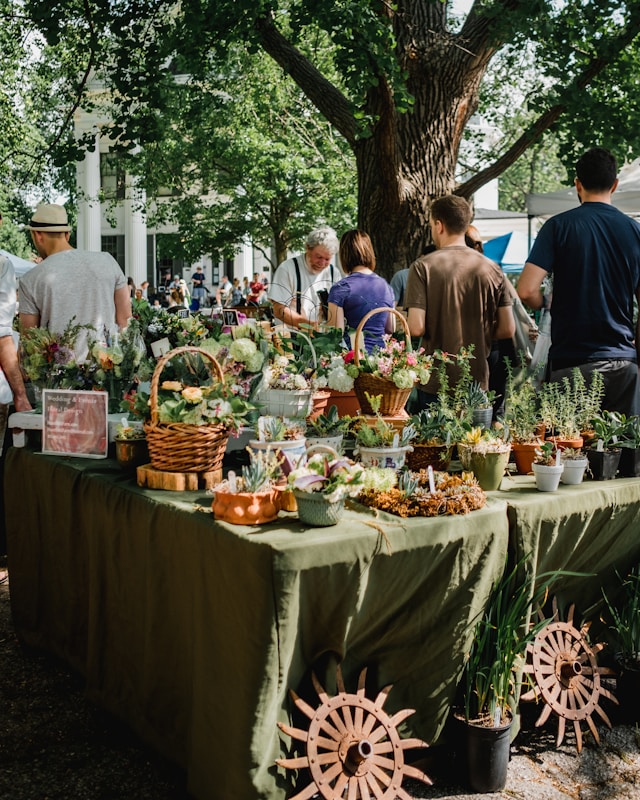
A neighborhood food drop is exactly what it sounds like. You deliver all orders for one area to a single address, and the individual customers pick up their orders from that location. Think of it like a mini farmers market on someone's front porch. The concept borrows from food co-ops and buying clubs where community members pool orders for pickup at a single location.
Here is how it works in practice:
"A neighborhood food drop turns six delivery stops into one. That is not a small efficiency gain. That is the difference between delivery being profitable and delivery eating your margins."
This model works especially well in these settings:
If you are already doing individual deliveries, you know how much time you spend driving between stops. A food drop model cuts that time by 60 to 80 percent on a typical route. That time goes back into baking, marketing, or just not working until 9 PM. For more details, see our guide on .
For a full breakdown of how to plan delivery routes as a one-person operation, read this guide on how to offer local food delivery.
Group orders are simple. One person in a group (the organizer) spreads the word that you are taking orders. Everyone in the group places their own order by a deadline. You make everything, pack it up, and deliver it all in one trip to one address. The organizer distributes orders to the individual buyers.
Here is the step-by-step flow:
The benefits stack up fast:
"Group orders do not just save you time. They turn your customers into a sales team. One organizer telling ten neighbors about your cinnamon rolls is worth more than any Instagram post."
The organizer is the key to making group orders work. This is the person who rallies the group, shares your storefront link, reminds people of the deadline, and handles pickup logistics on their end. You need someone who is already connected and enthusiastic.
Here is where to find them:
What to offer the organizer as a perk:
| Perk | Why It Works |
|---|---|
| Free product every drop (your choice) | Low cost to you, high perceived value |
| 10% off their personal order | Simple, automatic |
| First pick of new menu items | Makes them feel like an insider |
| Free product for every 10 orders they generate | Scales with their effort |
Keep the perk simple. The organizer is doing you a huge favor by consolidating logistics. A free loaf of bread or a jar of jam each week is a tiny cost compared to the gas and time you save.
You do not need special software or a complicated process. You need a few rules, a consistent schedule, and a simple way for people to place orders. Here is the system:
Set your minimums:
Set your cutoff deadline:
Pick one delivery day per neighborhood:
Use your Homegrown storefront for individual ordering:
Confirm with the organizer before each drop:
"The best group order system is the one you can run without thinking. Same cutoff day, same production day, same drop day, every single week."
Keep it simple. Your product prices stay the same whether someone orders individually or through a group. The savings come from delivery, not from discounting your food.
Here is the pricing framework:
Here is what the math looks like for a customer:
| Order Type | Product Price | Delivery Fee | Total for Customer |
|---|---|---|---|
| Individual delivery | $18.00 | $5.00 | $23.00 |
| Group drop (5+ orders) | $18.00 | $0.00 | $18.00 |
| Group drop (10+ orders, with 5% discount) | $17.10 | $0.00 | $17.10 |
And here is what it looks like for you:
| Scenario | Orders | Revenue | Gas/Time Cost | Net Per Order |
|---|---|---|---|---|
| 6 individual deliveries (6 stops) | 6 | $138.00 | ~$18.00 (gas + 90 min) | $20.00 |
| 6 group orders (1 stop) | 6 | $108.00 | ~$4.00 (gas + 15 min) | $17.33 |
You make slightly less per order on the group drop, but you spend a fraction of the time and gas. Your hourly rate goes way up. And customers are more likely to order when delivery is free, so your volume grows.
For a deeper look at how to set up delivery zones that match your pricing, check out how to set delivery zones.
Packaging for a group drop is different from packaging for a single delivery. You are handing off multiple orders to one person, and they need to be able to figure out which bag belongs to which customer without calling you.
Here is the system:
For a detailed guide on choosing the right packaging materials, containers, and labeling for delivery, read how to package food for local delivery.
Packing checklist for group drops:
"If the organizer has to call you to figure out whose order is whose, your labeling system failed. Make it obvious."
Start with one neighborhood. Get the rhythm down. Then add a second, then a third. Here is what a weekly schedule looks like when you are running two to three drop points:
| Day | Task |
|---|---|
| Saturday | Share your menu for the week on social media and with organizers |
| Monday 8 PM | Order cutoff for all drop points |
| Tuesday | Review orders, make shopping list, buy ingredients |
| Wednesday | Production day: bake, cook, prep everything |
| Thursday morning | Package and label all orders by drop point |
| Thursday afternoon | Deliver: Drop Point 1 at 2 PM, Drop Point 2 at 3 PM, Drop Point 3 at 3:45 PM |
| Friday | Follow up with organizers, ask for feedback, handle any issues |
A few things to keep in mind:
Scaling timeline:
| Month | Drop Points | Estimated Weekly Orders | Weekly Revenue (at $18 avg) |
|---|---|---|---|
| Month 1-2 | 1 neighborhood | 6-10 orders | $108 - $180 |
| Month 3-4 | 2 neighborhoods | 12-20 orders | $216 - $360 |
| Month 5-6 | 3 neighborhoods | 20-35 orders | $360 - $630 |
That is real, buildable income for a part-time cottage food vendor. And it comes from a system, not from hustling on social media every day.
Ready to set up your storefront and start taking group orders online? Create your Homegrown storefront and share the link with your first organizer today.
Push the orders to the following week and let the organizer know. You can also lower your minimum temporarily (say, three orders instead of five) for the first two weeks while the group builds momentum. Once people try your food, the numbers usually grow on their own. If a group consistently falls short after a month, it may not be the right neighborhood. Focus your energy on groups that hit minimums reliably.
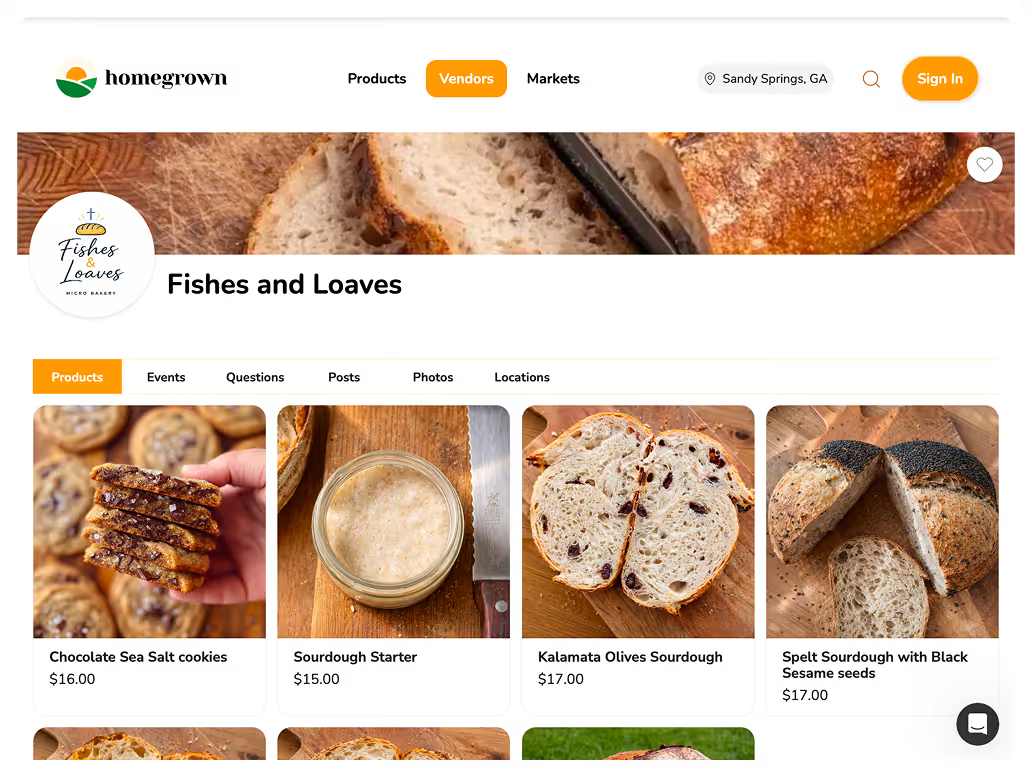
No. Use your regular Homegrown storefront and have each customer place their own order. You can add a note in your storefront description like "Orders for [Neighborhood Name] group drop close every Monday at 8 PM." The organizer shares your link, customers order and pay individually, and you see all the orders in one place. No spreadsheets, no Venmo, no chasing payments.
Be firm but friendly. "Sorry, the cutoff was Monday at 8 PM. I will add you to next week's drop." If you start making exceptions, your production schedule falls apart. The organizer can help enforce this by reminding the group on Sunday or Monday morning.
It happens. Thank them for their help and find a replacement. Ask the group if someone else wants to take over. You can also shift that neighborhood to a self-serve model where you drop orders on a porch table and customers pick up on their own within a two-hour window, no organizer needed.
Yes, but be intentional about it. Schedule your individual deliveries on the same day as your group drops, and plan the route so individual stops are on the way to or from a drop point. This keeps you from making separate trips. Over time, try to convert individual delivery customers into group drop customers by showing them the free delivery benefit.
Handle them the same way you would for any delivery. If a product arrived damaged, replace it or refund it. Deal directly with the customer, not through the organizer. Keep the organizer out of complaint resolution. Their job is logistics, not customer service.
Yes. Five orders at one stop is almost always more profitable per hour than five individual deliveries. Even at a modest average order of $15, five orders is $75 in revenue for about 15 minutes of delivery time. Compare that to five individual stops that might take you 90 minutes of driving. The math works at five orders. It gets even better at eight or ten.