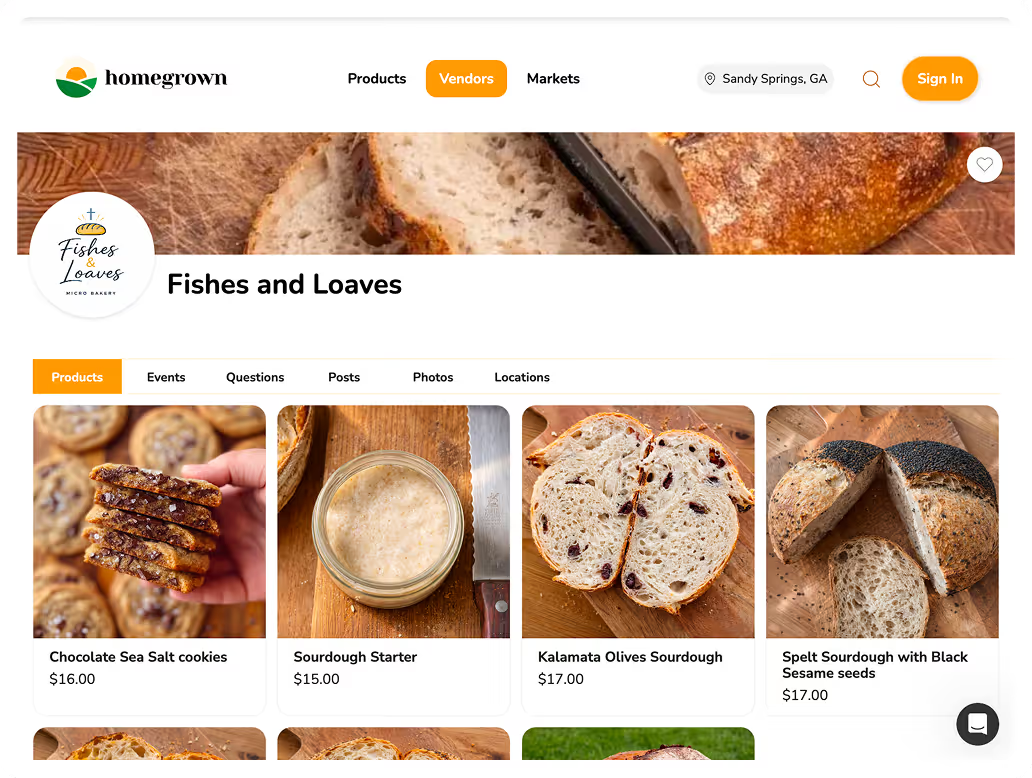



You can open a farm stand this weekend for under $200. The checklist is shorter than you think: a table, a sign with what you sell and your prices, your products, a cash box, and a QR code linking to your ordering page. That is it. Everything else — the permanent structure, the professional signage, the expanded product line, the social media presence — comes after you have proven that customers will actually show up and buy. Most first-time farm stand vendors over-prepare and under-launch. The vendors who succeed are the ones who start with the minimum and improve based on what they learn from real customers.
The short version: Here is the complete checklist in priority order: (1) products you can sell legally under cottage food law, (2) a table or display surface, (3) a sign with your products and prices, (4) a cash box with change, (5) a QR code to your Homegrown ordering page for digital payments and pre-orders, (6) liability insurance ($25/month), and (7) proper labels on every product. Total startup cost: $150 to $300. Total setup time: one weekend. Everything beyond this checklist is an upgrade you add after your first month of selling. Do not wait until everything is perfect. Start selling, learn from customers, and improve as you go.
| Item | Cost | When to Buy |
|---|---|---|
| Folding table | $40-$60 | Before opening |
| Pop-up canopy | $80-$120 | Before opening (or first month) |
| Road sign | $20-$30 | Before opening |
| Display sign | $5-$15 | Before opening |
| Cash box + change | $15-$25 + $20 | Before opening |
| Labels (first batch) | $10-$20 | Before opening |
| Packaging (first batch) | $20-$40 | Before opening |
| QR code sign | $5-$10 | Before opening |
| Business cards | $20-$30 | First month |
| Ordering platform | $10/month | Before opening |
| Insurance | $25/month | First month |
| Cottage food registration | $0-$100 | Before opening |
| Total Phase 1-2 (opening day) | $150-$250 | |
| Total with all phases | $250-$500 |
Compare this to opening a food truck ($50,000 to $200,000), a restaurant ($100,000 to $500,000), or even a permanent farm store ($10,000 to $50,000). A farm stand is the lowest-cost entry point into direct-to-consumer food sales. For a deeper look, see our guide on farm stand vs farm store.
These items are upgrades, not requirements. Add them as your stand grows:
Your first Saturday will not be perfect. You might sell $50 or $500. The point is that you started. Everything else — the permanent structure, the expanded product line, the email list, the pre-ordering system — builds from here.
The planning and prep phase takes one weekend. Production for your first selling day takes one day. Setup on the morning of your first selling day takes 15 to 30 minutes (unfold table, display products, put out signs). Total time from "I want to open a farm stand" to "I am open for business" is about one week.
This is normal. Most farm stands take 3 to 6 weeks to build awareness. Post in local Facebook groups, put up your road sign, and tell everyone you know. Traffic builds gradually through visibility and word of mouth.
For your first few weekends, yes — be present to learn what customers want, answer questions, and build relationships. After you establish your customer base and refine your product lineup, you can transition to a self-serve honor system if that fits your lifestyle. See our guide on self-serve payment options.
Possibly. Check your local zoning for home occupation or roadside selling restrictions. Many suburban areas allow farm stands with limitations (hours, sign size, parking). Some neighborhoods have HOA restrictions. Call your city zoning office before setting up.
$150 covers a folding table, a hand-painted sign, a cash box with change, labels for your products, and your first month of an ordering platform. This assumes you already have products to sell (ingredients are not included in the startup cost).
After 4 to 6 weeks of consistent sales on your first day, evaluate: Are you selling 80% or more of your inventory? Are customers requesting additional hours? Do you have production capacity for more than one day? If yes to all three, add a second window. See our guide on setting farm stand hours.
Waiting too long to start. Vendors who spend 3 months planning, designing a logo, building a permanent structure, and developing 15 products before their first sale are over-investing before proving demand. Start with $150, 3 products, and a folding table. Learn from real customers. Upgrade based on real data, not assumptions.
No. Your name and your product are enough for launch. "Sarah's Sourdough" written on a hand-painted sign works perfectly for your first month. A logo, branded packaging, and a formal business name are upgrades you add after you have proven that customers want what you sell. Many successful farm stand vendors operate under their personal name for the entire first year. Do not let branding become a reason to delay selling.
Start with cash and a digital payment option like Venmo or a QR code to your ordering page. Most customers under 50 prefer to pay digitally, and many do not carry cash at all. A QR code sign at your stand that links to your ordering page lets customers pay instantly from their phone. If you want a card reader, Square offers a free chip reader that plugs into your phone — but for most farm stands, cash plus a digital option covers 95% of transactions.
Review your sales data and customer feedback. Which products sold out every week? Which sat on the table unsold? What did customers ask for that you did not have? Use this information to adjust your product mix, increase production of your winners, and test one new product based on customer demand. Also set up your Google Business Profile if you have not already — being searchable on Google Maps is the single most impactful upgrade after your first month of proving the concept works.