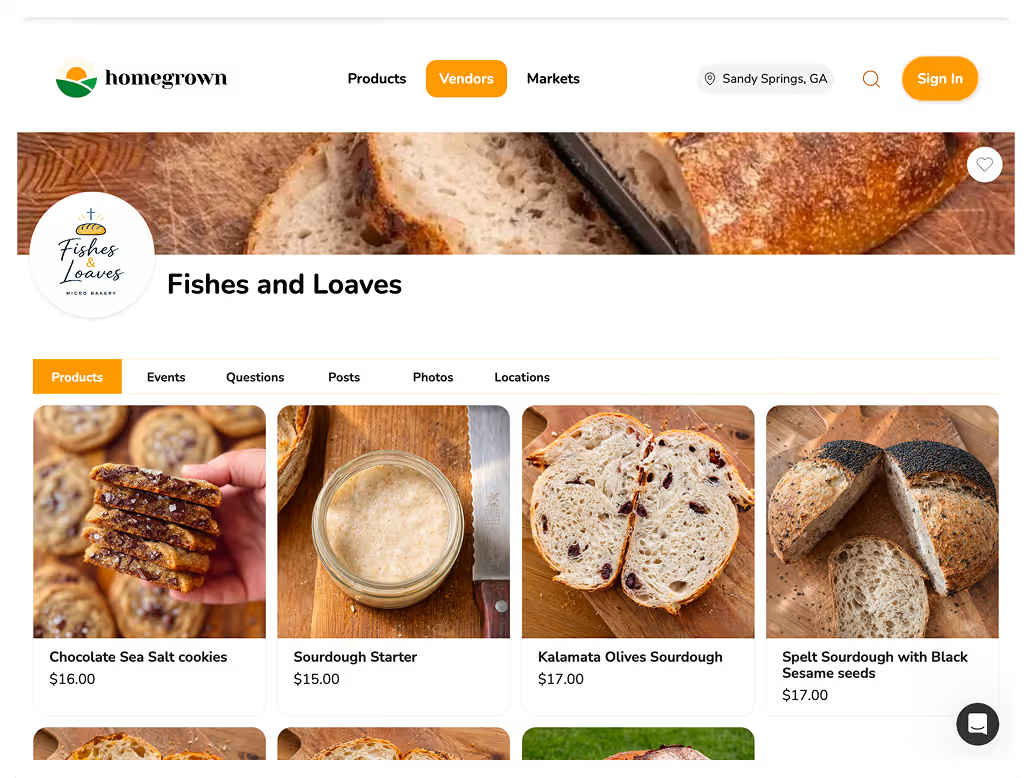


A farm stand is a simple, often seasonal setup where you sell products directly from your property, usually outdoors or under a basic structure. A farm store is a permanent, enclosed retail space on or near a farm that operates year-round with a wider product selection, refrigeration, and a more traditional retail experience. Both let you sell directly to customers without a middleman, but they require very different levels of investment, commitment, and infrastructure.
The short version: Farm stands are low-cost, seasonal, and easy to start. You can set one up with a folding table, some signage, and products from your kitchen or garden. Farm stores are permanent retail spaces that require a building, permits, inventory management, and year-round staffing. Most small vendors start with a farm stand because the startup cost is under $500, and you can test demand before committing to a store. If you already sell at farmers markets or through an online ordering platform like Homegrown, a farm stand is the natural next step. A farm store makes sense only after you have consistent demand, multiple product lines, and enough revenue to justify the overhead.
A farm stand is a direct-to-consumer sales setup located on or near your property. It can be as simple as a card table at the end of your driveway or as polished as a custom-built roadside structure with shelving and signage. The defining feature is simplicity: farm stands are typically open-air or semi-enclosed, seasonal, and run by one or two people.
Most farm stands share a few characteristics:
Farm stands work especially well for vendors who grow produce, sell baked goods under cottage food laws, or offer seasonal products like flowers, honey, or preserves. You do not need a business license in many states to run a basic farm stand selling your own agricultural products, though you should always check your local zoning and health department rules.
A farm stand is where most small vendors start their direct-sales journey, and for good reason. The barrier to entry is almost zero.
A farm store is a permanent, enclosed retail space where you sell farm products and often additional goods from other local producers. Think of it as a small specialty grocery store located on a farm or in a rural area. Farm stores typically have four walls, a roof, climate control, display fixtures, a point-of-sale system, and regular business hours.
Here is what sets a farm store apart:
Farm stores are a serious step up in commitment and investment. They can generate significantly more revenue than a farm stand, but they also come with significantly more risk and overhead.
As the Center for Rural Affairs explains, adding a farm store is one of the most effective ways to diversify farm revenue, but it requires careful planning and a customer base large enough to sustain year-round retail operations.
The differences come down to investment, complexity, and scale. Here is a side-by-side breakdown:
| Factor | Farm Stand | Farm Store |
|---|---|---|
| Startup cost | $50-$500 | $5,000-$50,000+ |
| Structure | Table, tent, or small shed | Enclosed building with utilities |
| Operating season | Seasonal or weekend-only | Year-round |
| Product range | Your own products (5-15 items) | Your products plus other local goods (50-200+ items) |
| Staffing | Just you (maybe a helper) | 1-3+ employees |
| Permits required | Minimal (varies by state) | Retail food license, business license, insurance |
| Refrigeration | Coolers or none | Commercial refrigeration |
| Payment systems | Cash, Venmo, QR codes | POS system, card readers |
| Daily time commitment | 2-4 hours | 6-10 hours |
| Revenue potential | $200-$2,000/month | $2,000-$20,000+/month |
| Risk level | Very low | Moderate to high |
| Best for | New vendors testing demand | Established vendors with proven demand |
The gap between these two models is significant. A farm stand is a side hustle. A farm store is a small business.
Starting a farm stand is one of the cheapest ways to enter direct-to-consumer sales. Most vendors can get started for under $300.
Here is a realistic breakdown of farm stand startup costs:
Total: $155-$450 to get started.
Your ongoing costs are minimal. You are selling from your own property, so there is no rent. Your biggest recurring expense is the cost of the products you make or grow. If you sell baked goods, your ingredient costs are your main expense. If you sell produce, your costs are seeds, soil, and your time.
Compare that to a farmers market, where you would pay $20-$75 per week in booth fees on top of these same setup costs. A farm stand eliminates that recurring fee entirely.
A farm store requires a fundamentally different level of investment. You are building or converting a retail space, not just setting up a table.
Here is what farm store startup costs typically look like:
Total: $10,000-$50,000+ to open, with $500-$2,000+ in monthly overhead before you sell a single product.
These numbers make it clear why most vendors should not jump straight to a farm store. You need proven demand and reliable revenue before taking on this kind of overhead.
A farm stand is the right choice if you fit most of these criteria:
A farm stand pairs especially well with an online ordering system. Instead of waiting for random drive-by customers, you can take pre-orders through a Homegrown storefront and have products ready for pickup at your stand during set hours. This turns your farm stand from a passive "hope someone drives by" setup into an active sales channel where customers order ahead and show up at a scheduled time.
Most vendors who run successful farm stands also sell at farmers markets. The market is where you find new customers. The farm stand is where repeat customers pick up their weekly orders without you having to pack up and drive to a market.
A farm store makes sense when you have outgrown simpler selling channels. You should consider a farm store if:
The key question is whether your existing customer base is large enough to sustain a permanent retail location. If you are still relying on farmers markets for the majority of your sales, you are probably not ready for a farm store yet.
Yes, and this is the path most successful farm stores followed. Starting with a farm stand lets you build a customer base, learn what sells, and test your location before investing in a permanent structure.
Here is a realistic progression:
This step-by-step approach reduces your risk at every stage. You never invest more than your current revenue can support.
As Acres U.S.A.'s direct marketing guide notes, direct marketing success depends on building relationships with customers over time. Rushing to a permanent retail space before you have those relationships is one of the most common mistakes small farm businesses make.
Whether you choose a farm stand or a farm store, certain mistakes derail vendors at every stage.
Online pre-orders are the single biggest advantage modern farm stand operators have over the previous generation. Instead of sitting at your stand hoping for walk-up traffic, you can take orders in advance, know exactly what to prepare, and have customers show up at a scheduled pickup window.
Here is how pre-orders change the math for both models:
| Without Pre-Orders | With Pre-Orders |
|---|---|
| Revenue depends on foot traffic | Revenue is confirmed before you open |
| You guess how much to produce | You produce exactly what is ordered |
| Waste from unsold products | Minimal waste (you make what sold) |
| Must be present during all open hours | Pickup windows can be short and scheduled |
| Cash and card only | Online payment before pickup |
| No customer data collected | Email and order history for every customer |
For farm stand vendors, a pre-order system like Homegrown ($10 per month) eliminates the biggest weakness of the farm stand model: relying on random traffic. You share your ordering link on social media, at the farmers market, and on your signage. Customers order by a deadline, you prepare everything, and they pick up during a two-hour window. It works like a mini CSA without the upfront commitment.
For farm store owners, pre-orders help you manage inventory, reduce waste, and serve customers faster. A customer who pre-orders and pays online just needs to grab their bag and go.
If you are comparing a farm stand vs a farm store and trying to decide which to open, consider this: a farm stand with an online pre-order system can generate revenue comparable to a small farm store, with a fraction of the overhead. You do not need four walls and a cash register to run a professional operation. You need a product people want, a way for them to order, and a place for them to pick it up.
Regulations vary significantly between farm stands and farm stores, and they vary by state and county.
The regulatory burden of a farm store is substantially heavier than a farm stand. This is another reason to start simple and scale up only when revenue justifies the added compliance costs.
Understanding the time commitment helps you decide which model fits your life.
Total weekly time commitment: 15-25 hours, including production.
Total weekly time commitment: 50-60+ hours, including management and production.
The time difference is dramatic. A farm stand is compatible with a day job, family responsibilities, or other side income. A farm store is a full-time business.
It depends on your location and what you sell. Many states allow the sale of raw agricultural products (produce, eggs, honey) from your own property without a permit. If you sell processed or baked goods, you will likely need to comply with your state's cottage food law, which may require registration, labeling, and annual sales caps. Always check with your local zoning office and health department before opening.
In most states, selling products you did not grow or make yourself at a farm stand changes the regulatory requirements. You may need a retail food license or resale permit. Some cottage food laws specifically limit you to selling only products you produced. If you want to carry products from other vendors, a farm store setup with proper licensing is usually the safer route.
Revenue varies widely based on your location, products, and hours of operation. A part-time farm stand selling baked goods or produce in a suburban area might generate $200 to $800 per week during peak season. A well-located stand with a strong pre-order system and loyal customer base can bring in $1,000 to $2,000 per week. Your profit margin depends on your product costs and how much waste you manage.
A farm store can be profitable, but it takes time. Most farm stores need 12 to 18 months to reach consistent profitability because of the high startup costs and overhead. The stores that succeed typically have an established customer base before opening, carry a mix of their own products and other local goods, and are located in areas with enough population to drive consistent traffic. Revenue of $5,000 to $15,000 per month is common for successful small farm stores.
They are essentially the same thing. A roadside stand is a farm stand positioned near a road for visibility to passing traffic. The term "roadside stand" emphasizes the location (near the road) while "farm stand" emphasizes the source (from a farm). Both describe a simple, direct-to-consumer selling setup on or near your property.
Insurance is not legally required for most farm stands, but it is strongly recommended. If a customer slips on your property, eats something that makes them sick, or has any other issue, you could be personally liable. A basic general liability policy for a farm stand costs $200 to $500 per year. If you already have a homeowner's or farm insurance policy, check whether it covers incidental commercial activity on your property.
Start with a farm stand. Nearly every successful farm store owner will tell you they started smaller. A farm stand lets you test your products, learn your customers' preferences, build a following, and generate revenue with minimal risk. Once you are consistently selling out at your stand and turning away customers because you do not have enough product or space, that is the signal to consider upgrading to a farm store.
Yes, and some vendors do this during the transition period. They keep their farm stand open for regular customers while building out and testing a farm store on the same property. The farm stand handles the established customer base while the farm store attracts new walk-in traffic with a broader product selection. Once the store is generating enough revenue on its own, most vendors close the stand and consolidate everything into the store. Running both simultaneously is extra work but reduces the risk of losing revenue during the transition.
A farm stand and a farm store serve the same purpose: getting your products directly into customers' hands without a middleman. The difference is scale. A farm stand is where you start. A farm store is where you might end up if demand grows enough to justify it.
For most vendors reading this, a farm stand is the right move. Pair it with a free or low-cost online ordering system, sell at farmers markets to find new customers, and direct repeat buyers to your stand for pickup orders. That combination gives you the revenue potential of a farm store without the overhead.
If you are further along and considering a farm store, do the math first. Make sure your current revenue can cover the added overhead before you sign a lease or start construction. The vendors who succeed with farm stores are the ones who waited until the numbers told them it was time, not the ones who jumped in hoping the customers would follow.
For more on how farm stands compare to other selling channels, read our guides on farm stand vs farmers market and the best platforms for selling food from home.