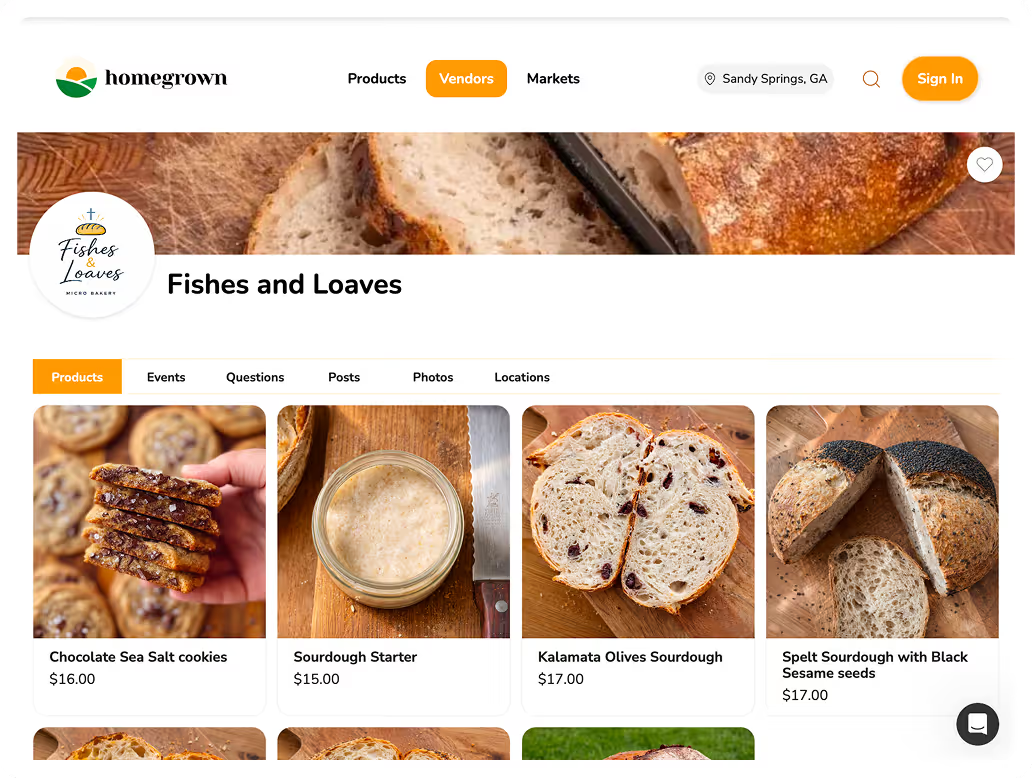


The fastest way to create an online menu for your farm stand is an ordering page that shows your products with photos, prices, and availability — not a PDF, not a social media post, and not a Google Doc. A proper online menu through a platform like Homegrown ($10 per month) serves as your menu AND your ordering system in one: customers see what you sell, select what they want, pay, and choose their pickup time. It takes 15 minutes to set up and updates in seconds when your product list changes. For a deeper look, see our guide on turn your farm stand into a pickup location.
The short version: Your online menu needs to live at a permanent URL that you can share everywhere — Instagram bio, Facebook posts, Google Business listing, QR codes at your stand, and business cards. It should show every product with a photo, description, price, and availability status. The best online menu is one that also accepts orders and payment, eliminating the step between "I see what you sell" and "I want to buy it." A Homegrown storefront does exactly this: one page with your menu, products, prices, and a checkout flow. You update products in 2 minutes. Customers order in 2 minutes. No PDF to email, no Google Doc to share, no Instagram post to search for.
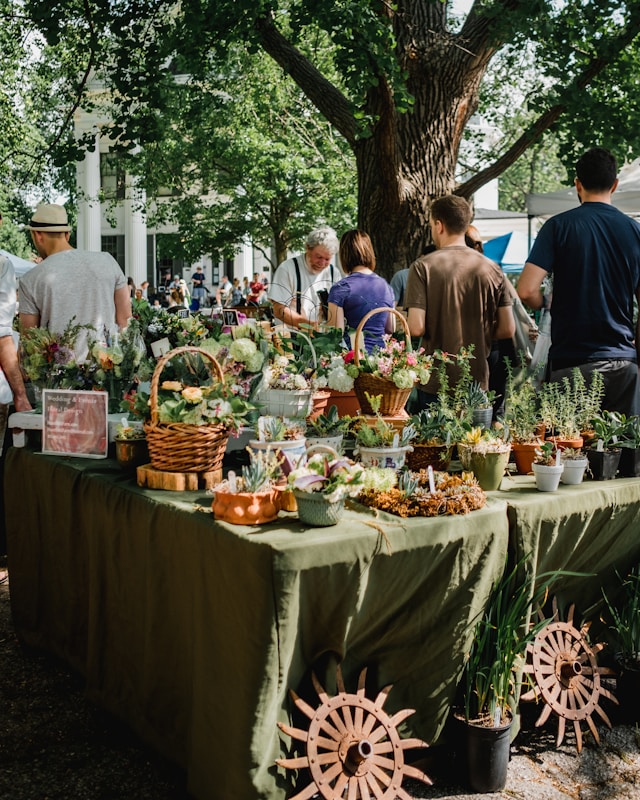
A farm stand without an online menu relies entirely on physical signage and word of mouth to communicate what it sells. This limits your reach to people who drive past your stand and can read your sign. An online menu extends your reach to everyone with a phone. Pre-selling through an online menu shifts your cash flow earlier in the week and reduces waste from overproduction — the same logic behind why LocalLine found subscription ordering increases food business revenue by 44%. And when paired with a this Google Business Profile SEO guide, your menu becomes discoverable to anyone searching "farm stand near me":
Without an online menu, every one of these potential customers has to either visit in person (hoping you are open and have what they want) or DM you for information (which most will not do). An online menu removes both barriers.
The conversion path changes dramatically:
Without online menu: Customer hears about you → Drives to your stand (hoping for the best) → May or may not find what they want → May or may not return
With online menu: Customer hears about you → Checks your online menu (sees exactly what you sell, with prices) → Pre-orders and pays → Arrives at your stand with a guaranteed order
The second path has a dramatically higher conversion rate because the customer makes an informed decision before committing time and gas to visit.
Here are five options ranked from best to worst:
A Homegrown storefront gives you a permanent URL with your products, photos, descriptions, prices, and a full checkout flow. Customers can browse your menu AND order in one visit. Updates take 2 minutes — add a product, remove a product, change a price.
Pros: Menu + ordering in one, permanent URL, professional appearance, automatic payment, pickup scheduling
Cons: $10 per month
Best for: Any vendor who wants their menu to also function as an ordering system (which is every vendor).
Create a Story highlight called "Menu" on your Instagram profile. Add Story slides with your products and prices.
Pros: Free, visible on your profile, easy to update weekly
Cons: Not searchable, no ordering capability, only accessible to Instagram users, photos are temporary unless saved to highlights
Best for: Vendors who only sell through Instagram and have no ordering page.
Google Business Profile lets you add products with photos and prices to your listing. When someone searches for your farm stand on Google, they see your products.
Pros: Free, shows up in Google search, adds product photos to your map listing
Cons: Limited formatting, no ordering capability, not a standalone menu page
Best for: Supplementing your primary online menu (use this IN ADDITION to your ordering page, not instead of).
Facebook Pages let you add a "Shop" or product listing section with photos and prices.
Pros: Free, reaches Facebook audience
Cons: Buried in your Facebook page layout, no ordering capability, requires customers to navigate to your page
Best for: Vendors whose primary audience is on Facebook.
A PDF or Google Doc with your product list and prices, shared as a link.
Pros: Free, easy to create
Cons: Not visually appealing, no photos, no ordering, hard to update, looks unprofessional, customers must download or open a separate document
Best for: Nobody. There is always a better option.
Whether you use an ordering platform or a simpler option, your online menu needs these elements:
Each product should have at least one photo. A menu without photos is a grocery list. A menu with photos is a sales tool. Customers buy with their eyes first.
Photo guidelines:
Every product should have a visible price. No "DM for pricing." No "varies." A specific dollar amount next to every item. Customers who see a price make a buying decision. Customers who see "DM for pricing" usually do not DM.
One to two sentences per product: what it is, what makes it special, and any relevant details (size, flavor, ingredients). "Sourdough loaf — 48-hour fermented with organic flour. ~1.5 lbs. Crusty exterior, tangy, soft crumb." That is enough.
Mark products as available, sold out, or seasonal. Customers need to know what they can actually order right now, not just what you have sold in the past.
Where and when customers can pick up. If your stand is open Saturdays 9 AM to 1 PM at 123 Farm Road, that information should be on your menu page. Do not make customers search for logistics after they have already decided to buy.
The best online menu is one where customers can select products, pay, and choose their pickup time without leaving the page. This is what separates a menu that generates sales from a menu that generates interest. A Homegrown ordering page includes all of this by default.
An outdated menu is worse than no menu. A customer who orders strawberry jam from your menu and discovers it is no longer available loses trust. Here is how to keep it current:
Every Monday (or whatever day your ordering cycle starts), update your menu:
On a platform like Homegrown, this takes 2 to 3 minutes: toggle products on or off, adjust quantities, update prices.
If a product sells out mid-week, update your menu immediately. A customer who orders a product that is already gone creates a customer service problem. On an ordering platform, sold-out items automatically stop accepting orders when inventory reaches zero.
When your product lineup changes seasonally (summer produce → fall squash → winter preserves), update your menu to reflect the new season. Remove out-of-season products entirely rather than marking them as "unavailable" — a page full of unavailable products looks like a failing business.
For more on seasonal product planning, see our guide on seasonal farm stand planning.
Your menu is only useful if customers know it exists. Here is where to share it:
Your bio link should point directly to your online menu or ordering page. This is the most important link placement because every profile visitor sees it. For complete bio optimization, see our guide on what to write in your Instagram bio.
Every product post should mention your menu: "See our full menu and order for Saturday pickup: link in bio" or include the URL directly..
Add your menu URL as the "website" on your Google Business listing. When people find you on Google Maps, they can tap directly to your menu.
Print a QR code that links to your menu and display it at your stand: "Scan to see our full menu and pre-order for next week." For setup guidance, see our guide on QR codes for farm stands.
Every business card should include your menu URL or QR code. When a customer takes a card home, your menu is always accessible.
When you post in local Facebook groups, include your menu link: "This week's farm stand menu is live. See everything and order here: [link]."
If you have an email list, your weekly menu email should link directly to your ordering page. For email list building tips, see our guide on building an email list from your farm stand.
Farm stand vendors who add an online menu with ordering capability consistently report revenue increases of 20 to 40%. Here is why:
When customers browse your full menu online, they add products they might not have noticed at the stand. A customer who visits in person might grab one loaf of sourdough. The same customer browsing your online menu adds sourdough, cookies, and a jar of jam — because the menu showed them options they did not know you offered.
An online menu that accepts orders generates revenue before the stand even opens. By Saturday morning, you have pre-order revenue locked in. Walk-in sales at the stand add to that baseline. Without an online menu, your entire revenue depends on who happens to stop by.
An online menu reaches customers who would never drive by your stand: people in the next town over, Instagram followers in a different neighborhood, Facebook group members who live 15 minutes away. Every new customer your online menu reaches is revenue your physical sign could not generate.
When customers pre-order through your online menu, you know exactly what to produce. Less guessing means less waste. Less waste means higher margins.
For more on how pre-orders improve your farm stand economics, see our guide on adding pre-orders to your farm stand.
No. A Homegrown ordering page functions as your menu AND your ordering system without requiring a separate website. You get a permanent URL that you can share everywhere. A full website with blog, about page, and custom design is unnecessary for a farm stand's online menu.
Update weekly at minimum to reflect current availability. Update immediately when a product sells out or when you add something new. A stale menu with outdated products damages trust.
No. Remove products that are not currently available. An online menu full of "sold out" or "coming next season" items makes your stand look like it has nothing to sell. Only show what customers can actually order right now.
Three products is enough for an online menu. Three well-photographed products with clear descriptions and prices look better than a cluttered page with 20 sparse listings. Quality over quantity.
Yes. Your online menu and ordering page serve both channels. Customers can pre-order for farm stand pickup OR farmers market pickup depending on how you set up your pickup options.
An Instagram Story highlight labeled "Menu" updated weekly with your current products and prices. It is not as effective as a dedicated ordering page, but it is free and reaches your Instagram audience. Add a Google Business Profile product listing for Google visibility.
Track three metrics: how many people view your menu (platform analytics or Instagram Story views), how many orders come through the menu versus walk-in, and whether your average order value is higher for online orders than walk-in. Most vendors see online orders averaging 20 to 30% higher than walk-in purchases because of the browsing effect.
Post highlights and individual product photos on Instagram, but keep your full menu on a dedicated ordering page. Instagram posts disappear in the feed, Stories expire in 24 hours, and neither lets customers browse, select, and pay in one place. Your Instagram should drive traffic to your menu, not replace it. A post that says "This week's full menu is live — link in bio" with a photo of your best product performs better than trying to list every item in a caption that most people will not read.