


Castiron was a website builder and marketplace for "food artisans" — home bakers, meal prep vendors, and cottage food producers who wanted to sell online. The platform raised $6 million in seed funding in 2022 and positioned itself as the go-to tool for food vendors who needed an online presence.
As of early 2026, Castiron appears to be shutting down. The website is returning server errors, SSL certificates have expired, and vendors in cottage food communities are reporting that the platform is no longer operational. If you are a current Castiron user — or were considering signing up — you need an alternative.
This guide compares the best Castiron alternatives for small local food vendors who need a reliable ordering page that will not disappear.
The short version: Castiron was a free website builder for food vendors that added a 10% fee to every customer order. The platform appears to be shutting down in 2026, with its website returning errors and vendors reporting service disruptions. For small local vendors who need a reliable ordering page, Homegrown ($10/month flat), Google Forms (free), or Square Online (free + standard fees) are alternatives that work right now and will not disappear on you.
Castiron was a website builder and marketplace designed specifically for food vendors. The platform received a $6 million seed round in 2022 and positioned itself as the go-to platform for "food artisans" who wanted to sell online.
Here is what the platform offers:
Castiron's pricing model:
| Component | Cost | Who Pays |
|---|---|---|
| Monthly subscription | $0 (free) | — |
| Convenience fee | 10% per order | Customer |
| Payment processing | 2.9% + $0.30 per order | Customer |
| Total customer surcharge | ~13% on every order | Customer |
The platform is free for vendors to use, but customers see higher prices because of the convenience fee. On a $50 order, the customer pays about $57 after Castiron's fees — roughly $7 more than they would pay if ordering directly from you.
As of early 2026, Castiron's website is returning 502 errors with expired SSL certificates, and vendors in cottage food communities have reported the platform is shutting down. This makes finding a reliable alternative urgent for any vendor who was using Castiron for their business.
The most obvious reason is that Castiron appears to be shutting down. But even when it was operational, vendors had real issues with the platform. Understanding those problems helps you choose a better alternative.
Here are the issues vendors experienced:
For a vendor who was doing $500 per month in online sales through Castiron, the 10% convenience fee was costing $50 per month — five times more than a flat $10/month subscription on a more affordable platform.
Here are three alternatives that give you a customer-facing ordering page without the 10% surcharge.
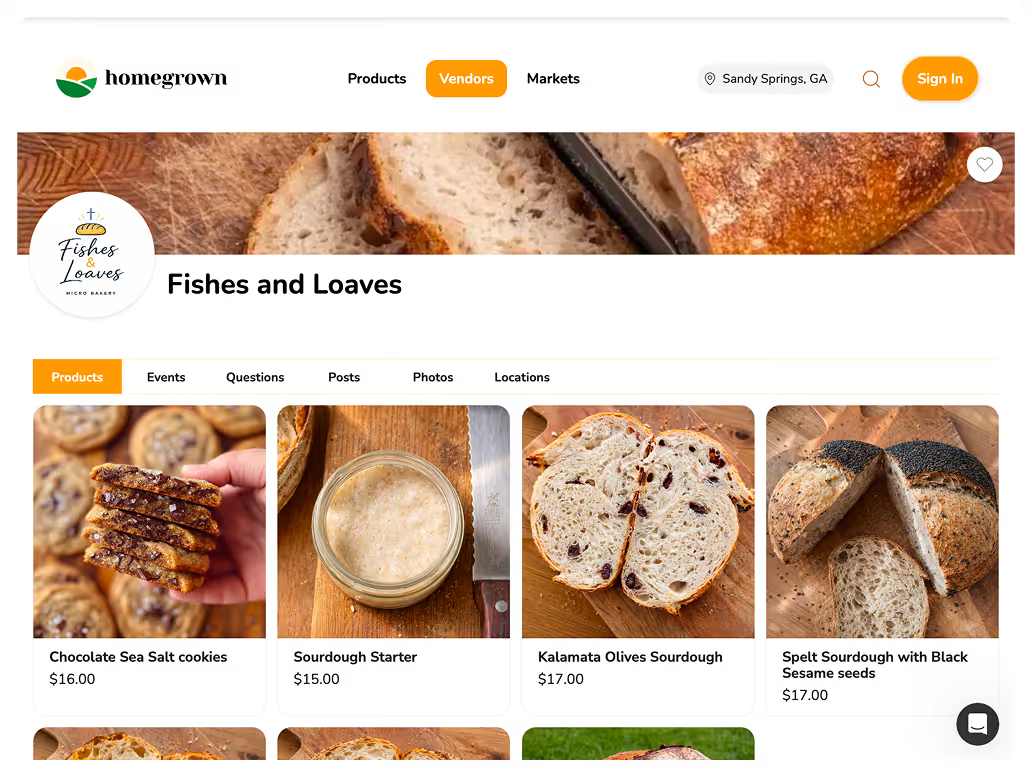
Homegrown is built for small local vendors who sell at farmers markets and want to take online orders. The key difference from Castiron is the pricing model — Homegrown charges a flat monthly fee with no transaction fee markups on customer orders.
Here is what you get:
The math comparison is clear. At $500/month in sales, Castiron costs about $50 in convenience fees alone. Homegrown costs $10 total. At $1,000/month in sales, Castiron costs $100. Homegrown still costs $10. The more you sell, the more you save with flat pricing.
Homegrown also does not inflate your prices at checkout. When a customer sees your lemon bars listed at $18, they pay $18. No surprise fees at the end.
If you are a food vendor looking to add online ordering to your existing market business, Homegrown handles the entire workflow — product listing, ordering, payment, and order summaries for pickup day.
Start your free trial at Homegrown
Google Forms costs nothing and works for vendors testing whether customers will pre-order. It is the simplest possible approach to online ordering.
Here is the typical setup:
What works:
What does not work:
Google Forms is better than Castiron if your only alternative is paying 10% on every sale. But it creates a different kind of overhead — the manual labor of tracking orders and chasing payments.
Square Online offers a free plan with standard payment processing fees (2.9% + 30 cents per transaction) and no platform convenience fee. If you already use Square for card payments at your market booth, the integration is seamless.
What Square Online includes:
Where it falls short:
Square Online works best for vendors already committed to the Square ecosystem. The processing fees are standard and transparent, which is a significant improvement over Castiron's layered fee structure.
| Feature | Castiron | Homegrown | Google Forms | Square Online |
|---|---|---|---|---|
| Monthly cost | $0 | $10/mo (annual) | Free | Free |
| Transaction fees | 10% + 2.9% + 30¢ | None | None | 2.9% + 30¢ |
| Cost on $500/mo sales | ~$65 | $10 | $0 | ~$17 |
| Customer storefront | Yes | Yes | No | Yes |
| Customers order independently | Yes | Yes | Partially | Yes |
| Customer sees your exact price | No (fees added) | Yes | Yes | Yes (fees built in) |
| Customer discovery | Castiron marketplace | Homegrown marketplace | None | None |
| Food-specific design | Yes | Yes | No | No |
| Setup time | 1-2 hours | 15 minutes | 15 minutes | 1-2 hours |
| Best for | Custom food artisans | Local market vendors | Testing demand | Square POS users |
The pricing comparison shows why percentage-based fees hurt small vendors. On $500 per month in sales, Castiron takes $65 in fees. Homegrown charges $10 flat. That $55 difference every month is real money for a vendor running a cottage food business.
If you have been selling to friends and family and are ready to expand to real customers with an online ordering page, the platform you choose has a direct impact on your margins. The right tool should make ordering easier for your customers, not more expensive. And if you are already taking pre-orders through texts or DMs, a proper ordering page formalizes that process without adding surprise fees.
If you were using Castiron and need to migrate, here is a step-by-step transition plan:
The Castiron shutdown is a reminder that the platform you build on matters. Tools like Bakesy and Butterbase solve specific parts of running a food business (invoicing, recipe costing), but for the ordering and selling piece, choose a platform with a sustainable business model and active development.
Checking your state's cottage food regulations is also worthwhile before committing to any platform — some states have specific rules about how you sell online, and knowing those rules helps you choose a tool that fits your legal requirements.
As of early 2026, Castiron appears to be shutting down. The website is returning 502 errors, SSL certificates have expired, and vendors in cottage food communities have reported service disruptions. If you are currently using Castiron, you should plan to migrate to a different platform as soon as possible.
On $500 per month in sales, Castiron's fees total approximately $65 (10% convenience + processing). Homegrown costs $10 per month flat with no transaction fee markup. On $1,000 per month in sales, Castiron costs about $130 while Homegrown remains at $10. Homegrown becomes significantly cheaper as your sales grow.
Yes. Castiron adds a 10% convenience fee plus payment processing fees (2.9% + $0.30) at checkout. The customer sees these added charges when they place their order. You cannot remove or hide the convenience fee. This means your products appear more expensive on Castiron than they would on a platform without additional surcharges.
Yes. You can set up a new storefront on Homegrown or another platform and redirect your customers to the new ordering link. However, you may need to rebuild your product listings and inform existing customers of the new ordering URL. If you have a custom domain through Castiron, check whether you can transfer it.
For farmers market vendors who already have customers and want a simple ordering page, Homegrown is the best Castiron alternative. It costs $10 per month with no transaction markups, takes 15 minutes to set up, and gives you your own ordering page where customers pay exactly the prices you set. It also includes marketplace discovery as a bonus.
Castiron is primarily an online platform and does not offer a traditional POS system for in-person market sales. If you need both online ordering and in-person payment processing, you would need a separate POS tool like Square Reader alongside your online ordering platform.
Castiron uses the convenience fee model instead of a monthly subscription to keep the platform free for vendors to join. The idea is that vendors only pay when they make sales. However, the 10% fee rate is significantly higher than most alternatives, and the cost is passed to the customer — which can reduce conversion rates and make your products appear overpriced compared to competitors.
Castiron's shutdown is a reminder that the tools you depend on need to be reliable, transparent, and built for the long term. Your customers should not have to deal with broken links, surprise fees, or disappearing storefronts.
Homegrown charges a flat $10/month, keeps your prices clean for customers, and is built specifically for small local food vendors. Set up your storefront in 15 minutes and give your customers a simple, reliable way to order from you.