

You know you need to stop taking orders through DMs. You've heard you need a website. Someone told you to get on Etsy. Your friend says Shopify is the way to go. And now you're so overwhelmed by the options that you're still replying to Instagram messages at 11 p.m. trying to keep track of who wants what.
Here's the thing most people won't tell you: you probably don't need a website. Not yet, anyway. What you need depends entirely on where your business is right now — how many orders you're handling, how many places you're selling, and how much time you have to manage tech.
This article breaks down your three real options — a simple order form, a marketplace or storefront platform, and a full website — and helps you figure out which one matches your current stage. No sales pitch. Just an honest look at what each option does, what it costs, and when it makes sense to upgrade.
The short version: Most food vendors don't need a website. If you're doing fewer than 15-20 orders per week, a simple order form (like Google Forms) handles it fine. Once you're juggling multiple sales channels or 20+ weekly orders, a storefront platform like Homegrown gives you payment processing, a product catalog, and a sharable link — without the complexity of a full website. You only need your own website when you're running a multi-channel brand with wholesale accounts, a content strategy, and multiple product lines. The biggest mistake vendors make is building more tech than their business needs right now.
Think of online ordering as a spectrum, not a single choice. There are three levels, and each one is designed for a different stage of business.
| Feature | Order Form | Storefront/Marketplace | Full Website |
|---|---|---|---|
| Cost | Free to $30/month | $10-$30/month | $30-$100+/month |
| Setup time | 30 minutes | 1-3 hours | 1-4 weeks |
| Payment processing | Manual (Venmo, Cash App) | Built-in | Built-in |
| Product catalog | No | Yes | Yes |
| Customer finds you | No — you share the link | Depends on platform | Yes (with SEO work) |
| Order tracking | Spreadsheet | Built-in | Built-in |
| Best for | Under 15 orders/week | 15-100 orders/week | 100+ orders/week or multi-channel brand |
The right answer isn't always the most advanced one. A Google Form that you actually use beats a Shopify store you never finish setting up.
A basic order form works surprisingly well for vendors just starting to take online orders. It's free, takes 30 minutes to set up, and does exactly one thing: lets customers tell you what they want.
The most common option is Google Forms. You create a form with your product list, let customers select what they want, enter their name and pickup details, and submit. You get an email notification and a Google Sheet with all the orders.
Other options include Jotform and Typeform, which look a bit more polished. Some vendors use a simple shared Google Doc or even a text message template.
Here's what a form can do:
Here's what a form can't do:
An order form is the right choice if you're in this stage:
The hidden benefit of starting with a form: you learn what your customers actually want before you invest in a platform. You'll see which products get ordered most, what pickup times work, and whether pre-orders actually increase your sales. That data makes every future decision easier.
Once you're past the order form stage — juggling more than 15-20 orders per week, selling in multiple places, or tired of chasing Venmo payments — it's time for a platform that handles the logistics.
These two terms get used interchangeably, but they work differently.
A marketplace is a shared platform where multiple vendors sell side by side. Think Etsy or a local food hub. Customers browse the marketplace and might discover you. You benefit from the platform's traffic, but you're competing with other vendors on the same page.
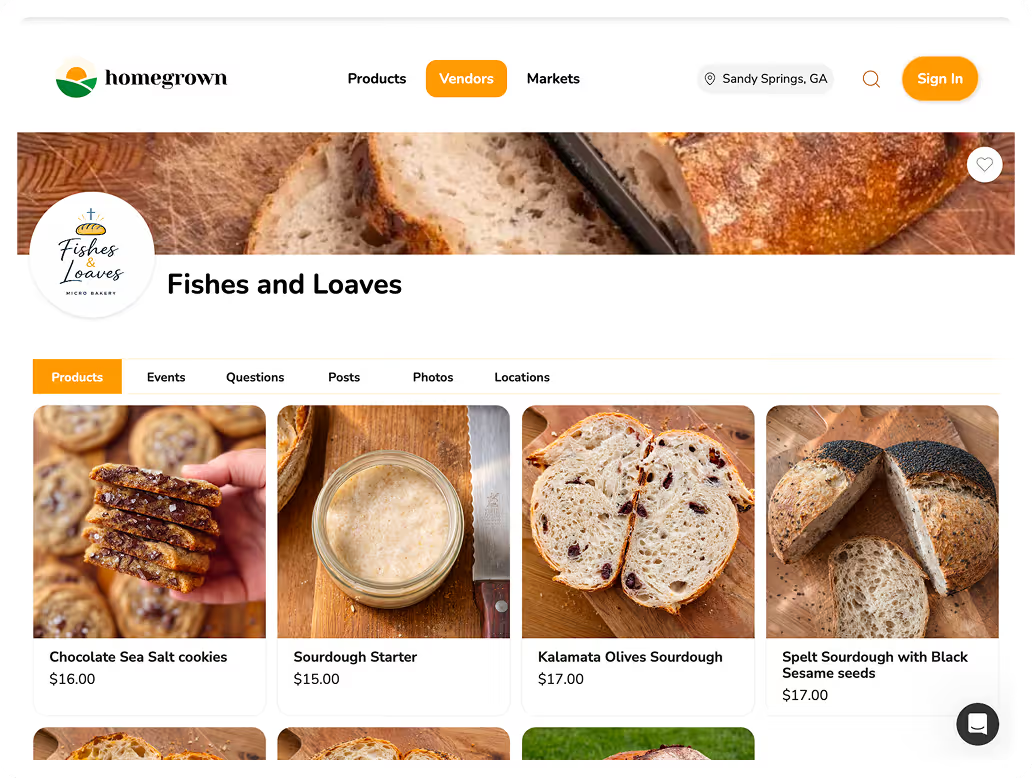
A storefront is your own branded page on a platform. Think of it like having your own section of the internet without building a whole website. Homegrown is $10/month with no percentage fees beyond standard payment processing and gives you a product catalog, built-in payment processing, and a single link you can share everywhere — your social bio, your market booth sign, your email signature. Compare that to Etsy, which charges listing fees plus 6.5% per transaction and puts your products next to competitors, or Shopify at $39/month with features built for large online retailers you will never use. Homegrown does not drive traffic to your page or help you find new customers — it gives you the storefront where the customers you already have can browse, order, and pay without you managing a text thread. At checkout, customers pick pickup or local delivery.
| Marketplace | Storefront | |
|---|---|---|
| Customers find you | Yes — platform has traffic | Mostly no — you drive traffic |
| Branding | Limited — platform's look | Your products, your page |
| Competition | Side-by-side with other vendors | Just your products |
| Fees | Transaction fees + listing fees | Monthly subscription or lower transaction fee |
| Control | Limited | More control over layout and products |
For most small food vendors, a storefront is the better fit. You already have customers from the farmers market, social media, or word of mouth. You don't need a platform to find customers — you need a platform to take their money and organize their orders.
You're ready for a storefront platform when:
If you're already taking pre-orders at the market, setting up a proper pre-order page on a storefront platform turns those casual requests into organized, paid orders.
The sweet spot for most vendors is right here. A storefront gives you 90% of what a website does — product photos, payment processing, order management, a sharable link — at a fraction of the cost and complexity. You don't need to learn web design, manage hosting, or worry about security certificates.
A full website gives you complete control over your online presence. You can build custom pages, write blog content, optimize for search engines, and design the experience from scratch. But that control comes with responsibility.
But a website also requires:
A full website makes sense when you're running a multi-channel brand, not just a weekly market business. You need a website if:
According to Wix's small business research, 27% of small businesses still don't have a website — and many of them are thriving using simpler alternatives. Having no website is not the same as having no online presence. A storefront link in your Instagram bio does 80% of what a website does for most food vendors.
If you're wondering whether you even need a separate website when you already sell at markets, the answer for most vendors is no. You can sell food without Shopify or a traditional website and still run a professional, profitable operation.
Here's what you'll realistically spend at each level, including the costs people don't mention.
| Order Form | Storefront | Full Website | |
|---|---|---|---|
| Monthly fee | $0 (Google Forms) | $10-$30/month | $30-$100+/month |
| Payment processing | 0% (manual collection) | 2.9% + $0.30 per transaction | 2.9% + $0.30 per transaction |
| Setup cost | $0 | $0-$50 | $200-$2,000+ (design + setup) |
| Time to set up | 30 minutes | 1-3 hours | 10-40 hours |
| Ongoing time | 15 min/week updating form | 30 min/week managing orders | 2-5 hours/week maintaining site |
| Hidden costs | Your time chasing payments | None significant | Hosting, domain, plugins, updates |
The biggest hidden cost at every level is your time. A free Google Form that takes you 2 hours per week to manage manually costs more than a $12/month storefront that automates everything — if your time is worth more than $6/hour.
Most food vendors selling at farmers markets and taking online orders spend between $10 and $30 per month on a storefront platform. According to the Site Builder Report's small business research, even businesses that do build websites spend an average of $200-$500 on initial setup alone — before monthly costs begin.
The best time to upgrade is when your current system starts costing you orders or sanity. Here are the specific signs for each transition.
The danger of upgrading too early is real. Vendors who jump straight to Shopify often spend weeks building a store, pay $39/month plus payment processing on top, and then get 3 orders because they don't have the traffic or SEO knowledge to drive visitors. That same vendor with a $12/month storefront and a QR code at their booth would have been taking orders on day one.
The number one mistake isn't picking the wrong platform. It's overthinking the decision and doing nothing.
Every week you spend stuck in DMs and cash-only sales is a week of orders you're missing from customers who wanted to buy between markets. The vendor who sets up a Google Form today and upgrades to a storefront next month is miles ahead of the vendor who spends three months researching Shopify vs. WordPress vs. Squarespace and never launches anything.
Here are the three biggest mistakes, ranked:
If you're ready to stop losing orders in your DMs, set up your ordering page today — it takes less than 15 minutes and gives you a professional online presence by this afternoon.
Yes, and many vendors do. Google Forms is free, takes about 30 minutes to set up, and automatically organizes responses in a Google Sheet. The main limitation is that it doesn't process payments — you'll need to collect through Venmo, Cash App, or cash at pickup. It works well for vendors doing fewer than 15-20 orders per week who already have an established customer base.
No. Most small food vendors don't need a traditional website. A storefront platform gives you a product catalog, payment processing, and a sharable link — without the cost and maintenance of a full website. You only need a website if you're building a multi-channel brand with wholesale accounts, content marketing, and advanced SEO needs.
The cheapest option is a free Google Form paired with Venmo or Cash App for payments. The cheapest option with built-in payment processing is a storefront platform, typically $10-$30 per month. Both are significantly cheaper than a full website, which costs $30-$100+ per month plus setup fees.
Etsy works if you sell shelf-stable products (cookies, jam, spice blends) and want access to Etsy's built-in traffic. But Etsy charges listing fees plus a 6.5% transaction fee, and you compete with thousands of other sellers. A dedicated storefront gives you more branding control, lower fees, and a direct relationship with your customers. Most local food vendors do better with a storefront they share at markets.
At the order form level, vendors typically use Venmo, Cash App, Zelle, or cash at pickup. Storefront platforms and websites include built-in payment processing through Stripe or Square, typically charging 2.9% + $0.30 per transaction. Built-in processing is worth the fee because it eliminates payment chasing and gives customers a professional checkout experience.
Switch when the form starts costing you orders or too much time. Specific triggers: you're spending more than 30 minutes daily managing orders, customers want to pay online, you're selling across multiple channels, or you need a proper pre-order system for market day. Most vendors hit this point at around 15-20 orders per week.
For most food vendors selling locally, it's not worth it yet. Website builders cost $16-$45/month for the base plan, plus you'll spend 10-40 hours building the site. That time and money is better spent on products, packaging, and market fees until your business consistently generates $50,000+ in annual revenue. A storefront platform handles online ordering for a fraction of the cost and effort.
The best online ordering system is the one that matches your business today — not the business you hope to have in two years. Start where you are. A Google Form is a real system. A storefront is a real business tool. A website is a real investment.
Most food vendors land in the middle: a storefront platform that handles payments, shows off their products, and gives customers a clean link to order from. It's enough tech to be professional without so much tech that you're spending more time on your website than on your baking.
If you're still taking orders through DMs, the single best thing you can do today is pick one of these three options and set it up before your next market day. The jump from "no system" to "any system" is the biggest leap. Everything after that is just upgrading.
Set up your ordering page — it takes 15 minutes and your customers will thank you.