

You've been told to build your own online store. Get a Shopify site, design it yourself, figure out SEO, run ads, and eventually — maybe — customers will find you. But you're a part-time food vendor, not a digital marketer. And after six months with a beautiful store that nobody visits, the advice starts to feel hollow.
There's another path: selling through a marketplace that already has customers looking for products like yours. Instead of building an audience from scratch, you plug into one that exists. It's the difference between opening a stand in a busy food hall and opening a shop on a quiet side street hoping people walk by.
This article breaks down the real differences between marketplaces and DIY stores for small food vendors — and why built-in customers almost always beat building alone when you're starting out.
The short version: A marketplace gives you access to customers who are already searching for local food products. A DIY store gives you full control but zero built-in traffic — meaning you need to drive every single visitor yourself through social media, SEO, or paid ads. For most part-time food vendors, a marketplace is the faster, cheaper, and more realistic way to start selling online. The average cost to acquire a new ecommerce customer is $53, but marketplace sellers cut that roughly in half because the platform brings buyers to them. You can always add a standalone store later once you have steady online revenue.
A marketplace is a platform where multiple vendors sell in one place, and customers come to the platform to browse and buy. Think of it like a farmers market — you set up your booth, but the market organizer brings the foot traffic. A DIY store is a standalone website you build yourself using tools like Shopify, Wix, or Square Online. You control everything, but you're also responsible for everything — including getting people to show up.
Here's how they compare on the things that matter most to food vendors:
| Factor | Marketplace | DIY Store |
|---|---|---|
| Built-in customers | Yes — customers browse the platform | No — you drive all traffic yourself |
| Setup time | 1-2 hours | 1-2 weeks (realistically) |
| Monthly cost | $0-$15/month | $29-$79/month + apps/plugins |
| Marketing required | Minimal — platform does discovery | Significant — SEO, social, ads |
| Brand control | Limited — your page lives on their site | Full — custom domain, design, branding |
| Customer data | Varies by platform | Full ownership |
| Technical skills needed | Low — similar to social media | Medium to high — design, hosting, DNS |
The core tradeoff is simple: marketplaces trade some control for built-in discovery. DIY stores trade built-in discovery for full control. For a part-time vendor who bakes on weekends and sells at one market, the question isn't which is "better" — it's which actually gets you online sales this month.
Most food vendors who try building their own online store hit the same wall: nobody visits. The store looks great, the products are listed, the checkout works — but traffic is zero. That's not a failure of the vendor. It's a fundamental problem with standalone stores that nobody explains upfront.
Here's why DIY stores are so hard for small vendors:
The result? According to SellerCraft's ecommerce research, driving visitors to your own website requires robust marketing efforts, SEO optimization, and possibly paid advertising — resources most part-time food vendors simply don't have. The advice to "just build a Shopify store" ignores the reality of who you are and how much time you have.
A marketplace gives you the one thing a DIY store can't: customers who are already looking for what you sell. You don't have to convince people to visit your site. They're already browsing the platform, searching for local food, and ready to order.
Here's what that looks like in practice:
Think about your own farmers market experience. You didn't build the market. You didn't advertise it. You didn't handle parking or permits or signage. You showed up with great products, and the market brought you customers. An online marketplace works the same way — it's the digital version of the market organizer doing the heavy lifting so you can focus on what you do best.
Marketplaces aren't perfect. Being honest about the tradeoffs helps you make a smarter decision. Here are the real downsides:
These are real concerns — but context matters. A DIY store with zero visitors generates zero revenue regardless of how much brand control you have. A marketplace with some limitations but actual customers generates real sales. For most part-time vendors, the best "brand building" is having customers who know and love your products, and a marketplace gets you there faster.
This is the question nobody answers honestly when they tell you to build a Shopify store. According to MobiLoud's 2026 ecommerce benchmarks, the average customer acquisition cost for food and beverage ecommerce is $53 per new customer. That means for every new person who places their first order, you've spent $53 in marketing, ads, content, and tools to get them there.
Let's break down what that looks like for a typical food vendor:
| Monthly Expense | DIY Store | Marketplace |
|---|---|---|
| Platform/hosting | $29-$79 | $0-$15 |
| Domain name | $12-$20/year | Included |
| Facebook/Instagram ads | $200-$500 | $0 |
| Email marketing tool | $15-$30 | Usually included |
| SEO tools/plugins | $10-$50 | $0 |
| Design/theme | $0-$200 (one-time) | $0 |
| Total monthly cost | $270-$680+ | $0-$15 |
If you're a vendor doing $1,500 per month in market sales and hoping to add $500 in online revenue, spending $300-$500 per month on ads and tools to drive traffic to a DIY store doesn't make financial sense. Your marketing budget would eat most of your online profit. A marketplace with a $10-$15 monthly fee and zero ad spend leaves that profit in your pocket.
The math gets worse when you factor in time. Every hour you spend on SEO, writing blog posts, managing ad campaigns, and tweaking your website is an hour you're not baking, packaging, or selling at markets. For a vendor working evenings and weekends, time is the scarcest resource. A marketplace protects it.
A DIY store is the right move when specific conditions exist in your business. It's not bad advice — it's advice that applies at the wrong stage for most vendors. A standalone store makes sense when:
For vendors who've already figured out how to take online orders alongside their market sales, upgrading to a standalone store is a natural next step — once the volume supports it. The key word is "once." Starting there is almost always premature.
Yes — and many successful food vendors do exactly this. The smartest approach is to start on a marketplace, build your customer base, and add a standalone store later when the numbers make sense. Here's what that looks like:
This approach eliminates the biggest risk of DIY stores — investing months of time and hundreds of dollars before making a single online sale. With a marketplace, you validate that online ordering works for your business before committing to the cost and complexity of building alone.
Vendors who've already moved their business off Instagram DMs are perfectly positioned for this phased approach. The marketplace becomes your permanent ordering system, not a temporary step.
Not all marketplaces are created equal. The wrong one can be worse than no marketplace at all. Here's what to look for:
The right marketplace feels like an extension of your farmers market booth, not a completely new business. You list your products, set your availability, and customers find you. Everything else — payments, hosting, mobile experience, security — is handled for you.
No. Customers care about your products, not your website design. A well-made loaf of sourdough photographed in natural light on a marketplace listing is more compelling than a poorly designed standalone website. Professional-looking products on a clean marketplace page build more trust than a DIY store that looks unfinished — which is what happens when vendors rush to launch their own site without design experience.
Compare the marketplace fee to what you'd actually spend driving traffic to a DIY store. A marketplace charging $10-$15 per month is almost always cheaper than the $270-$680 per month you'd spend on hosting, ads, and tools to run your own store. If a marketplace charges high per-transaction commissions (15%+), that's worth scrutinizing — but flat monthly fees under $15 are a bargain compared to DIY marketing costs.
Yes — if you choose a marketplace that gives you access to customer data. Build your email list from day one. When you're ready for a standalone store, you'll have a list of people who already buy from you. That list is the difference between launching a DIY store to an audience of zero and launching to hundreds of existing customers.
Some areas don't have strong local food marketplaces yet. In that case, a simple storefront platform (not a full DIY website) is your best option. Look for platforms designed specifically for food vendors that give you a shareable ordering page without requiring you to build and market a full website. The setup should take hours, not weeks.
Industry data shows marketplace sellers typically pay significantly less per new customer because the platform handles discovery and marketing. While standalone stores average $53 per new food and beverage customer, marketplace vendors benefit from shared marketing costs and organic platform traffic. The exact savings depend on your specific marketplace, but the direction is clear: building alone is more expensive than joining an established platform.
Not necessarily. If you already have a DIY store with some traffic, keep it running and add a marketplace as a second channel. But if your DIY store gets fewer than 50 visitors per month and hasn't generated sales, it's costing you time and money for nothing. Redirect that energy to a marketplace where customers already exist, and revisit the standalone store when your online sales justify the investment.
Most vendors on active food marketplaces see their first order within the first 1-2 weeks. Compare that to DIY stores, where it can take 3-6 months to generate consistent organic traffic. The timeline depends on the marketplace's existing customer base and how well your products are listed, but the ramp-up is dramatically faster than building alone.
The vendors who struggle most with online sales are the ones trying to do everything themselves — build the store, design the pages, run the ads, write the blog posts, optimize for SEO, and somehow still have time to bake. That's not a business plan. That's a burnout plan.
The vendors who thrive online are the ones who plug into existing platforms with built-in customers, just like they plug into existing farmers markets with built-in foot traffic. The strategy is the same: show up where the customers already are, bring great products, and let the platform do the marketing.
You don't need a custom website to sell food online. You need customers who can find you and a simple way for them to order. A marketplace gives you both.
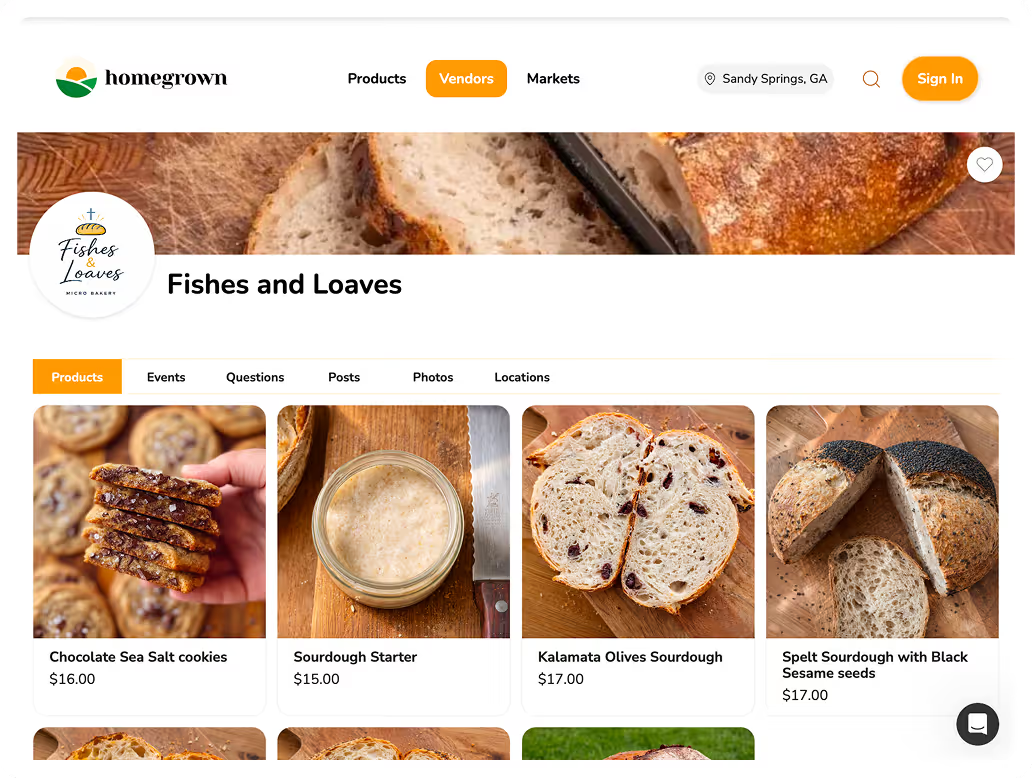
Try Homegrown's marketplace storefront — list your products, share your link, and start getting orders from customers who are already searching for local food in your area.