

The best Square Online alternative for most local food vendors is Homegrown, a simple online storefront built for pickup-based selling at $10 per month. Square Online works well for in-person card processing at the booth, but its online store was not designed for how local food vendors actually sell: pre-orders, scheduled pickups, and one shareable link customers can use between market days.
The short version: Square Online's free plan charges 3.3% + 30 cents per online transaction, shows Square ads on your site, and does not include pickup scheduling or pre-order workflows. If you sell at farmers markets, a farm stand, or from your porch, you need something simpler and more affordable than Square's $49 per month Plus plan. Homegrown costs $10 per month, sets up in about 15 minutes, and gives you one link where customers can browse your products, place orders, and pay ahead for pickup. Other alternatives include Locally Grown (free app, 2.7% + 5 cents per card tap, good for in-person POS), Local Line ($99 per month, best for farms with CSA and wholesale needs), and Barn2Door ($99 to $299 per month, full farm sales platform). For most part-time vendors who sell locally, Homegrown is the simplest and most affordable option.
Square Online is Square's built-in website and online store feature. If you already use Square for card payments at your farmers market booth, you can turn on Square Online to create a basic storefront where customers can browse products and place orders.
On the free plan, you get:
Most local food vendors discover Square Online after they already use the Square card reader at their booth. It feels like the logical next step: "I already use Square, so I will just use their online store too." That works until you realize the free online store was designed for general retail, not for a jam maker who needs customers to pre-order six jars of strawberry preserves for Saturday pickup. If you have already compared Square Online vs Shopify for food sellers, you know both platforms were built for a different kind of business.
The most common reason is that Square Online's free plan is limited in ways that matter specifically to local food vendors. The platform is powerful for restaurants and retail stores, but it was not built for the vendor who sells sourdough at the Saturday market and wants a simple way to take orders during the week.
Here are the specific pain points:
None of this means Square is a bad product. It is excellent for in-person card processing, and thousands of vendors use the Square reader at their booth every weekend. The issue is that Square Online, the website builder, was not designed for the specific way local food vendors sell online.
Before comparing platforms, decide what you actually need. Most local food vendors need exactly five things from an online ordering tool:
If a platform checks all five boxes, it is worth trying. If it checks three but costs $99 per month, it is probably built for someone bigger than you.
Six alternatives stand out, and each one fits a different type of vendor. Here is what they cost, what they do well, and who they are actually built for.
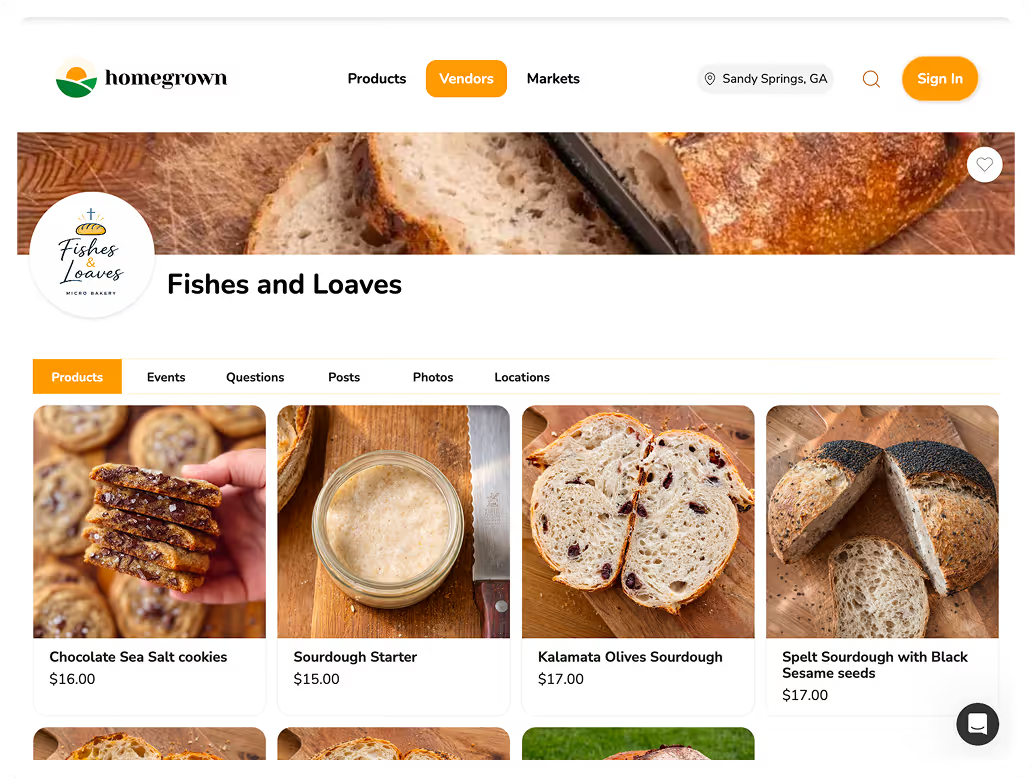
Homegrown is an online storefront built specifically for local vendors who sell for pickup or local delivery. You add your products, set prices, choose pickup times and locations, and share one link. Customers browse, order, and pay from their phone without downloading an app.
Here is what you get:
If you sell at two farmers markets and want customers to pre-order during the week, Homegrown handles that. You share your link on Monday, customers order by Thursday, and you show up Saturday with exactly what was ordered. No guessing, no overproducing, no chasing messages.
Homegrown also lists your storefront in a local vendor marketplace as a bonus discovery channel. You will not build a business on marketplace traffic alone, but it helps new customers find you.
Pros:
Cons:
Best for: Home bakers, cottage food producers, jam makers, farmers market vendors, and anyone who sells locally for pickup and wants the simplest possible ordering system.
Once you know what you sell and where customers pick up, the rest is just sharing a link. Homegrown gives you that link for $10 a month, and most vendors are set up before their next batch of cookies comes out of the oven.
Locally Grown is a mobile POS app that turns your iPhone into a card reader and syncs your in-person sales with an online storefront. There is no monthly fee. You pay 2.7% + 5 cents per card transaction. Cash sales are free.
Here is what you get:
Pros:
Cons:
Best for: Vendors who want to replace their Square card reader entirely and have everything in one app. Strong choice if you do most of your sales in person and want a basic online page as a bonus.
Local Line is a sales platform built for farms that sell through multiple channels: online store, CSA subscriptions, wholesale to restaurants, and farmers market pre-orders. It is significantly more powerful than what most part-time vendors need.
Key details:
Pros:
Cons:
Best for: Working farms that sell through CSA, wholesale, and direct-to-consumer channels and need one platform to manage all three.
Barn2Door is a full-service platform for farms that want a branded online store, delivery logistics, and customer management. It includes a concierge onboarding team that helps you set up.
Key details:
Pros:
Cons:
Best for: Established farms doing $50,000 or more in annual sales that want a full e-commerce and delivery platform with hands-on support.
Shopify is the largest e-commerce platform in the world. It can do almost anything, but that flexibility comes with complexity. You can sell food on Shopify, but you will spend time configuring shipping rules, installing pickup apps, and customizing themes.
Key details:
Pros:
Cons:
Best for: Vendors who want a full-featured website with a blog, email marketing, and the ability to sell nationally. Not the best fit for a vendor who just needs a pre-order link for Saturday's market.
Castiron was a storefront platform designed for home bakers and food creators who take custom orders. It is free to create an account, but Castiron took a 10% fee on every transaction.
Key details:
Pros:
Cons:
Best for: Bakers who primarily take custom orders (birthday cakes, event cookies) and want a free platform to get started. Less ideal for vendors selling standard products at a farmers market.
Price matters when you are a part-time vendor. Here is how Square Online stacks up against every alternative:
| Platform | Monthly Cost | Transaction Fee | Setup Fee | Best For |
|---|---|---|---|---|
| Square Online (Free) | $0 | 3.3% + 30¢ | $0 | Vendors already using Square in person |
| Square Online (Plus) | $49/mo | 2.9% + 30¢ | $0 | Vendors needing custom domain and features |
| Homegrown | $10/mo | 2.9% + 30¢ | $0 | Local vendors who sell for pickup or local delivery |
| Locally Grown | $0 | 2.7% + 5¢ | $0 | Vendors wanting POS + online in one app |
| Castiron | $0 | 10% | $0 | Custom order bakers |
| Local Line | $99/mo | 2.9% + 30¢ | $0 | Farms with CSA and wholesale |
| Barn2Door | $99-$299/mo | Varies | $399-$599 | Full-service farm operations |
| Shopify | $39/mo | 2.9% + 30¢ | $0 | Maximum customization |
For a vendor processing $1,000 per month in online orders, here is what you would pay in fees alone:
At $1,000 per month in sales, Locally Grown is cheapest, Homegrown is $39 total, and Square Online free is $33 but lacks pickup scheduling and shows ads on your site. At $2,000 per month, Castiron's 10% fee reaches $200, while Homegrown stays at $68 total.
The right choice depends on how you sell. Here is a quick decision framework:
For most local food vendors reading this article — the home baker selling cookies at the Saturday market, the jam maker with a farm stand, the cottage food producer taking orders through Instagram DMs — the answer is Homegrown. Our full comparison of the best e-commerce platforms for farmers market vendors covers even more options if you want a broader look. You do not need a $99 per month farm platform or a custom Shopify store. You need one link where customers can see your products, order, pay, and pick up.
As noted by Local Food Economics, the technology you choose should match the scale and style of your operation. For most part-time local vendors, that means something simple, affordable, and built for pickup.
You can keep using Square at your booth for card payments. That part works great. But for online orders and pre-orders between market days, a Homegrown storefront gives your customers one clean link to order from, and you wake up to a list of exactly what to make instead of a pile of DMs to sort through.
Yes. Square's card reader works independently from Square Online. You can use Square for in-person card payments at your farmers market booth and use a completely different platform like Homegrown for online pre-orders. The two do not need to be connected. Most vendors keep Square at the booth for walk-up customers and use their online storefront for weekly pre-orders.
Square Online has a free tier, but it comes with tradeoffs. The free plan charges 3.3% + 30 cents per online transaction (higher than most alternatives), displays Square ads on your site, does not allow a custom domain, and provides limited customization. You can technically sell for free, but the experience is not ideal for a professional food vendor storefront.
Locally Grown is the cheapest option with no monthly fee and 2.7% + 5 cents per transaction. Homegrown is the cheapest monthly subscription option at $10 per month with 2.9% + 30 cents per transaction. For vendors doing more than about $500 per month in online orders, the monthly subscription model at Homegrown often costs less total than percentage-heavy models like Castiron's 10% fee.
No. Platforms like Homegrown and Locally Grown give you an ordering page without building a full website. You get a shareable link that works like a website for your customers, showing your products, prices, and pickup options. You do not need to buy a domain name, hire a web designer, or learn website building. Your ordering link is ready in minutes.
Yes. Many vendors use Homegrown for online pre-orders and Square for in-person card payments at the booth. Homegrown handles the online side (customers browse, order, and pay through your link) while Square handles the in-person side (walk-up customers tap or swipe at your booth). You manage inventory manually, but most small vendors find this straightforward since they know what they made and what sold.
Pre-orders let customers order and pay before market day. You share your ordering link during the week. Customers pick what they want, choose pickup or local delivery (like Saturday 9 AM to noon at the downtown farmers market), and pay online. You see all orders in your dashboard, make exactly what was ordered, and have everything packaged and labeled when customers arrive. No guessing how much to bring, no unsold product at the end of the day.
The simplest approach is a platform with built-in payment processing, like Homegrown (2.9% + 30 cents) or Locally Grown (2.7% + 5 cents). These handle the payment infrastructure so you do not need to set up a separate Stripe or PayPal account. Avoid platforms that only support one payment processor, since that limits your options if fees change or you have issues with your account.