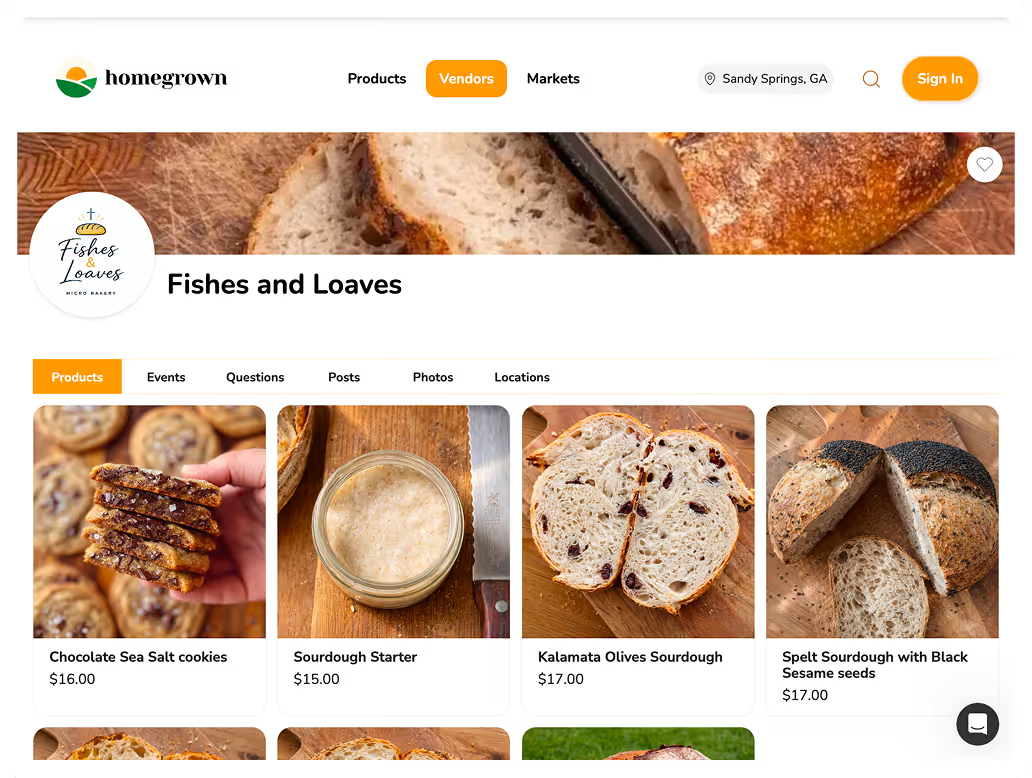


The most efficient way to use Instagram Stories for food orders is to post your menu in a Story with a direct link to your ordering page, not a call to "DM me." When you use Stories to drive customers to an ordering link instead of your inbox, you get the marketing power of Stories (visibility, urgency, personal touch) without the operational burden of managing dozens of DM conversations. Smaller accounts post an average of 13 Stories per month and still see strong reach rates, according to Rival IQ's 2024 Instagram benchmark. The goal is to make Stories your top-of-funnel tool that drives traffic to a system that handles ordering automatically. Instagram still delivers roughly triple the organic reach of Facebook, according to Socialinsider's 2025 cross-platform study — and Stories are one of the formats that keeps that gap open..
The short version: Post a Story sequence every ordering day: slide 1 is a product photo that stops the scroll, slide 2 is your menu with prices, slide 3 is a link sticker to your ordering page with "tap to order." This three-slide formula generates orders without a single DM. If customers still DM you, redirect them to the link: "You can see everything and order here — way easier than going back and forth." An ordering platform like Homegrown ($10 per month) gives you the link that makes this work. Without a link, Stories just drive more DMs. With a link, Stories drive orders directly. The vendors who master this formula report 50 to 70 percent of their weekly orders coming from Story posts.
Instagram Stories and feed posts serve different purposes for food vendors. Feed posts build your brand over time — they sit on your grid permanently and attract new followers. Stories create urgency and drive immediate action because they disappear in 24 hours.
Here is why Stories are the better ordering tool:
The combination of urgency, link capability, and top-of-app visibility makes Stories the single most effective Instagram feature for driving food orders.
The most effective Story sequence for taking orders uses three slides posted in order:
Your first slide needs to make someone stop tapping through Stories and pay attention. This means a mouth-watering, full-screen photo of your best product. No text overlay needed on this slide — let the food speak.
Best approaches for Slide 1:
The goal is purely visual. You have about 1.5 seconds before the viewer taps to the next Story. A beautiful food photo earns you those seconds.
Your second slide is the menu. List every product available this week with its price. Use text overlay on a simple background (a photo of your products slightly dimmed, or a solid color background).
Format for readability:
```
This week's menu:
Sourdough loaves — $8
Chocolate chip cookies (dz) — $18
Strawberry jam (8 oz) — $10
Cinnamon rolls — $4 ea
Orders close Wed 9 PM
Pickup: Sat 9-12 at Riverside Market
```
Keep the text large enough to read on a phone screen. Use line breaks between items. Include the ordering deadline and pickup details right on this slide so customers have everything they need.
Your third slide is the call to action. Add a link sticker pointing to your ordering page with text like "Tap to order" or "Order here." This is the slide that turns a viewer into a buyer.
Best practices for the link slide:
This three-slide sequence takes about 5 minutes to create and post. It reaches every follower who opens Instagram that day. And every order it generates requires zero DM conversation from you.
Some customers will DM you even when you post a link. This is normal — it is a habit that takes time to break. Here is how to redirect efficiently:
Customer: "Hey, can I order sourdough for Saturday?"
Your response: "Hey! Absolutely — you can see everything and order right here: [your link]. It takes about 2 minutes and you can pay right there. Way easier than going back and forth in DMs!"
This response is friendly, helpful, and redirects without being dismissive. After 2 to 3 weeks of consistent redirection, most customers shift to using the link on their own.
If you want a deeper framework for transitioning customers from DMs to an ordering system, our full guide on DM orders vs online storefronts covers the complete playbook. And if the issue is specifically around pricing questions, our guide on how to set prices in DMs covers how to post prices publicly so customers stop asking.
The three-slide menu formula drives orders. But Stories throughout the week build the desire that makes customers order when Monday comes. Here is a weekly Story content plan:
Post the three-slide formula. This is your primary ordering Story. Pin it to your highlights so customers can find it all week.
Show your prep or ingredient shopping. "Just picked up 20 pounds of strawberries for this week's jam" or "Sourdough starter is looking happy today." This content builds anticipation and shows the care that goes into your products.
Post a Story with a countdown sticker: "Orders close tonight at 9 PM." Add your link sticker. This catches customers who saw Monday's Story but did not order yet. Wednesday reminders typically generate 20 to 30 percent of the week's total orders.
Show your kitchen in action. Bread rising, cookies on baking sheets, jars being filled. This content does not directly drive orders for this week (ordering is closed) but builds desire for next week. Customers who watch you bake are primed to order the moment your next menu drops.
Post a Story of your booth setup, happy customers picking up orders, and your display at the market. Tag customers who are comfortable being featured. This social proof shows potential customers that real people order from you regularly.
Take the day off from Stories. Or post a single slide: "What should I make next week? Vote below." Use a poll sticker with two product options. This engages followers and gives you market research at the same time.
Instagram Highlights are permanent Story collections that appear on your profile below your bio. Create a highlight called "Menu" or "Order" and add your menu Story to it every week. This means:
Update your highlight every week by adding the new menu Story and removing the outdated one. This takes 30 seconds and keeps your ordering information current.
For tips on what else to put in your Instagram profile to convert visitors, our guide on what to write in your Instagram bio covers the full optimization strategy.
Instagram offers several interactive features that food vendors should use strategically:
The link sticker is the most important feature for ordering. It takes customers directly to your ordering page with one tap. Use it on every menu Story and every "last chance" reminder.
Add a countdown timer to your ordering deadline: "Orders close in 18 hours." The countdown creates visual urgency. Followers can also set a reminder from the countdown sticker, which sends them a notification when time is almost up.
"Which flavor next week: peanut butter or snickerdoodle?" Polls engage followers and make them feel invested in your product decisions. The results also give you genuine demand data for product planning.
"What products do you want to see this spring?" Customer answers become your product development roadmap and your content calendar. Post the answers as future Stories with your response.
When you feature a customer picking up their order or enjoying your product, mention them with a sticker. They get notified, often repost to their own Story, and you reach their followers for free.
Quality matters more than quantity, but here are guidelines:
This is enough to stay visible in your followers' Story bar without overwhelming them. The key is consistency — posting Stories every week trains the algorithm to show your content and trains customers to expect your menu.
If you want a complete Instagram strategy beyond just Stories, our guide to Instagram tips for farmers market vendors covers feed posts, reels, and profile optimization alongside Stories. And for a comparison of how Instagram fits with other platforms, see our guide on Instagram vs Facebook vs your own website.
Instagram link stickers are available to all accounts (business, creator, and personal) regardless of follower count. You do not need a business account or 10,000 followers. Anyone can add a link sticker to their Story.
Vendors who consistently post the three-slide formula report that 50 to 70 percent of their weekly orders come from Story posts. The exact number depends on your follower count, engagement rate, and how compelling your product photos are. Even vendors with 300 followers can generate 5 to 10 orders per Story if the content and link are strong.
Both. Post a feed post with your full menu for permanent visibility on your grid. Post a Story with the same menu plus a link sticker for immediate urgency and easy ordering. The feed post catches followers who browse your grid. The Story catches followers who open Instagram and tap through Stories.
Without an ordering link, your menu Story will say "DM to order," which defeats the purpose of reducing DM conversations. Set up a Homegrown storefront first (takes 15 minutes), then use that link in your Stories. The link is what makes the three-slide formula work without generating DMs.
Check your Story insights: how many people viewed each slide, how many tapped the link sticker, and how many orders came in on the days you posted Stories vs. days you did not. If your link sticker gets 20 taps and you get 8 orders, your Story-to-order conversion rate is 40 percent, which is excellent.
Yes. Instagram's built-in scheduling lets you create and schedule Stories up to 75 days in advance. Third-party tools like Later and Planoly also support Story scheduling. Schedule your Monday menu Story on Sunday evening so it posts automatically while you sleep.
Reels are better for reaching NEW followers (they appear on the Explore page). Stories are better for reaching EXISTING followers and driving immediate orders. Use Reels for brand building and customer acquisition. Use Stories for weekly ordering. They serve different purposes and work best together.