

If people keep telling you that you should sell your bread, cookies, or cinnamon rolls, they might be onto something. Starting a baking business from home is one of the most accessible ways to turn a skill you already have into real income. In most states, cottage food laws let you sell baked goods directly to customers from your home kitchen — no commercial kitchen rental, no restaurant license, no health department inspection.
But there's a difference between baking for friends and baking for customers. Once you're selling, you need to know what your state allows, how to label your products correctly, how to price so you actually make money, and how to find your first paying customers without spending months building infrastructure you don't need yet.
This guide walks through the full process from confirming your legal requirements through making your first sales. It's written specifically for home bakers who want to start small, sell locally, and build something real without overcomplicating the early stages.
The short version: You can start a baking business from home under cottage food laws in most states with no commercial kitchen, no permits, and under $300 in startup costs. Pick 2-4 products you bake well, get your labels right, price to actually cover your costs and time, and sell through farmers markets, pre-orders, or word of mouth. Most home bakers can go from idea to first sale in a single week.
Before you bake a single product for sale, look up your state's cottage food law. This is the law that allows home-based food producers to sell certain products directly to consumers without meeting commercial kitchen requirements. Every state has some version of this law, but the specifics vary significantly.
For a home baking business, there are four questions you need to answer about your state's rules.
What baked goods are permitted? Most states allow shelf-stable baked goods — bread, cookies, muffins, brownies, cakes, quick breads, granola, biscotti, and similar products. The key distinction is shelf-stable versus potentially hazardous. Products that require refrigeration to stay safe generally don't qualify under cottage food laws.
Products typically permitted in most states:
Products often restricted or excluded:
The distinction comes down to whether the finished product supports bacterial growth at room temperature. Shelf-stable baked goods don't. Products with dairy-based fillings or frostings that aren't fully cooked can. If you're unsure whether a specific product qualifies, check your state's permitted foods list before you start selling it.
What's your state's revenue cap? Some states limit how much you can earn annually under the cottage food exemption. Common caps range from $25,000 to $75,000 per year, though some states have no cap at all. Know your number so you're not caught off guard if your business grows faster than expected.
Which sales channels are allowed? Some states only permit direct-to-consumer sales — farmers markets, roadside stands, and home pickup. Others allow online ordering with local pickup. A smaller number permit shipping within the state. Your state's approved sales channels determine how you can reach customers, so this directly shapes your business model. The home bakery business tips provides additional guidance on this.
Is any registration required? A few states require you to register with the Department of Agriculture or complete a brief food safety course before selling. Most don't require anything — you simply start selling within the rules. Check whether your state has any pre-selling requirements.
The best resource for finding your state's specific rules is Forrager, which has detailed profiles for all 50 states including permitted foods, revenue caps, and sales channel rules.
For a broader understanding of how cottage food laws work across the country and what the key variables are, cottage food laws by state covers the full framework.
Start with a focused menu of 2 to 4 products rather than everything you bake well. A narrow lineup makes your operation simpler, your costs more predictable, your quality more consistent, and your brand more memorable.
A home baker known for outstanding sourdough and three types of cookies is more compelling — and more profitable — than someone offering twelve different products with inconsistent availability.
How to pick your starting products:
Need more help here? See our guide on selling food from home.
Start narrow, expand based on demand. Your first month should be about proving that people will pay for your products and that you can produce them reliably at the volume you need. Once that's working, you can add new products based on what customers request.
Your home kitchen is fine under cottage food laws — no commercial kitchen required. But there's a meaningful difference between baking for your family and running production batches for paying customers. Organization, cleanliness, and consistent processes matter more when money and reputation are involved.
Equipment you probably already have: A reliable oven, stand mixer or hand mixer, sheet pans, cooling racks, mixing bowls, measuring cups and spoons, and a kitchen scale. If you've been baking regularly, you likely own everything you need.
Equipment you might need to add: Packaging is the most common purchase for new home bakers — bags, boxes, containers, tissue paper, stickers, and branded labels. A kitchen scale is essential for consistent portioning and accurate net weight on labels. Food-safe storage containers keep products fresh between baking and selling.
What you don't need: You don't need to remodel your kitchen, buy a commercial oven, or invest in restaurant-grade equipment. Start with what you have, upgrade specific products only when your production volume demands it.
Every cottage food product needs a compliant label before it can legally be sold. This is non-negotiable and should be completed before your first sale.
Standard label requirements for cottage food baked goods include six elements in most states:
The disclosure statement wording varies by state and must match what your state's law specifies. Using generic or incorrect wording can be a compliance issue. Look up the exact language required in your state before printing labels. Resources from home bakery insurance guide offer more detail here.
For detailed guidance on every element of cottage food labeling, including the disclosure statement, allergen requirements, and common mistakes to avoid, cottage food labeling requirements covers this in full.
Creating your labels. Canva is a free and popular option for designing simple, professional-looking labels. You can print labels at home on adhesive label sheets or have them printed at a local print shop for a more polished look. Keep labels readable — a clean, well-organized label signals professionalism.
Price based on your actual costs, not what "seems fair." Underpricing is the most common mistake home bakers make, and it's the fastest way to turn a business into an expensive hobby.
Calculate your true cost per product:
The floor price formula: (ingredient cost + packaging cost + time cost) x 1.5 to 2 minimum. Most profitable home bakers operate at 2x to 3x their total cost.
Example pricing breakdown:
| Cost Component | Amount |
|---|---|
| Ingredients (48 brownies) | $12.00 |
| Packaging | $4.00 |
| Labor (2 hours at $18/hr) | $36.00 |
| Total cost | $52.00 |
| Cost per brownie | $1.08 |
| Sell price at 3x markup | $3.25 each |
| Pack of 4 (farmers market) | $13.00 |
| Pack of 6 (pre-orders) | $18.00 |
Check your local market. Visit farmers markets and look at what similar baked products sell for in your area. Your prices should be competitive with the artisan and farmers market range, not the grocery store range. Customers buying from a home baker at a farmers market expect to pay more than Walmart prices, and they're happy to do so for quality handmade products.
Don't apologize for your prices. You're selling handmade, small-batch products made with care in your kitchen. That has real value.
Once you have regular orders coming in, you need a system for taking orders and collecting payment before you bake — instead of fielding texts and DMs all week.
Start with one primary sales channel, get it working, and add others as demand grows. Here's how the main options compare:
| Sales Channel | Pros | Cons |
|---|---|---|
| Farmers markets | Built-in foot traffic, impulse buyers, immediate cash sales | Vendor fees ($20-$50/day), early mornings, weather risk, unsold inventory |
| Pre-orders with local pickup | Zero waste, predictable schedule, no fees | Requires building customer base from scratch |
| Social media | Free, visual products perform well | Time-intensive to maintain |
| Word of mouth | Highest trust, free | Limited initial reach |
Farmers markets are the most popular starting point for home bakers. Before committing to a market, visit as a customer first. See what other vendors are selling, observe traffic patterns, and talk to vendors about their experience. Then check the vendor application requirements — some markets have waiting lists.
Pre-orders with local pickup is an increasingly popular model. You announce what you're baking that week, customers order and pay in advance, you bake exactly what's been ordered, and customers pick up at your home or a designated location. The advantages are significant: zero wasted inventory, predictable production, no market fees.
The question is how customers place those pre-orders. Most home bakers start with text messages and Instagram DMs, which works until you have 10 or 15 people texting "can I get two sourdough and a dozen cookies?" every Tuesday night. Then you are copying orders into a spreadsheet, sending Venmo requests, and checking who paid before you start mixing dough Wednesday morning.
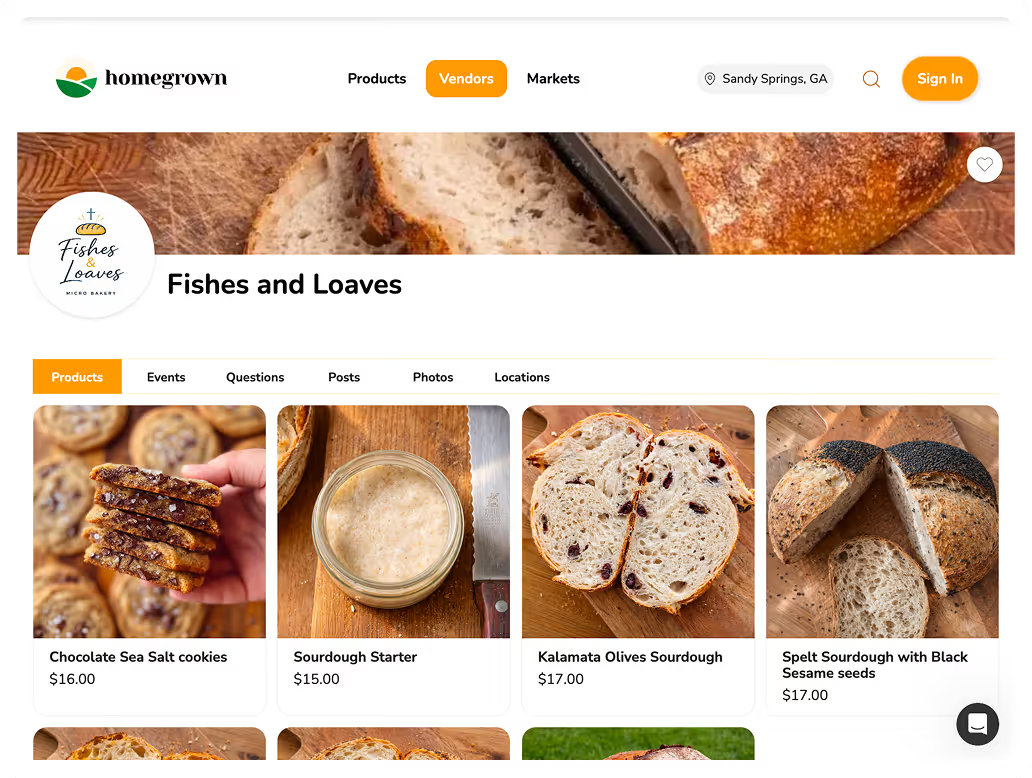
Google Forms is free and gives you a form, but customers still pay separately — so you are matching form responses to Venmo payments, which is the same problem with an extra step. Etsy works for shipping baked goods nationally, but it takes 6.5% per sale plus fees, and the platform is built for shipped orders, not Thursday porch pickup. Homegrown is $10/month — customers see your weekly menu, pick what they want, and pay when they order. You see every order in one list before you start baking. When the sourdough slots fill up, the listing closes. It will not help you build a brand website or sell wholesale to coffee shops — it is an ordering page for local pickup, and that is the thing most home bakers actually need.
Word of mouth is where almost every home baking business gets its first customers. Tell friends, family, neighbors, and coworkers. Bring samples to neighborhood events, church gatherings, or office parties. Your first 10 to 20 customers will almost certainly come from people you already know.
You need far less than you think to start. One of the biggest traps for new home bakers is spending weeks on business infrastructure before making a single sale.
What you need before your first sale:
What can wait:
The free business mentoring for startups provides additional guidance on this.
Track your income and expenses from day one. Use a simple spreadsheet to record every ingredient purchase, packaging expense, market fee, and sales transaction. This isn't optional — cottage food income is taxable, and your spreadsheet is the only way to know whether your business is actually profitable.
Ready to turn this into a real business? The easiest way to take local orders and get paid is an online storefront — see the best platform to sell food from home, or set up a Homegrown storefront in about 15 minutes ($10/mo, 0% commission).
No, in most states you do not. Cottage food laws specifically allow home bakers to sell from their home kitchen without commercial kitchen requirements. That's the core purpose of the cottage food exemption. Some states have product-specific exceptions, so check your state's rules.
Yes, in most states, as long as the finished product is shelf-stable. Tiered cakes, decorated sugar cookies, and custom birthday cakes with buttercream frosting are all standard cottage food products. The restriction is on fillings and frostings that require refrigeration. Cream cheese frosting rules vary by state.
Most home bakers can start for $100 to $300 in initial expenses. That covers packaging materials, label supplies, and the first few production batches of ingredients. If you already bake regularly, you probably own all the equipment you need. Ongoing costs are primarily ingredients, packaging, and farmers market fees if applicable.
This depends on your state's cottage food law. Some states allow online ordering with local pickup, which is the most common online model for cottage food bakers. Others restrict sales to in-person transactions only. A smaller number allow shipping within the state. Check your state's approved sales channels before setting up online ordering.
Liability insurance isn't required by most cottage food laws, but some farmers markets require it as part of their vendor agreement. A basic product liability policy for a cottage food business typically costs $200 to $400 per year. It's a worthwhile investment once you're selling regularly.
Most cottage food laws don't require a food handler's permit. Some states require a basic food safety course as a condition of the cottage food exemption, which is typically a shorter, sometimes free online course — not the same as a full food handler's certification.
Earnings vary widely based on your products, pricing, and sales channels. A vendor selling at one farmers market per week can typically earn $150 to $800 per market day depending on experience and market size. Adding pre-orders between market days can increase weekly revenue by 20 to 40 percent. Most home bakers start part-time and scale based on demand.
Here's what the first week of a home baking business actually looks like for most people. You confirm your state's rules, choose your starting products, create compliant labels, set a price that covers your costs, and tell everyone you know that you're selling. You take your first few orders — probably from friends and family — bake them, deliver them, and collect payment. That's it. No permits to wait on, no inspections to schedule, no LLC paperwork to file.
The business grows from there. Your friends tell their friends. You add a farmers market. Your regular customers start ordering weekly. You expand your menu based on what people ask for. You build a reputation in your community as the person who makes incredible sourdough or the best cookies in town.
When your order volume grows past what text messages can handle, Homegrown gives you a simple Homegrown storefront where customers can see what's available, place orders, and pay ahead for pickup. It takes about 15 minutes to set up, and it replaces the chaos of managing orders through DMs and group texts.
Start small, start this week, and let your baking speak for itself.