

Herbal tea is one of the best products you can sell from a home kitchen. A pound of dried herbs costs $2 to $5 to grow or source, and a single ounce of blended herbal tea sells for $3 to $8 at a farmers market. That means a $3 bag of chamomile and lavender you grew in your garden can sell for $6 to $8 — and your customers will thank you for it.
Herbal teas are shelf-stable, lightweight, easy to package, and have a long shelf life. They qualify as cottage food in most states. And unlike products like fresh pasta or fermented foods, the legal path for selling herbal tea is straightforward — as long as you follow one critical rule.
This guide covers the legal requirements, best-selling blends, pricing, packaging, equipment, and where to sell your herbal teas.
The short version: Dried herbal tea blends are cottage food eligible in most states because they are shelf-stable and non-hazardous. You need a cottage food permit (free to $75) and proper labeling with ingredients, allergens, and the required cottage food disclaimer. The one rule that trips up most herbal tea sellers: you cannot make health claims about your teas. The moment you say your chamomile "helps with sleep" or your echinacea "boosts immunity," your product shifts from a food to a dietary supplement under FDA rules — and that requires a completely different (and expensive) regulatory path. Price your blends at $5 to $8 per ounce or $10 to $16 per 2-ounce pouch for profit margins of 70% to 85%. Sell through farmers markets, online pre-orders, local shops, and a Homegrown storefront.
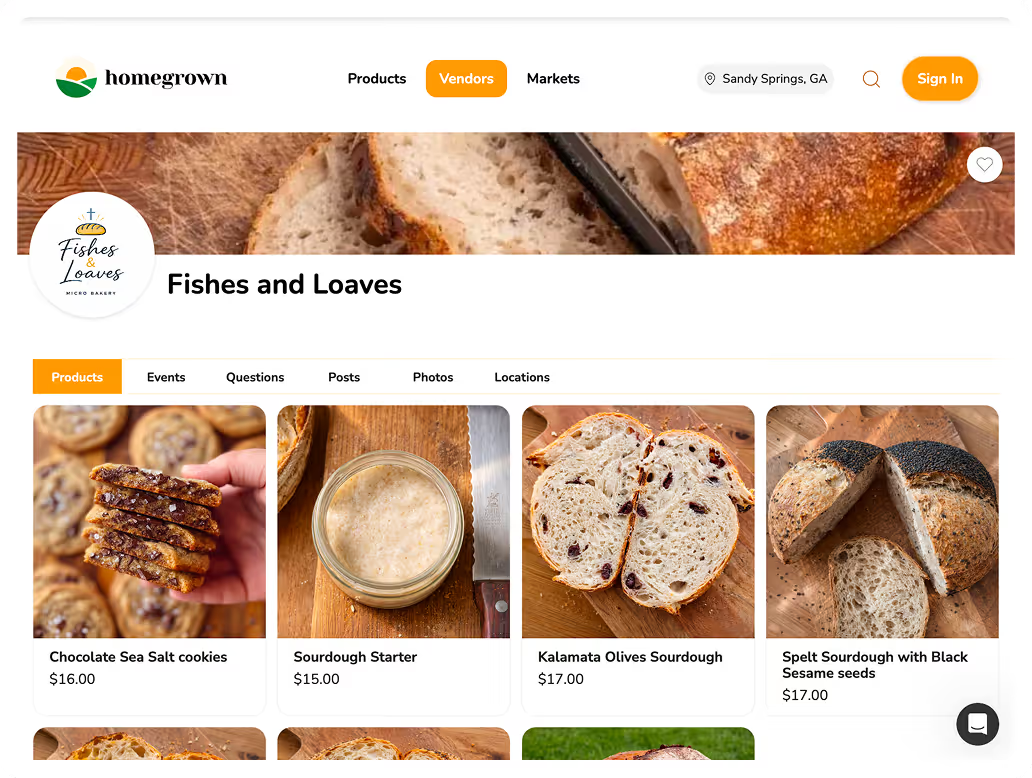
Ready to actually start selling? Take orders and get paid online in about 15 minutes — set up a Homegrown storefront ($10/mo, 0% commission), or compare the best platforms to sell food from home.
Yes. Dried herbal tea blends qualify under cottage food laws in most states because they are shelf-stable, do not require refrigeration, and are considered non-hazardous foods.
To sell herbal tea from your home kitchen, you typically need:
Check your state's specific cottage food requirements in our cottage food laws by state guide.
The legal path for herbal tea is simpler than many food products. You do not need a commercial kitchen, health department inspection, or MEHKO permit. Dried tea blends are in the same category as other shelf-stable goods like cookies, bread, granola, and dried pasta.
Do not make health claims about your herbal teas.
This is the single most important legal rule for herbal tea sellers, and the one most people get wrong. The FDA draws a clear line between foods and dietary supplements:
The moment you claim your tea treats, cures, prevents, or alleviates any health condition, the FDA considers it a dietary supplement. Dietary supplements have their own set of federal regulations — including Current Good Manufacturing Practices (cGMP), facility registration, and specific labeling requirements — that cottage food permits do not cover.
What you can say:
What you cannot say:
This rule applies to your labels, your signage at farmers markets, your social media posts, and your conversations with customers. Keep your marketing focused on flavor, ingredients, and the experience of drinking the tea — not on health benefits.
The best-selling herbal tea blends combine familiar ingredients with one or two unique elements. Customers want blends they recognize but cannot find at the grocery store.
These are the blends that sell consistently week after week:
Specialty blends command higher prices ($7 to $10 per ounce) and differentiate you from other vendors:
Start with three to five core blends and build from there. A strong starting lineup looks like this:
The variety pack is especially important. First-time customers who are not sure which blend to try will buy a sampler, and it often converts them into repeat buyers of their favorite blend.
Herbal tea has some of the best profit margins of any cottage food product. Your ingredient cost per ounce of finished blend is typically $0.50 to $1.50, depending on whether you grow your own herbs or buy them.
Use a simple cost-plus formula. For detailed pricing strategies, see our how to price food products guide.
Example:
If you grow your own chamomile, lavender, mint, lemon balm, or other tea herbs, your ingredient cost drops dramatically — often to $0.10 to $0.30 per ounce of finished dried herb. This pushes your margins even higher (80% to 90%) and gives you a genuine story to tell customers.
Growing your own also means you can offer blends that are truly unique. "Grown in my garden, blended in my kitchen, packed by hand" is a powerful selling point that no grocery store brand can match.
Packaging matters more for herbal tea than for most food products. Tea is lightweight, aromatic, and needs to stay dry. Your packaging needs to protect the product, look professional, and comply with labeling laws.
Every package of herbal tea you sell must include:
Keep your labels clean and simple. A clear ingredient list, an attractive design, and your farm or business name are all you need. Invest in a simple label design — even a clean template from Canva printed on kraft sticker paper looks professional and costs pennies per label.
Dried herbal tea blends stored in airtight packaging away from heat, light, and moisture will stay fresh for 6 to 12 months. Include a "best by" date on your label — most vendors set this at 6 to 9 months from the blend date.
Starting an herbal tea business requires very little equipment. Most of what you need is already in your kitchen.
This is one of the lowest startup costs of any food product. Compare that to fresh pasta ($200 to $500) or baked goods ($300 to $600). Herbal tea requires minimal equipment, minimal ingredients, and minimal production space.
Herbal tea works well across more sales channels than most cottage food products because it is lightweight, shelf-stable, and ships easily.
Farmers markets are the best starting point for herbal tea vendors. You can expect:
Tea sells especially well alongside samples. Brew one or two blends as iced tea in summer or hot tea in cooler months. Samples convert browsers into buyers at a high rate — herbal tea is a product people want to taste before committing.
A weekly or biweekly pre-order system works well for herbal tea because you can batch your production. Take orders through your Homegrown storefront and offer pickup at your next farmers market or a local pickup point.
Herbal tea is one of the easiest cottage food products to get into local retail because:
Wholesale pricing is typically 50% to 60% of your retail price. If you sell a 2-ounce pouch for $12 retail, offer it to shops at $6 to $7 wholesale.
Herbal tea is a natural fit for gift sets. Partner with other local vendors — honey, baked goods, candles, mugs — to create curated gift baskets. Price gift sets at a premium ($25 to $45) and sell them heavily during the holiday season (October through December).
Because herbal tea is lightweight and shelf-stable, it ships easily and cheaply. A 2-ounce pouch of tea weighs almost nothing and can ship in a padded envelope for $3 to $5. This makes online sales viable even for small producers.
Check whether your state's cottage food laws allow online sales and shipping — some states restrict cottage food to in-person sales only. See our guide on what you can sell under cottage food laws for details on your state's rules.
If you have a garden, start with the herbs you already grow. Chamomile, lavender, mint, lemon balm, rosemary, and lemongrass are all easy to grow in most climates and dry well for tea blends. Growing your own herbs drops your ingredient cost to almost nothing and gives you an authentic story.
Tea is a sensory product. Customers want to smell and taste before they buy. Brew two to three blends as samples at every market — iced in summer, hot in cooler weather. The investment in sample tea is minimal (a few cents per cup) and the conversion rate is high.
Keep your product line fresh by rotating one or two blends each season:
Seasonal blends create urgency ("only available in December") and give repeat customers a reason to come back.
Herbal tea is a consumable product — customers use it up and need more. This makes it ideal for a subscription or standing order model. Offer a "tea of the month" option where customers get a new blend shipped or ready for pickup each month.
Tea is one of those products where repeat orders happen naturally — once someone finds a blend they love, they come back for more every few weeks. The question is how those repeat orders actually reach you.
What most tea vendors start with: Customers text you, DM you on Instagram, or catch you at the market. That works when you have 5 regulars. When you have 30 — each wanting different blends, some wanting their usual, some wanting to try this month's seasonal rotation — your phone becomes a blending queue you manage between batches.
Etsy handles the shipped side well. If your state allows cottage food shipping, listing your blends on Etsy puts them in front of buyers searching for artisan herbal tea nationwide. Etsy takes roughly 10-12% per sale in combined fees, which works when you're shipping $12-16 pouches to customers across the country.
But your local regulars — the ones who buy chamomile-lavender every three weeks and pick up at the Saturday market — don't need Etsy's shipping infrastructure, and you don't need to pay 10% on a transaction that happens in your neighborhood.
Homegrown is $10/month flat. Your customers get an ordering page where they can see what blends you have available, place an order, and pay — all before market day. You see exactly how many pouches of each blend to prepare. When your seasonal rotation changes, you update the listing. When chamomile-lavender sells out, it closes automatically.
| Texts + DMs | Etsy | Homegrown | |
|---|---|---|---|
| Best for | First 5-10 customers | Shipped orders nationwide | Local repeat orders, pickup or delivery |
| Handles restock timing | No — customers guess | No — they browse when they remember | Yes — you control when blends are available |
| Collects payment upfront | No | Yes (minus 10-12% fees) | Yes ($10/mo flat) |
| Shows you what to blend | Manual counting | Etsy dashboard | Order summary per blend |
Homegrown doesn't replace your Etsy shop if you're shipping nationally, and it won't help you land wholesale accounts with cafes or gift stores. It handles the local side — the repeat customers, the market pre-orders, the seasonal blend drops — so you spend your time blending tea instead of scrolling through messages.
Because herbal tea packaging is visible and kept in kitchens for weeks, your label design matters more than for products that are consumed immediately. A well-designed label gets seen every time your customer reaches for your tea. Invest in a clean, simple design that reflects your brand and makes your product look like it belongs on a boutique shelf.
In most states, you need a cottage food permit to sell dried herbal tea blends from your home kitchen. Cottage food permits are free to $75 and the application process takes a few days to a few weeks. You may also need a food handler's certificate ($10 to $15 online). Check your state's cottage food laws for the specific requirements — our cottage food laws by state guide has the details.
No. If you make health claims about your herbal tea — such as "helps with sleep," "reduces anxiety," or "boosts immunity" — the FDA considers your product a dietary supplement, not a food. Dietary supplements require federal facility registration, cGMP compliance, and specific labeling that cottage food permits do not cover. Keep your marketing focused on flavor, ingredients, and the experience of drinking the tea.
Dried herbal tea blends stored in airtight packaging away from heat, light, and moisture will stay fresh for 6 to 12 months. Most vendors set a "best by" date of 6 to 9 months from the blend date. This long shelf life is one of the biggest advantages of selling herbal tea — it means zero waste from unsold inventory.
It depends on your state. Some state cottage food laws allow online sales and shipping, while others restrict cottage food to in-person sales only. Herbal tea is one of the easiest cottage food products to ship — it is lightweight, shelf-stable, and fits in a padded envelope for $3 to $5 in shipping costs. Check your state's specific rules in our guide on what you can sell under cottage food laws.
Total startup cost is $100 to $300 depending on whether you grow your own herbs or buy dried herbs in bulk. The essentials are a kitchen scale ($10 to $20), a dehydrator if you grow your own herbs ($40 to $80), and packaging supplies ($30 to $50). This makes herbal tea one of the lowest-cost food products to start selling from home.
Chamomile, peppermint, spearmint, lemon balm, lavender, and lemongrass are the easiest herbs to grow for tea blends. All of these grow well in most climates, produce abundantly, and dry easily in a dehydrator or by hanging in bundles. Start with two to three herbs in your first growing season and add more as you learn what sells best in your market.
Ready to start selling your herbal tea blends? Set up your Homegrown storefront in 15 minutes — list your blends, set your pickup or delivery schedule, and let your regulars reorder without texting you.