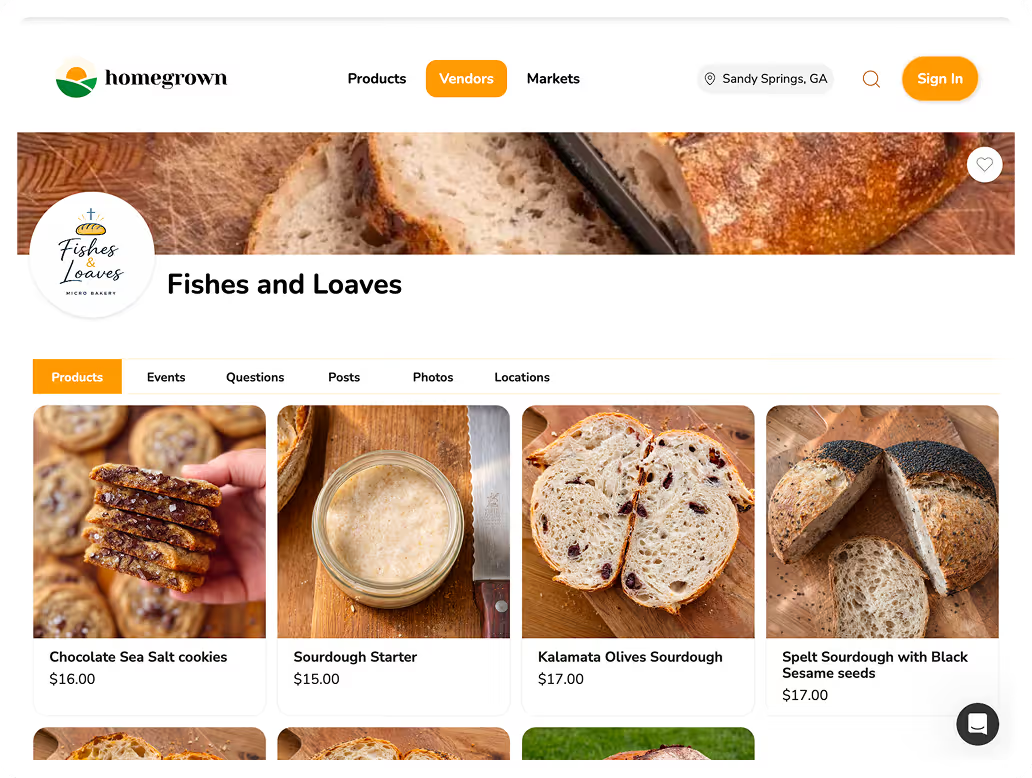


Your food business name goes on everything. Your labels. Your farmers market booth sign. Your social media pages. Your permit application. It is the first thing customers see and the last thing they remember.
Picking a name feels like a big decision because it is one. But it does not need to be complicated, and you do not need a branding agency or a 200-name listicle to figure it out. You need a name that fits what you sell, is easy to remember, and is not already taken by someone else.
This guide walks you through how to come up with a food business name that works, how to check if it is available, and how to make it official.
The short version: A good food business name is short, easy to spell, and clearly connected to what you sell. Before you commit to a name, check five places: your state's Secretary of State database, the USPTO trademark database, your county's DBA filings, social media platforms, and domain name registrars. Most cottage food vendors register their name as a DBA (Doing Business As) through their county clerk for $10 to $65. Pick a name you can live with for years — it is harder to change once it is on your labels and your customers know you by it.
Your business name is your first impression. At the farmers market, it is the name on your booth banner that tells shoppers what you sell before they get close enough to see your products. Online, it is what people search for when they want to find you again.
Your name also goes on legal documents. Your cottage food permit application, your DBA filing, your business bank account, and every label on every product you sell all use your business name. Changing it later means updating all of those things.
The most important thing about your business name is not that it is clever or creative. It is that your customers can remember it, spell it, and find you by it. A simple, clear name beats a clever one every time.
Coming up with a food business name does not require a branding workshop or a creative agency. Most successful cottage food vendors pick their names in an afternoon using one of these approaches.
The simplest approach is to name your business after your product. If you make cookies, put "cookies" in the name. If you sell jam, say so. Customers at the farmers market should be able to read your name and know what you offer.
Names like "Sweet Batch Cookies" or "Peach Lane Preserves" tell people exactly what to expect. You do not need to be mysterious or clever — clarity sells more than creativity at a farmers market booth.
Your town, neighborhood, street, or region can anchor your business name and make it feel local. "Riverside Kitchen" or "Hill Country Honey" immediately signals that you are a local vendor, which is a selling point for farmers market shoppers.
Location-based names also tend to be unique. There are thousands of businesses called "Sweet Treats," but probably only one called "Cedar Creek Confections" in your area.
Using your first name, last name, or family name is one of the simplest and most effective approaches for a small food business. "Maria's Kitchen" or "Johnson Family Farms" is personal, memorable, and impossible for someone else to claim.
Your own name works especially well if you sell at farmers markets where customers get to know you personally. Your name IS your brand. It is also the easiest name to get approved for a DBA because it is already yours.
Think about words that describe your products or how you make them. Words like "fresh," "handmade," "small batch," "homestyle," or "scratch" all communicate something about your process and quality.
Pair a descriptive word with your product type or location. "Scratch Kitchen Bakes" or "Fresh Harvest Preserves" gives customers a clear picture of who you are and what you sell.
Your business name needs to fit on a label, a booth banner, a social media handle, and a business card. Long names get cut off, abbreviated, or misspelled. Aim for two to four words maximum.
Avoid unusual spellings, hyphens, or numbers. If you tell someone your business name and they cannot spell it correctly on the first try, it is too complicated. "Kountry Kookies" might seem fun, but customers will search for "Country Cookies" and never find you.
Read your top name choices out loud. Say them to a friend. Imagine answering the phone with that name. Imagine a customer at the farmers market telling their friend about you — can they remember it and say it clearly?
Some names look great on paper but sound awkward when spoken. Others sound similar to existing businesses or have unintended meanings. Test it verbally before you put it on anything.
Not every name that sounds good in your head works in practice. Here are the most common naming mistakes cottage food vendors make.
Before you print labels, order a booth banner, or file any paperwork, check five places to make sure your name is available. This takes about 30 minutes and can save you from legal problems and expensive rebranding later.
Every state maintains a business name database through the Secretary of State's office. Search your proposed name on their website to see if any registered business — LLC, corporation, or partnership — is already using it.
This search is free in every state. Google "[your state] Secretary of State business name search" to find the right page. If your exact name or something very close to it is already registered, pick a different name.
The United States Patent and Trademark Office maintains a free trademark database where you can search for registered and pending trademarks. Even if a business is not in your state, a federal trademark could prevent you from using the same name anywhere in the country.
Go to the USPTO trademark search and search for your proposed name. Look for trademarks in food-related categories (International Class 030 covers baked goods, candy, and confections; Class 029 covers jams, preserved foods, and dairy products). If your name matches a registered trademark in a food category, do not use it.
DBAs are business names registered at the county or state level. They are separate from LLCs and corporations. A business can operate under a DBA without incorporating, which is how most cottage food vendors operate.
Search your county clerk's website or your state's DBA database for your proposed name. Some states maintain a statewide DBA registry, while others handle it at the county level. The search is usually free.
Check if your business name is available as a handle on Instagram, Facebook, and any other platform where you plan to promote your products. Consistent handles across platforms make it easier for customers to find you.
If @yourbusinessname is taken, try small variations like adding your state abbreviation or the word "foods" — but if the exact match is taken by another food business, you may want to choose a different name entirely to avoid confusion.
Even if you do not plan to build a website right now, check if a matching domain name is available. You can search for free on any domain registrar like Namecheap or Google Domains. A .com domain is ideal, but .co or .shop also work for small food businesses.
You do not need to buy the domain today, but knowing it is available gives you the option later. If your exact business name .com is taken by another food business, that is a signal to consider a different name.
Most cottage food vendors need to register their business name if it is different from their personal legal name. If you sell under "Maria Garcia" and that is your real name, you probably do not need to register anything. If you sell under "Sweet Peach Kitchen," you need a DBA.
A DBA — Doing Business As — is a registration that lets you operate a business under a name other than your own legal name. It is sometimes called a fictitious business name, trade name, or assumed name depending on your state.
Most cottage food vendors use a DBA because it is the simplest and cheapest way to operate under a business name. You do not need to form an LLC or a corporation. A DBA lets you open a business bank account, put your business name on labels, and operate legally.
Filing a DBA typically involves filling out a short form at your county clerk's office or online through your state's filing system. The cost ranges from $10 to $65 depending on your state and county. Some states also require you to publish a notice in a local newspaper, which adds $30 to $100 to the cost.
The process usually takes less than a week. Once approved, you can use your business name on labels, booth signs, and business bank accounts.
For the full walkthrough on registering your cottage food business, including DBA vs. LLC decisions and state-specific requirements, see our guide on how to register your cottage food business.
A sole proprietorship with a DBA is the most common setup for cottage food vendors. It is the cheapest, simplest option and works fine for most part-time food businesses.
An LLC provides liability protection — your personal assets are separated from your business. It costs more ($50 to $500 depending on the state) and requires more paperwork, but some vendors choose it for the added protection.
A sole proprietorship without a DBA means you operate under your own legal name. This works if you are comfortable having your personal name on everything.
For most cottage food vendors starting out, a DBA is the right choice. You can always upgrade to an LLC later if your business grows.
Yes, you can change your food business name, but it is more work than picking the right one upfront. Here is what you would need to update if you rebrand.
If you are just starting out, spend the extra time now to pick a name you can grow with. If you have been operating for a while and your name is holding you back — it does not reflect what you sell, it is confusing, or it conflicts with another business — a name change is worth the temporary hassle.
The best time to change your name is before you have built up a large customer base. The worst time is after you have thousands of labeled products in inventory.
Ready to start selling locally? The easiest way to take local orders and get paid is an online storefront — see the best platform to sell food from home, or set up a Homegrown storefront in about 15 minutes ($10/mo, 0% commission).
Most cottage food vendors do not need a federal trademark. A trademark costs $250 to $350 per class to file and is designed for businesses that operate nationally or want to prevent others from using their name across the entire country. A DBA registration protects your name at the local or state level, which is enough for most home food businesses selling at farmers markets and local events.
Two businesses can share the same DBA name in many states, especially if they are in different counties. However, if one business has a registered trademark, the trademark holder has the legal right to the name nationwide. For cottage food vendors, the practical concern is more about customer confusion — if another food vendor in your area has the same name, your customers will mix you up.
Either works. Using your real name is the simplest option — no DBA filing needed, and it is personal and memorable. A business name gives you more flexibility to grow, add products, or eventually sell the business. Many vendors start with their own name and add a DBA later as the business develops.
A DBA registration costs $10 to $65 in most states. Some states also require a newspaper publication notice, adding $30 to $100. If you choose to form an LLC instead, that costs $50 to $500 depending on the state. A federal trademark costs $250 to $350 per class. For most cottage food vendors, the DBA is the only registration they need.
You can usually use a name that is registered as a DBA or LLC in a different state, as long as it is not a federally registered trademark. DBA and state registrations only protect the name within that state. However, if the other business has a federal trademark in a food-related category, you cannot use the name regardless of where you are located. Always run a USPTO trademark search before committing to a name.
If you named your business "Sarah's Cookie Co." but now you sell cookies, brownies, cakes, and granola, your name is not necessarily a problem. Customers who know you will buy your other products regardless of the name. But if you are just starting out, choose a broader name like "Sarah's Bake Shop" that covers everything you might sell in the future.
Your food business name is one of the first decisions you will make — but it does not have to be one of the hardest. Pick a name that is clear, easy to remember, and available. Check the five databases, file your DBA, and start selling.
Once your name is locked in, you need somewhere to put it. Homegrown is $10/month with no percentage fees beyond standard payment processing and gives you an ordering page where customers browse your products, place orders, and pay upfront — your business name front and center. Compare that to Etsy (6.5% per transaction, your brand buried under Etsy's) or coordinating orders through Venmo and text messages with no professional presence. Homegrown does not build you a full website or handle your DBA filing — it gives you the ordering page that makes your new business name real to customers.