

A food handler's permit is one of the most common requirements in the food world, and one of the simplest to get. If someone has told you that you need one — your employer, a farmers market organizer, or your state's cottage food rules — the process is straightforward. Take a short online course, pass a basic exam, and receive your card. Most people finish the entire thing in a single afternoon for around $15 to $30.
But before you sign up for a course, it's worth understanding exactly what a food handler's permit is, whether you actually need one for your situation, and how to make sure you're getting the right certification from an approved provider. The term "food handler's permit" gets mixed up with other food safety certifications all the time, and signing up for the wrong course wastes both time and money.
The short version: A food handler's permit is a basic food safety certification you get by completing a short online course (1.5–3 hours) and passing a multiple-choice exam. It costs $15–$30, and most people finish in a single afternoon. Most cottage food vendors don't need one unless their state or farmers market specifically requires it — but the knowledge is genuinely useful for anyone producing food for sale.
This guide walks through what the permit actually covers, when it's required (and when it isn't), the step-by-step process for getting one, and what to know about renewal. Whether you're getting one for a food service job, a farmers market requirement, or a state cottage food rule, the process is the same — and it's easier than most people expect.
A food handler's permit is a basic food safety credential that proves you've completed training on safe food handling fundamentals and passed an exam. It's also called a food handler's card, food handler certificate, or food handler certification.
The training covers the core principles that apply to anyone who touches, prepares, serves, or stores food in a professional or semi-professional setting:
The content is genuinely useful regardless of whether you're required to get the certification. Understanding time-temperature relationships alone — knowing that bacteria multiply rapidly between 40 and 140 degrees Fahrenheit, and that food sitting in that "danger zone" for more than two hours should be discarded — is practical knowledge that makes you a safer food handler whether you're cooking for customers or your family.
What it is not. A food handler's permit is a personal certification that you carry with you. It is not a commercial kitchen license, a food establishment permit, a business license, or a facility inspection. It doesn't certify your kitchen or your business. It certifies your knowledge. The card travels with you from job to job, farmers market to farmers market.
These two certifications are completely different, and signing up for the wrong one is a common and expensive mistake. They serve different purposes, target different audiences, cost very different amounts, and take very different amounts of time.
| Food Handler's Permit | Food Manager Certification | |
|---|---|---|
| Who it's for | Anyone who handles food (line cooks, vendors, servers) | Managers/supervisors in food establishments |
| Training time | 1.5–3 hours | 8–16 hours |
| Cost | $15–$30 | $100–$200+ |
| Exam | Not proctored, multiple-choice | Proctored, longer, more difficult |
| Passing score | 70–75% | Varies by provider |
| Common providers | ServSafe Food Handler, StateFoodSafety | ServSafe Food Protection Manager, NRFSP |
Food Handler's Permit (basic level):
This is the standard food safety training designed for anyone who handles food in a professional setting. It's required for line cooks, prep workers, servers, grocery store employees, food truck staff, and similar positions. When someone says "food handler's permit" or "food handler's card," this is what they mean. It's the basic certification that applies to the largest number of food workers. See the ServSafe certification program for additional context.
Food Manager Certification (advanced level):
This is a more comprehensive certification designed for managers and supervisors in food establishments — people who are responsible for overseeing food safety practices in a restaurant, catering operation, or food production facility. The most well-known version is the ServSafe Food Protection Manager certification, but there are other accredited options (National Registry of Food Safety Professionals, Prometric, etc.).
The critical distinction: If you've been told you need a "food handler's permit," you almost certainly need the basic version. The food manager certification is only required for designated food safety managers in food establishments. If you're a cottage food vendor, a farmers market vendor, or a food service employee, the basic food handler's permit is what applies. Don't sign up for the $150 manager course when the $20 handler course is what you need.
The answer depends on your situation. Most cottage food vendors don't need one, but some states and farmers markets require it. Here are the most common scenarios:
You work in food service. If you're employed at a restaurant, food truck, catering company, grocery store deli, school cafeteria, or similar food establishment, most states and many local jurisdictions require you to get a food handler's card within a set number of days after starting work. The timeline is typically 30 days from your start date, though some jurisdictions require it before you begin or within 14 days. Your employer should tell you which specific certification they require and may cover the cost.
You're selling cottage food and your state requires food safety training. Most cottage food laws do not require a food handler's permit. The cottage food exemption specifically carves out home producers from commercial food safety regulations, which includes most food handler's permit requirements. However, some states require cottage food vendors to complete a basic food safety course as a condition of the exemption. This state-required training may be a standard food handler's certification, or it may be a shorter, state-specific course — sometimes free — offered through the state's Department of Agriculture or Department of Health.
The distinction matters because a state that requires "food safety training" for cottage food vendors may accept a quick free online course offered by the state itself, while someone who signs up for a paid third-party food handler certification spent money they didn't need to. Check your state's specific cottage food requirements before signing up for anything.
A farmers market requires it. Some farmers markets require vendors to hold a food handler's card as part of their vendor agreement, regardless of whether state law requires it. This is a farmers market policy, not a government requirement, and it varies from farmers market to farmers market. If your target farmers market requires it, getting the certification is simply a cost of selling there.
You're not sure if you need one. If you're a cottage food vendor wondering whether you need a food handler's permit, the answer is probably no — but check two things:
If neither requires it, you don't need it. For a broader overview of what licenses and permits cottage food vendors actually need, that guide separates the different requirements clearly.
The process is straightforward and most people complete it in a single afternoon. Here are the five steps from start to certified.
Before signing up for a course, confirm two things. First, make sure you need the basic food handler's permit (not the advanced food manager certification). Second, check whether your state, employer, or farmers market has specific approved providers. Some states maintain a list of approved food handler training providers and don't accept certifications from providers not on the list. Others accept any accredited national provider.
Most food handler training is available online, and the major national providers are accepted in the vast majority of states. The most widely used options include:
Online courses are self-paced, which means you can start, pause, and resume at your convenience. Most people complete the training in a single sitting of 1.5 to 3 hours, but you can break it up over multiple sessions if needed.
The training typically consists of video modules and reading material organized by topic:
Short knowledge-check quizzes may appear throughout the course to reinforce key concepts. These quizzes are learning tools, not the final exam.
Take the training seriously even though it's basic. The information is practical and directly applicable to anyone producing food, whether you're running a restaurant or baking bread in your home kitchen.
After completing the training material, you'll take the final exam. The exam is typically 30 to 40 multiple-choice questions covering the content from the training course. You need to score 70 to 75 percent or higher to pass, depending on the provider and your state's requirements.
The exam is not difficult if you've paid attention during the training. The questions test practical knowledge, not obscure details. You'll be asked things like:
For online courses, the exam is typically taken immediately after the training on the same platform. Most providers allow at least one retake if you don't pass on the first attempt. Failing is uncommon if you've completed the training material. The CDC food safety training resources provide additional guidance on this.
After passing the exam, you'll receive your food handler's certificate. With online providers, this is usually available immediately as a downloadable and printable PDF. Some providers also offer a digital card you can store on your phone.
If your state or employer requires a physical card, some providers mail a hard copy. Check delivery times — physical cards typically arrive within 1 to 2 weeks. In the meantime, the printable PDF serves as proof of certification.
Keep your certificate accessible. You may need to show it to an employer, a farmers market organizer, or a health inspector. Having a digital copy on your phone is convenient for situations where you need to produce it quickly.
Online training is the better choice for most people. It's available immediately, self-paced, completable from home, and produces the same certification as in-person training.
| Online Training | In-Person Training | |
|---|---|---|
| Availability | Immediate, 24/7 | Scheduled class times |
| Pace | Self-paced | Instructor-led |
| Duration | 1.5–3 hours | 2–4 hours |
| Location | Home/anywhere | Classroom |
| Certification | Same-day digital | Same-day or mailed |
| Best for | Most people, flexible schedules | Structured learners, specific employer requirements |
In-person training is available through local health departments, community colleges, culinary schools, and food safety training companies. It follows a scheduled class format, typically 2 to 4 hours in a classroom setting. Some people prefer in-person training because they learn better in a structured environment with an instructor available for questions.
When in-person might be necessary: A small number of jurisdictions require in-person training or have specific approved local providers. Some employers have in-house training programs that they prefer employees to complete. If your state's approved provider list doesn't include online options (rare but possible), in-person training is your path.
Food handler certifications are not permanent — most are valid for 2 to 3 years. They expire after a set period, and the expiration timeline varies by state.
The cost of a food handler's permit is one of the most reasonable expenses in the food business world. Here's the breakdown:
The total investment for most people is $15 to $25 plus 2 to 3 hours of time. For a certification that's valid for 2 to 3 years, that's a negligible cost whether it's required or voluntary. Resources from StateFoodSafety's state requirements directory offer more detail here.
It depends on the farmers market, not on universal law. Each farmers market sets its own vendor requirements, and some require a food handler's card while others don't. Check your target farmers market's vendor application or contact the farmers market manager directly. If the farmers market requires it, getting certified before you apply strengthens your vendor application.
No. States have their own requirements for food handler training, including which providers are accepted, what content must be covered, how long the certification is valid, and whether online training is acceptable. A food handler's permit earned in one state may not be accepted in another, though many states recognize certifications from major national providers like ServSafe and StateFoodSafety. If you move to a new state or want to work in a different state, check that state's specific requirements rather than assuming your existing card transfers.
In most states, yes. The majority of states accept online food handler training from accredited providers. You complete the course and exam online and receive a printable certificate the same day. A few states have restrictions on online training or require specific approved online providers, so confirm your state's rules before enrolling.
The exam is not difficult for anyone who has completed the training material. It's a basic multiple-choice test covering the fundamentals you just learned. The questions are practical and straightforward — temperatures, time limits, hygiene practices, contamination prevention. Most people pass on their first attempt. If you fail, most providers allow at least one retake.
Most food handler certification programs require you to complete the full training before taking the exam. You can't skip ahead to the test in most cases. The good news is that online courses are self-paced, so if you already know the material, you can move through it quickly. Someone with existing food safety knowledge can often complete the training in under an hour and take the exam immediately.
ServSafe Food Handler is the basic food handler's certification — approximately 1.5 to 2 hours, around $15 to $20, non-proctored online exam. This is what most food service employees and cottage food vendors need. ServSafe Food Protection Manager is the advanced certification for designated food safety managers in food establishments — approximately 8 to 16 hours of training, $100 to $200 including the proctored exam, significantly more comprehensive. Make sure you're signing up for the correct one.
Most cottage food vendors do not need a food handler's permit. Your state's cottage food exemption generally removes the requirement for personal food safety certification along with the other commercial food regulations it exempts you from. However, some states require a basic food safety course as a condition of the exemption, and some farmers markets require it as part of their vendor agreement. Check your state's cottage food law on Forrager and your target farmers market's vendor requirements to confirm.
If you're exploring food handler certification because you're starting a cottage food business, here's the honest picture: most cottage food vendors don't need a food handler's permit. Your state's cottage food exemption generally removes the requirement for personal food safety certification along with the other commercial food regulations it exempts you from. For a deeper look at this topic, see selling food from home.
That said, if your state's cottage food law requires a food safety course, complete it before you start selling. And even if it's not required, the knowledge you gain from a basic food handler course is genuinely useful for anyone producing food for sale. Understanding temperature control, cross-contamination prevention, and proper storage practices makes you a better producer and gives your customers well-deserved confidence in your products.
For the full sequence of what you actually need before your first sale — from understanding your state's rules through labeling, pricing, and finding your first customers — how to start a cottage food business walks through the complete process.
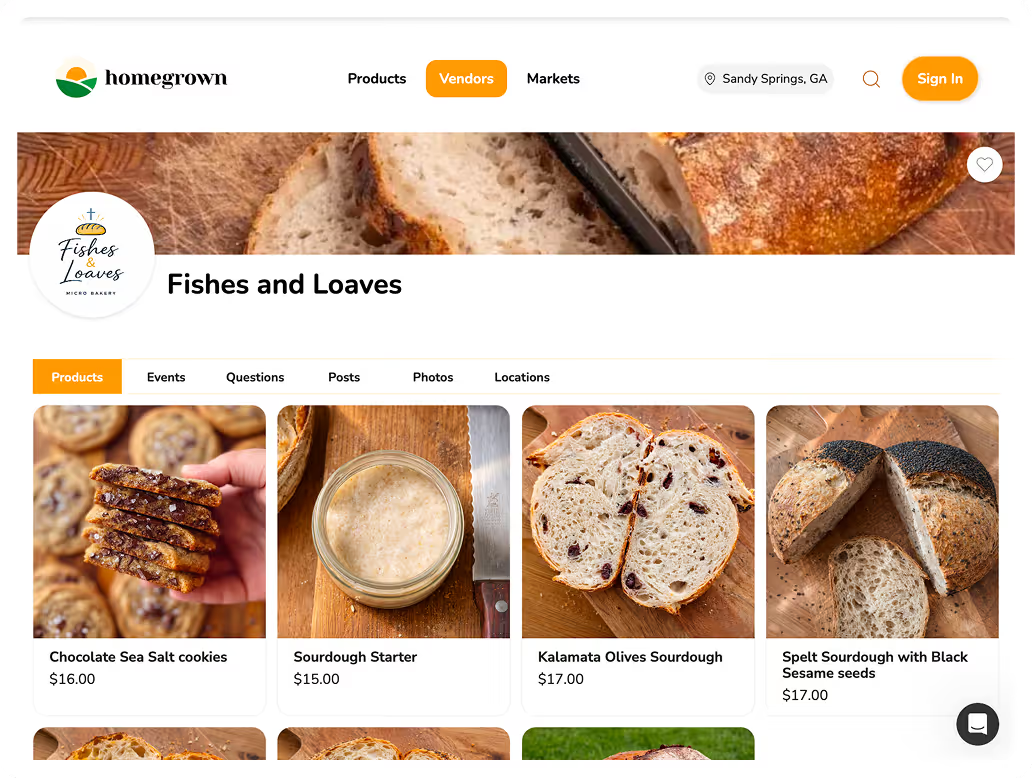
Once you have the permit (or confirm you don't need one), the next bottleneck is taking orders without living in your text messages. Venmo and Cash App move money but give you no order details — you're still tracking who wants what in a notebook. Etsy charges 6.5% per transaction and is built for shipping to strangers, not managing 15 local regulars who reorder every week. Homegrown is $10/month with no percentage fees beyond standard payment processing and gives you one ordering page where customers see your products, pay, and choose pickup or local delivery. It doesn't design your labels, file your permits, or handle shipping — it replaces the group text with a real ordering system.