

Holiday gift boxes are one of the fastest ways to boost your revenue as a food vendor. Instead of selling individual jars of jam or bags of granola, you bundle them into a themed box and charge two to three times what the products would sell for on their own.
The best part? You don't need to create anything new. If you already make jam, honey, baked goods, spice blends, or candles, you have everything you need to build gift boxes that sell for $30 to $75 each.
According to an NRF holiday survey, 30% of holiday shoppers plan to give food or candy as gifts — making food gift boxes one of the strongest seasonal products you can offer at a farmers market or through your online storefront.
This guide walks you through how to plan, assemble, price, and sell holiday gift boxes using products you already make.
The short version: Holiday gift boxes let you bundle products you already make into higher-priced packages that sell for $30 to $75 each. Start planning in September, source packaging early, price boxes at 2.5 to 3 times your product cost, and open pre-orders by early November. You don't need new products or a big investment — just a plan, good presentation, and a way to take orders.
Holiday gift boxes sell well because they solve a problem every holiday shopper has: finding a thoughtful gift without spending hours on it. A curated food gift box feels personal and unique, especially when it comes from a local vendor the buyer already trusts.
Here's why gift boxes consistently outperform individual product sales during the holidays:
Most food vendors see their average sale jump from $12 to $15 per customer to $40 to $60 per customer when they offer gift boxes during the holiday season.
A food gift box uses a structured container — usually a cardboard box, wooden crate, or tin — while a gift basket uses an open wicker basket with visible products. Both work, and the choice comes down to your products and presentation style.
Gift boxes tend to look cleaner, stack better for transport, and protect fragile products like cookies or chocolates. Gift baskets have a more traditional, rustic feel that works well at farmers markets. Many vendors use the term "gift box" even when they use baskets, crates, or bags — the format matters less than the presentation.
The best products for holiday gift boxes are shelf-stable products that look good together and don't need refrigeration. You want products that can sit assembled for at least two to three weeks without losing quality.
These products are the backbone of most food gift boxes because they hold up well and have long shelf lives:
If you already sell any of these at the farmers market, you have a ready-made gift box product line.
Baked goods like cookies, brownies, shortbread, and quick breads are popular gift box additions, but they require more planning because of their shorter shelf life. Most baked goods stay fresh for five to seven days.
The best approach for baked goods in gift boxes:
Adding one or two non-food products to a food gift box increases the perceived value and fills out the presentation:
If you sell non-food products like candles and soap at the farmers market, these are natural additions to your gift boxes.
Themed boxes give customers a reason to choose a specific box and make the purchase decision easier. Here are themes that consistently sell well:
The most popular themes at holiday markets tend to be breakfast boxes and local favorites — they appeal to the widest range of recipients.
Price your holiday gift boxes using a cost-plus method: add up the cost of every product inside, add packaging and labor, then multiply by 2.5 to 3 for your retail price. Most vendors price gift boxes in three tiers — $25, $50, and $75 — to give customers options at every budget level.
Here's a sample pricing breakdown for a $50 gift box:
Key pricing principles for gift boxes:
Start with a sturdy container that fits your products without too much empty space. Layer the heaviest products at the bottom, add filler material to support items and fill gaps, then arrange smaller and lighter products on top and toward the front.
Good gift basket assembly follows a simple pattern: anchor with the largest item at the back or center, stagger heights so every product is visible, and fill gaps with crinkle paper or tissue.
Here's the full assembly process:
Gift box supplies are cheapest when you buy them early and in bulk. September is the best time to order — prices go up in November as demand spikes.
Budget-friendly sources for packaging supplies:
Plan to spend $3 to $7 per box on packaging materials, depending on the container type and retail price. Ordering enough supplies for 30 to 50 boxes at once usually gets you better pricing.
Yes, most states allow cottage food vendors to bundle their products into gift boxes. The box itself doesn't create any new legal requirements — each product inside the box must comply with your state's cottage food laws individually.
Here's what that means in practice:
The safest approach is to label each product individually inside the box. That way, every item meets labeling requirements on its own, and the recipient can see exactly what's in each jar or bag.
If you include products from other vendors in a "local favorites" box, check whether your state allows reselling other vendors' cottage food products. Some states restrict this.
Pre-orders are the smartest way to sell holiday gift boxes because they guarantee sales before you assemble anything. You know exactly how many boxes to make, which products to prepare, and how much packaging to order.
Here's how to set up a pre-order system:
Pre-orders work best when you set a deadline and stick to it. Customers who wait until the last minute will respect a cutoff date — and it protects you from scrambling to fulfill late orders.
Start with 20 to 30 gift boxes your first year. This is a manageable number that doesn't require a huge upfront investment in packaging or product inventory.
If you sell through pre-orders, the number takes care of itself — you make exactly what's ordered. If you're selling at a holiday market, bring 15 to 20 boxes and plan to sell out. Running out is better than bringing home unsold inventory.
Track what sells and what doesn't. After your first season, you'll know which themes, price points, and sizes to scale up the following year.
Holiday gift boxes sell well in almost every channel a food vendor already uses. The key is matching your sales approach to the channel.
Your farmers market booth is the most natural place to sell gift boxes because customers already know and trust your products.
Display tips for market booth gift box sales:
Most vendors report selling 5 to 15 gift boxes per market day during the holiday season, on top of their regular product sales.
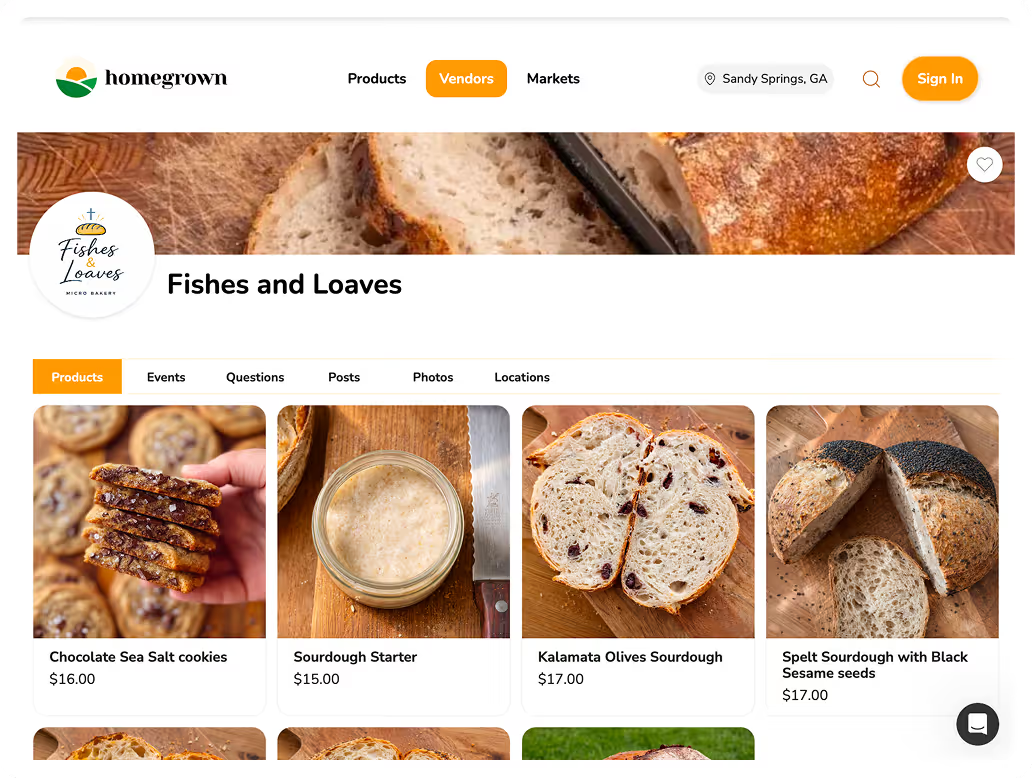
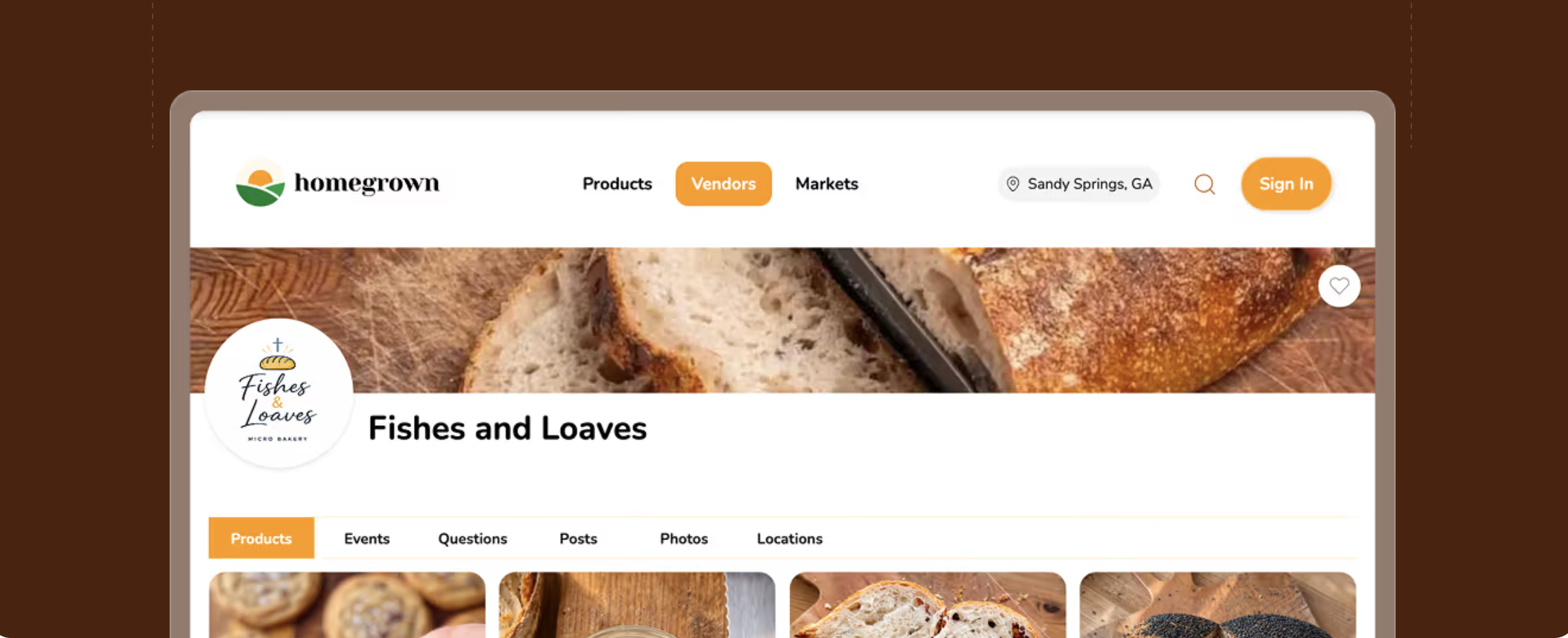
An online storefront lets you sell gift boxes to customers who cannot make it to the market, with pickup or local delivery. You could take orders through Instagram DMs, but tracking 30 gift box orders with different variants across a week of messages is how things get missed. Etsy handles ordering but takes 6.5% of every sale and is built for shipping — most of your holiday gift box customers live nearby and want local pickup. Homegrown is $10/month with no percentage fees — list each gift box option with photos and pricing, set your ordering window and pickup dates, and customers order and pay in one step. It will not ship boxes for you or design your packaging — but for converting a social media post into a paid, confirmed pre-order with pickup details, it handles the holiday rush without the DM chaos.
Online gift box sales work best when you:
Holiday markets and craft fairs attract shoppers specifically looking for gifts. Gift boxes are a perfect fit for this audience — they're ready to give, look impressive on your table, and justify higher price points.
Apply early for holiday markets. Most popular holiday craft fairs and Christmas markets fill vendor spots by September or October. Check your local chamber of commerce, community Facebook groups, and event listing sites for dates and applications.
Corporate gifting is an underrated sales channel for food vendors. Small offices, real estate agents, hair salons, and dental offices all buy holiday gifts for clients and staff. One corporate order can be 10 to 20 boxes at your regular retail price.
You can also pitch your gift boxes to local gift shops and boutiques. If you already sell individual products in local stores, adding seasonal gift boxes is an easy upsell. Most shops will take gift boxes on consignment or at a 40 to 50% wholesale discount.
Your existing customer base is the easiest audience to sell holiday gift boxes to. These are people who already buy your products — a curated gift box is a natural extension.
How to promote gift boxes to your existing audience:
Start promoting holiday gift boxes in October — at least six weeks before the peak buying season. The vendors who sell out are the ones who start early, not the ones with the best products.
Here's a marketing timeline that works:
Content ideas that drive gift box sales:
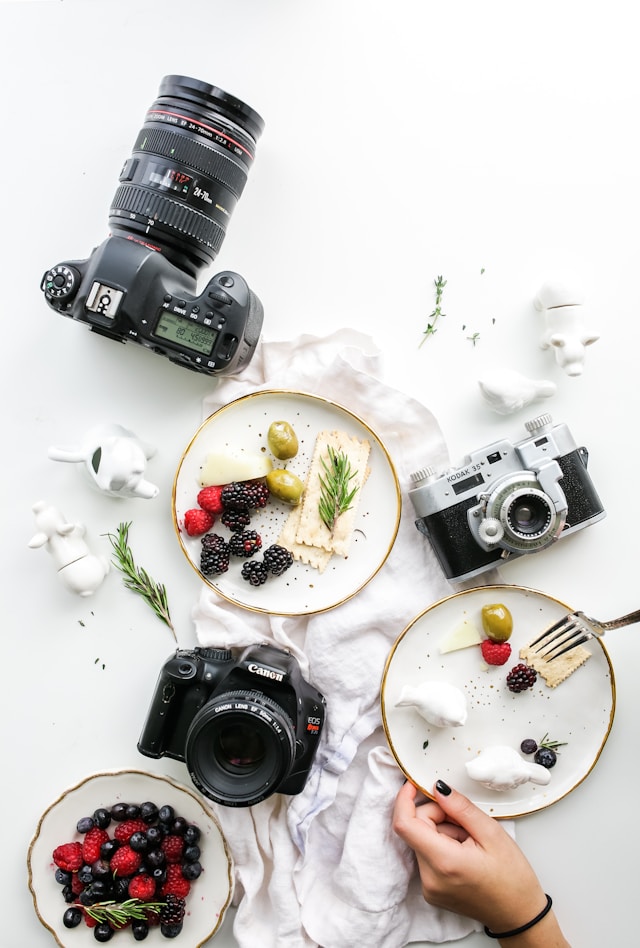
Good photos sell more gift boxes than good descriptions. You don't need a professional photographer — a phone camera and natural light are enough.
Tips for gift box photography:
Planning your holiday gift box season starts three to four months before the first sale. The vendors who sell the most boxes are the ones who plan early and promote consistently.
Here's a month-by-month timeline:
The most common mistake vendors make is starting too late. If you're reading this in November, you can still put together gift boxes for this season — just scale back to one or two options and focus on selling at your next market or through a quick pre-order push.
Holiday gift boxes are also a strong strategy for building off-season income. They extend your selling season into months when regular farmers market traffic drops off, and you can adapt the same boxes for Valentine's Day, Mother's Day, and other gift-giving occasions throughout the year. You can also look at what sells best each season to adjust your gift box contents as the year changes.
Ready to start selling locally? The easiest way to take local orders and get paid is an online storefront — see the best platform to sell food from home, or set up a Homegrown storefront in about 15 minutes ($10/mo, 0% commission).
Most vendors spend $100 to $250 to get started with holiday gift boxes, covering packaging materials, ribbon, filler, and gift tags. You're using products you already make, so the main new expense is the packaging itself. Buying supplies for 20 to 30 boxes in bulk keeps costs down to $3 to $7 per box.
It depends on your state's cottage food laws. Some states allow you to resell other vendors' cottage food products, while others restrict it. If you want to include products from another vendor, the safest approach is to have each vendor label their own products individually. You can also collaborate with other vendors — each person contributes labeled products, and you handle the assembly and sales.
Your existing vendor insurance should cover gift box sales since you're selling the same products in a different format. If you sell at holiday markets or craft fairs, you may need to show proof of liability insurance as part of your vendor application. Check with your insurance provider to confirm your policy covers events beyond your regular farmers market.
Most cottage food vendors should stick to local pickup rather than shipping. Shipping adds significant cost ($8 to $15 per box for packaging and postage), introduces breakage risk, and may conflict with cottage food laws that restrict sales to in-person transactions. If you want to offer shipping, use sturdy boxes with tight-fitting inserts, wrap fragile items individually, and charge the customer for actual shipping costs.
If you use a pre-order model, this problem mostly solves itself — you only assemble what's ordered. For boxes you bring to holiday markets, keep the contents flexible. Unsold gift boxes can be broken apart and sold as individual products at your next regular market day. Shelf-stable products don't go to waste.
Start planning in September, three to four months before the holiday selling season. Source packaging in September, photograph and list boxes in October, open pre-orders in November, and fulfill through December. The earlier you start promoting, the more pre-orders you'll collect.
Yes. Holiday gift boxes are the biggest opportunity, but the same concept works for Valentine's Day, Mother's Day, Easter, graduation, and housewarming gifts. Many vendors keep a small "anytime gift box" option available year-round on their online storefront and repackage it with seasonal themes throughout the year.
Holiday gift boxes are one of the simplest ways to increase your average sale and bring in more revenue during the busiest buying season of the year. You already have the products. You just need a box, a plan, and a pre-order system that does not require you to manage 40 DM threads the week before Christmas.