

Christmas cookies are the single highest-demand cottage food product of the year. Everyone needs them — for parties, for gifts, for the office, for the neighbors, for the teacher. And most people would rather buy beautiful homemade cookies than bake them. That gap between demand and willingness to bake is where you make money.
A well-run Christmas cookie operation can generate $2,000 to $5,000 in a 6 to 8 week season. Holiday gift boxes are another strong revenue driver during this period. The key is choosing the right varieties, pricing for your actual time, packaging for gift-giving, and running pre-orders so you know exactly what to bake before you turn on the oven. Getting your holiday pricing right is critical — see our holiday pricing strategy food vendor guide.This guide covers product selection, pricing, packaging, the production timeline, and how to sell through holiday markets and online pre-orders.
The short version: Christmas cookies and gift sets are the most profitable seasonal product for cottage food vendors. Decorated sugar cookies sell for $4 to $12 each depending on complexity. A 12-cookie gift box runs $20 to $36. Gingerbread has the longest shelf life at 3 to 4 weeks, making it the best cookie for gifts that sit under a tree. Freeze dough 3 weeks out, bake 2 weeks out, decorate 1 week out. Open pre-orders by November 1, cut off December 10. Packaging matters more than any other factor — a window box or tin adds $1 to $3 in cost but supports $5 to $10 in additional pricing.
Not all cookies are equally profitable or practical for holiday selling. The best Christmas cookies balance visual appeal, shelf life, production speed, and margin.
| Cookie | Shelf Life | Price Per Cookie | Production Speed | Best For |
|---|---|---|---|---|
| Decorated sugar cut-outs | 2 weeks | $4-$12 | Slow (3-15 min/cookie decorating) | Gift sets, custom orders |
| Gingerbread | 3-4 weeks | $3-$6 | Medium | Gifts that sit under the tree |
| Shortbread | 2 weeks | $2-$4 | Fast (no decorating) | Tins, bulk orders, platters |
| Snickerdoodles | 5-7 days | $2-$3 | Very fast | Market impulse buys |
| Snowball/Mexican wedding | 5-7 days | $2-$3 | Fast (powdered sugar only) | Platters, gift bags |
Gingerbread is your secret weapon. Its 3 to 4 week shelf life is the longest of any common Christmas cookie. This means you can bake it early in December and it still tastes fresh on Christmas Day. For gift sets that might sit under a tree for a week, gingerbread is the safest choice.
Decorated sugar cookies are your highest-margin product but also your most time-intensive. A simple flood design takes 3 to 5 minutes of active decorating time per cookie. Detailed multi-layer designs take 10 to 15 minutes. Price accordingly — your time is the most expensive ingredient.
Shortbread is your volume product. Minimal ingredients, no decorating required, fast production. Shortbread fills tins beautifully and pairs well with decorated cookies in assortment boxes.
Start with 3 to 4 varieties. You can always add more next year once you know what sells.
The most common mistake home bakers make is pricing based on ingredients only. A batch of sugar cookies might cost $8 in ingredients, but the decorating time for 2 dozen detailed cut-outs is 3 to 5 hours. If you sell those 24 cookies at $3 each ($72 total), you are paying yourself less than $13 per hour after ingredients.
| Set | Contents | Price Range |
|---|---|---|
| Teacher/neighbor gift | 6 cookies in cellophane or small box | $12-$18 |
| Standard gift box | 12 assorted cookies in window box | $20-$36 |
| Premium gift box | 18 cookies, 3-4 varieties, in tin or ribbon box | $28-$48 |
| Cookie platter | 24-36 assorted on a tray | $30-$55 |
| Cookie decorating kit | 6-8 plain cut-outs + icing + sprinkles | $18-$30 |
| Advent calendar | 24 mini cookies in numbered box | $55-$75 |
Ingredients + Labor + Overhead + Packaging + Profit Margin = Price
A decorated sugar cookie that costs $1.50 in ingredients, $2.50 in labor (10 minutes at $15/hour), $0.60 in overhead, and $0.40 in packaging = $5 total cost. At a 100 percent markup, your retail price is $10 per cookie. That is a fair price for detailed work.
Packaging is where most home bakers leave money on the table. The exact same cookies in a cellophane bag sell for $18 per dozen. In a window box with tissue paper and a ribbon, they sell for $30 to $36. The $2 in additional packaging cost supports $12 to $18 in additional revenue.
| Container | Cost per Unit | Perceived Value | Best For |
|---|---|---|---|
| Cellophane bag + ribbon | $0.15-$0.50 | Low-medium | Individual cookies, market impulse |
| Kraft window box | $0.55-$1.17 | Medium-high | Gift sets, pre-orders |
| White bakery box | $0.75-$1.25 | Medium-high | Platters, assortments |
| Cookie tin | $1-$3 | High | Premium gifts, reusable container |
| Advent calendar box | $5-$7 | Very high | Premium differentiation |
Ohio State University's Farm Office outlines labeling and packaging requirements for home-based food products, including the requirement that cottage food labels include your business name and address, a complete ingredient list, net weight, allergen declarations, and your state's home kitchen disclaimer.
Important: vacuum sealing and reduced oxygen packaging are not allowed for cottage food products in most states. Stick to standard cellophane bags, window boxes, and tins.
The production timeline is everything. Baking 200 dozen cookies in the last three days before Christmas will break you. Spread the work across 3 to 4 weeks using a backward planning approach.
Week 1 (Late November): Prep and Freeze Dough
Week 2 (Early December): Bake All Base Cookies
Week 3 (Mid-December): Decorate
Use assembly-line decorating to maximize efficiency:
This approach is dramatically faster than decorating each cookie start-to-finish before moving to the next one.
Week 4 (Late December): Package and Fulfill
Holiday craft fairs and Christmas markets run from late November through December 20. These are your highest-traffic in-person selling opportunities.
Pre-orders are the highest-margin, most predictable way to sell Christmas cookies. You know exactly what to bake, your costs are covered by deposits, and nothing goes to waste.
If you ran a successful Thanksgiving pre-order campaign, your Christmas campaign is the natural sequel. Many Thanksgiving customers will order again. Read our guide on how to run a Thanksgiving pre-order campaign for the full pre-order framework.
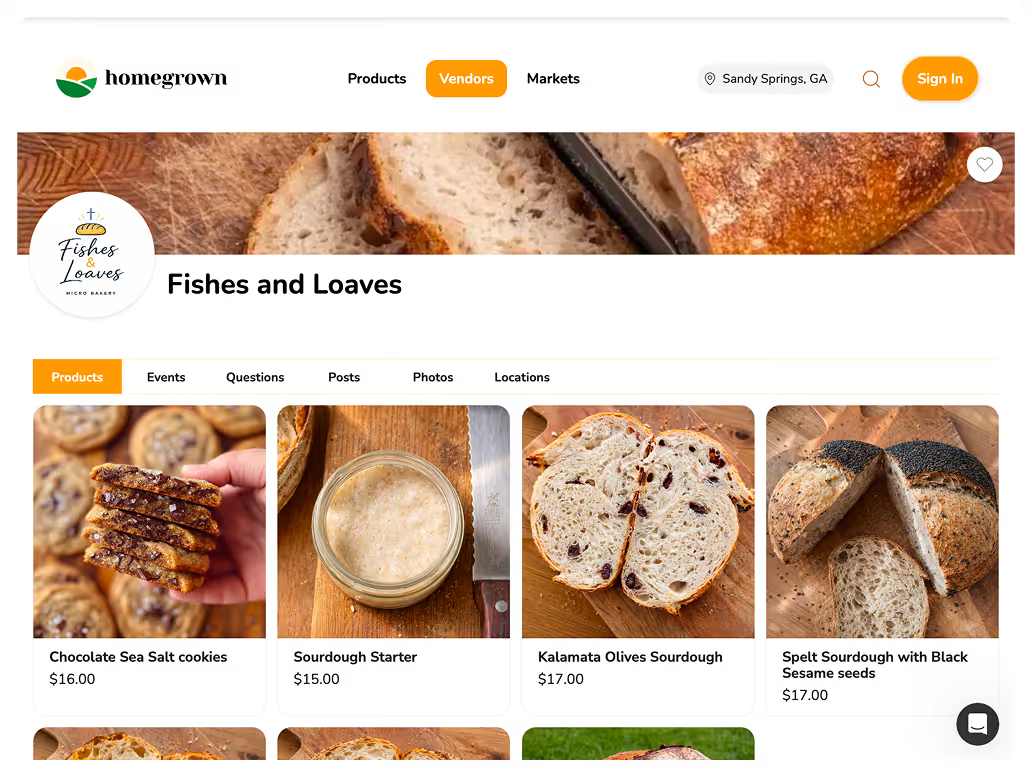
Start your free trial at Homegrown to set up your Christmas pre-order page and let customers browse your menu, select gift sets, and pay online.
Corporate orders have the highest average order value of any sales channel. A single office manager ordering 15 gift boxes at $30 each is $450 from one customer.
This is the $12 to $18 price point, and it drives volume through word of mouth.
Two products can differentiate you from every other cookie seller at the holiday market:
Package 6 to 8 plain baked sugar cookie cut-outs with 2 piping bags of colored royal icing and a packet of sprinkles in a window box. Price at $18 to $30. Parents love these as activity gifts for kids, and they require almost no skilled decorating labor from you — the customer does the decorating. Your cost is mostly the baked cookies and packaging.
Twenty-four mini (2-inch) decorated cookies in a numbered compartment box. Price at $55 to $75. The specialty packaging costs $5 to $7 per unit, but the premium pricing more than covers it. Most home bakers do not offer this because of the packaging logistics, which means less competition and higher perceived value.
Custom decorated cookies (baby shower cookies in July, logo cookies for a launch party) are a year-round revenue stream, but they are especially common during the holidays.
If you are adding online ordering for the first time, read our guide on how to add online ordering to your existing farmers market business for the setup process. Try Homegrown free for 7 days to manage your holiday pre-orders and custom orders in one place.
Gingerbread and shortbread hold for 3 to 4 weeks baked in airtight containers. Decorated sugar cookies hold for 1 to 2 weeks. Drop cookies (chocolate chip, snickerdoodle) hold for 5 to 7 days. Cookie dough freezes for up to 3 months. The best approach is to freeze dough early, bake in stages, and decorate last.
For plain drop cookies, 8 to 12 dozen per day is realistic with a standard home oven. For decorated sugar cookies, 3 to 5 dozen per day including drying time. Decorating is the bottleneck — plan your schedule around it.
No special packaging is required, but your label must include your business name and address, a complete ingredient list, net weight, allergen declarations, and your state's home kitchen disclaimer. Vacuum sealing is not allowed under most cottage food laws. Standard boxes, bags, and tins are all permitted.
Gingerbread and shortbread are the most shipping-friendly because of their long shelf life and sturdy texture. Double-wrap each cookie in cellophane, nestle in tissue paper inside a rigid box, and ship via priority mail (2 to 3 days). Note that most cottage food laws restrict sales to within your state.
Track your actual time per cookie, including mixing, rolling, baking, cooling, decorating, drying, and packaging. Multiply by your target hourly rate ($15 to $25 per hour). Add ingredient cost, overhead (15 to 25 percent), and packaging. Then add your profit margin (70 to 100 percent). A detailed cookie that takes 15 minutes to decorate should retail for $8 to $12.
Only if you can produce them safely in a separate batch with dedicated equipment. Cross-contact with wheat flour is nearly impossible to avoid in a home kitchen producing regular cookies simultaneously. If you cannot guarantee allergen safety, it is better to decline than to risk a reaction. Be honest with customers about your limitations.
Christmas cookies are a seasonal gold mine for cottage food vendors. Start planning in October, price for your actual time, invest in packaging that makes your cookies look like a gift shop product, and open pre-orders early. Start your free trial at Homegrown to build your holiday order page and turn your kitchen into a cookie business.