

The short version: GrazeCart publishes exactly one price: $89 a month for Starter, which is $1,068 a year. Every tier above it renders as dots behind a "Talk with an expert" button, and there is no published processing rate, no published platform fee, and no published trial. What Starter gets you is the sell-by-weight engine GrazeCart is built around, capped at three delivery zones. GrazeCart's Growth tier, the next one up, is where subscriptions, coupons, gift cards, an express point-of-sale, and unlimited zones live, and it has no public price at all. So the real question is not whether $89 is good value. It is whether Starter does what you need, because the moment it does not, you are in a sales conversation with no reference point.
Figures came from GrazeCart's own pricing and payments pages in July 2026.
One number, and a lot of blanks.
| GrazeCart | |
|---|---|
| Subscription | $89/mo Starter. Growth and above are shown as "$ . . ." behind "Talk with an expert." Annual pricing not published |
| Free trial | Not published |
| Platform fee | Not published |
| Card processing | Not published. Absent from both the pricing page and the payments page |
To be fair to GrazeCart, that opacity is normal for farm software sold through a sales team, and it is not evidence of anything except a sales-led motion. What it does mean is that you cannot compare GrazeCart to anything from public information alone, and you should treat any article that publishes a total for it as fiction.
What the public information does support is a fit test, which is what the rest of this page is. While you wait on their sales team, the self-serve side of the category prices out in one evening, which gives the demo a number to beat.
The thing GrazeCart is genuinely known for, and a hard cap.
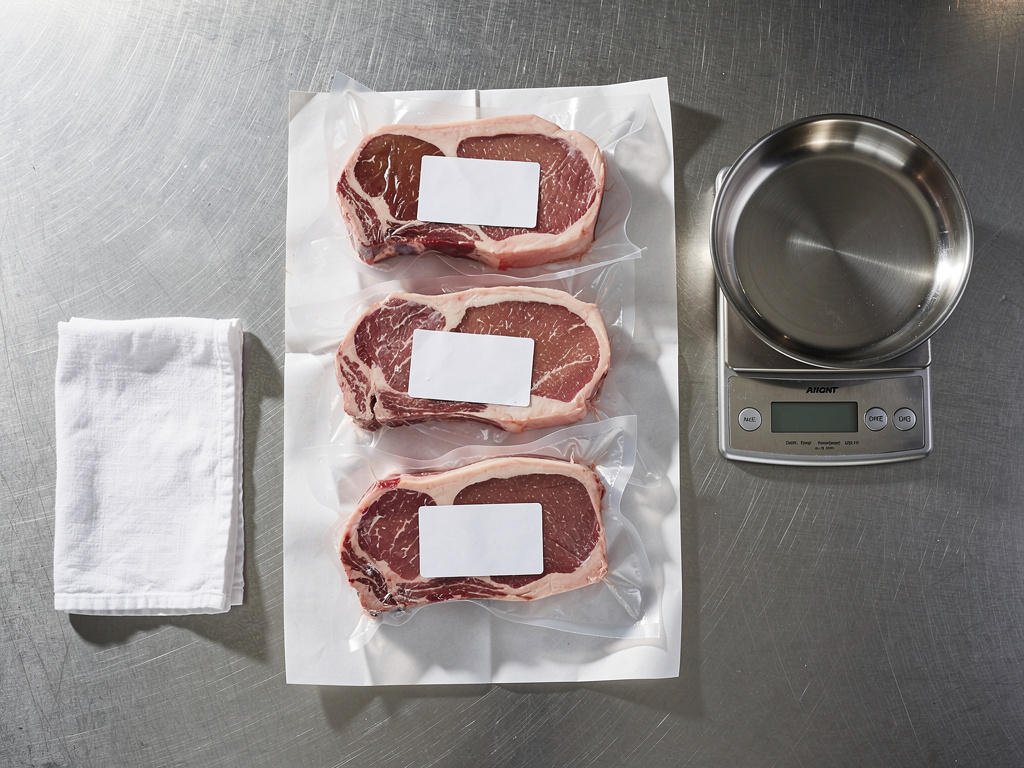
Sell-by-weight is the flagship capability and the reason most farms look at GrazeCart in the first place. If you sell a whole chicken that weighs somewhere between 3.5 and 4.5 pounds, or a beef share cut to order, you need a system that charges the actual weight rather than a fixed price, and most e-commerce platforms simply cannot do this. GrazeCart can, and that is a real differentiator rather than a marketing claim.
Alongside that, Starter is described as an e-commerce solution for small farms, and it is capped at three delivery zones.
That cap is the number to look at hardest. Three zones covers a farm delivering to a couple of nearby towns and a pickup point. It does not cover a farm running six drop sites across a region, or one that wants different delivery rules for different areas.
Sooner than most farms expect, and it is the main reason people end up on the phone.
A delivery zone is usually how these systems express "this area, with this delivery day, this minimum order, and this fee." Three of them means three combinations. Consider a fairly ordinary setup:
That is four, and you are over the cap before you have added anything unusual. A farm that already runs two markets and home delivery will hit three zones in its first month.
So the honest way to evaluate Starter is: write down every distinct combination of place, day, minimum, and fee you currently use. If the count is three or fewer, $89 buys you a genuinely capable system. If it is four or more, Starter is not your price and you should ask what Growth costs before you invest any more time.
GrazeCart's Growth tier adds the features a farm typically wants once it is past the beginner stage: an Express point-of-sale, coupons, gift cards, subscriptions, and unlimited delivery zones.
Subscriptions are the significant one. A farm running a monthly meat share or a recurring box needs recurring billing, and that capability sits on a tier with no published price. If your business model is recurring, you are starting at Growth whether or not you wanted to.
That is worth noticing as a pattern rather than a complaint. The two things most likely to push a growing farm off Starter, recurring shares and a fourth delivery zone, are both extremely common and both sit on the unpriced tier. A farm that grows at all will meet one of them, usually within a year. So treat $89 as an entry price rather than a running cost, and get the Growth quote at the same time you evaluate Starter. Otherwise you are choosing a platform on a number you will stop paying almost immediately.
Since the price is quoted rather than listed, go into that call with your numbers ready and a list:
Question two matters most. A farm doing $150,000 a year through cards is paying somewhere around $4,400 in processing at 2.9%. A half-point difference on that is $750 a year, which is likely larger than any discount you will negotiate on the subscription. Ask about the rate before you spend an hour on the feature tour.
Against general e-commerce, yes. Against farm-specific software, it is mid-range.
At $12,000 a year in sales, adding a common 2.9% plus 30¢ processing rate for comparison:
So GrazeCart costs roughly double a general storefront and sits at the upper end of the farm-specific group. What that premium buys is sell-by-weight, which none of the cheaper options can do at all.
Which makes the evaluation unusually clean. If you sell by weight, the premium is buying you something real. If you sell fixed-price items, you are paying farm-software prices for capability you will never open, and a $144-a-year storefront will handle your orders perfectly well.
Our look at GrazeCart for local food sellers covers the product in more detail, and our comparisons of Local Line vs GrazeCart and Barn2Door vs GrazeCart put it next to the other two farm platforms.
Worth quantifying, because it is the whole argument for the price.
Without it, a farm selling variable-weight cuts has three bad options:
Option one is the common choice, and the cost is real. On a chicken priced at a 4-pound average that actually ranges from 3.5 to 4.5 pounds, you are giving away roughly half a pound on every heavy bird. At $5 a pound across 500 birds a year, the variance you absorb is meaningful money, and that is before the customer complaints about paying the same for a visibly smaller bird.
Option two costs you time. Thirty orders a week each needing a manual adjustment is an hour or two of admin a week, which is 50 to 100 hours a year. At any reasonable value for your time, that alone exceeds GrazeCart's subscription.
Option three costs you customers. Asking someone to pay twice for one order, days apart, is friction that a proportion of buyers simply do not complete, and every uncollected second payment is a bird you already processed.
There is a compliance dimension here too that fixed-price sellers never encounter. Selling by weight means the weight you state has to be right, which is a measurement-standards question rather than a software one. NIST's packaging and labeling program maintains the model regulations states adopt on net-quantity statements, and it is worth understanding what your state requires before you build a store around weight at all.
So for a meat farm, the $89 is straightforwardly justified. For a vegetable CSA selling fixed-price shares, or a baker selling loaves at a set price, it is buying a solution to a problem you do not have.
USDA's Economic Research Service work on food markets and prices gives useful background on where direct-to-consumer meat sales sit, which is worth a look if you are sizing this decision against your likely growth.
That first one is worth pricing. Registration, collection, filing, and remittance is a quarterly obligation measured in hours, and a farm selling across state lines or at multiple markets often has more than one jurisdiction to handle.
If you do not sell by weight and what you actually need is straightforward local ordering, Homegrown is $10 a month billed annually with 0% commission and 2.9% plus $0.30 processing published up front, and it handles pickup at each place you sell with its own schedule and cutoff, local delivery with a radius and a route, and sales tax calculated, filed, and remitted in all 50 states. The honest bounds, stated plainly: it does not sell by weight, it has no subscriptions or recurring shares, no point-of-sale, no gift cards, and it does not ship nationally. If variable-weight pricing or a recurring meat share is your business, GrazeCart does things it cannot. If your products have fixed prices and your problem is juggling pickup days, you can run a week of real orders through it and compare against an $89 subscription on your own numbers.
Question one settles it for most farms. Sell-by-weight is not a nice-to-have for a meat producer, and it is completely irrelevant to a baker. There is very little middle ground.
Before you commit either way, it is worth taking one hour to write down your actual requirements: zones, weights, recurring orders, pickup points, and payment methods. Then price that list rather than the marketing pages. If you want a second number for comparison while you wait on a quote, running a month of real orders through a flat-fee storefront costs nothing and gives you something concrete to hold a quote against.
$89 a month for the Starter plan, which is the only published price. Growth and higher tiers are quoted through a sales conversation and appear as dots on the pricing page.
No. It is absent from both the pricing page and the payments page. Ask for the rate and the underlying processor before signing, since at farm volume it is likely larger than the subscription.
The sell-by-weight engine GrazeCart is built around, plus standard farm e-commerce, capped at three delivery zones. On GrazeCart's own plan comparison, subscriptions, coupons, gift cards, express point-of-sale, and unlimited zones sit on the Growth tier instead.
Three. Count your real combinations of place, day, minimum, and fee before assuming that is enough, because two markets plus home delivery already uses all three.
None is published. Ask directly whether a trial or pilot period is available, since that absence makes the platform harder to evaluate than competitors offering 7 to 30 days.
Because it does something they cannot: charge by actual weight. For a meat farm that is essential. For a fixed-price seller it is capability you will never use, and a general storefront at a fraction of the price will serve you better.
For a farm selling variable-weight cuts, almost certainly. The alternatives are absorbing the weight variance, issuing manual refunds on every order, or invoicing separately, and all three cost more than $1,068 a year in money or hours.
GrazeCart publishes one price, $89 a month, and hides everything else behind a sales call. That is a normal way to sell farm software and it makes independent comparison impossible, so treat any published total for it with suspicion.
What $89 buys is genuinely distinctive: sell-by-weight, capped at three delivery zones. If you sell whole birds, beef shares, or anything cut to order, that capability is worth the premium and very few alternatives offer it at all.
The two things to establish before you go further are the processing rate and what Growth costs. Three delivery zones is fewer than most farms need, subscriptions sit above Starter, and the moment either constraint bites you are negotiating a price with nothing to compare it against.