

Selling food through Instagram does not change the licensing requirements you need to follow. Whether you take orders through DMs, post a menu on your Stories, or sell at a farmers market table, the same cottage food laws apply. Instagram is just a communication channel. Your state does not care how customers find you. It cares what you are selling, how you are making it, and where you are selling from.
This trips up a lot of vendors because social media feels different from a farmers market booth. But legally, it is not. The food safety rules that apply when someone walks up to your table and buys a jar of jam are the same rules that apply when someone messages you on Instagram and picks up that same jar from your porch.
The short version: You do not need a special license to sell food on Instagram. What you need is whatever your state's cottage food law requires, which typically includes registering with your local health department, labeling your products, and staying within your state's annual sales cap. Instagram itself has no food-selling license or permit. The platform does not regulate what you sell or require a business license to operate. Your legal obligations come from your state, not from Instagram. Getting reported is a real risk — here's what to do if you're reported selling food without license. Most cottage food vendors can get fully legal in a few days for under $100.
Cottage food laws are state-level regulations that let you prepare and sell certain foods from your home kitchen without a commercial kitchen license. Every state except one (New Jersey, which requires a commercial kitchen for most home food sales) has some version of a cottage food law.
The specifics vary by state, but most cottage food laws cover these areas:
The University of Nebraska's cottage food law resource notes that even states with newer cottage food programs require basic food safety training and proper labeling before you can legally sell.
You can look up your specific state's rules in the Cottage Food Laws state-by-state directory to see exactly what applies to you.
No. Instagram does not have a food-selling license, a food vendor registration, or any approval process for selling homemade food. The platform's commerce policies focus on prohibited items like drugs, weapons, and counterfeit goods. Homemade cookies and jam are not on that list.
Here is what Instagram does and does not regulate:
| Area | Instagram's Role | Your State's Role |
|---|---|---|
| Food safety | No rules | Sets cottage food law requirements |
| Product labeling | No rules | Requires specific label information |
| Business license | Not required to post/sell | May require registration or permit |
| Sales limits | No cap | Often sets annual revenue limits |
| What you can sell | Bans illegal items only | Specifies allowed cottage foods |
| Where customers get food | No rules | Usually requires direct-to-consumer |
| Payment processing | No built-in requirement | May regulate sales tax collection |
The only Instagram-specific thing you should know is that if you use Instagram Shopping (tagged products, in-app checkout), you need to comply with Meta's Commerce Policies. But most cottage food vendors do not use Instagram Shopping. They post photos, take orders through DMs or a link in bio, and arrange local pickup. That approach has zero Instagram-specific requirements beyond following the platform's general community guidelines.
Most cottage food vendors selling through Instagram follow a simple workflow that does not require any special platform features or business tools.
Here is the typical process:
This workflow works, but it has some friction points that become painful as you grow past a handful of orders per week. Managing orders through DMs means manually tracking who ordered what, following up on payments, and keeping a mental list of pickup times.
That is where having a dedicated ordering page helps. Instead of fielding 15 DMs every Thursday night, you share one link where customers can see your products, place an order, and pay upfront. You wake up to a clean order list instead of a full inbox.
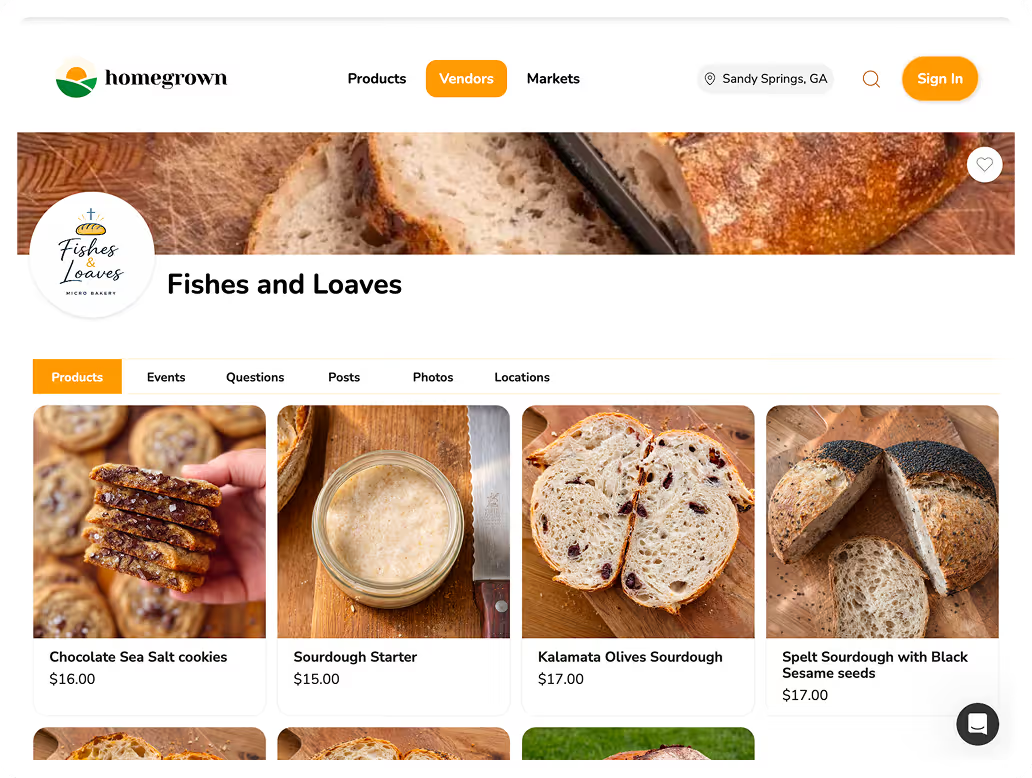
A Homegrown storefront does exactly this. Customers order and pay through one link, and you get an organized list of everything you need to make and who is picking it up. It works alongside your Instagram presence rather than replacing it.
Switching to an Instagram Business account is free, optional, and not a legal requirement for selling food. It does give you access to analytics (how many people see your posts, when your followers are online) and the ability to run ads, but it does not change your legal obligations.
Here is what a business account gives you versus a personal account:
None of these features require a food license, business license, or any government registration. You can sell food through a personal Instagram account just as legally as through a business account.
The CottageFoodLaws.com that shows annual sales limits, which products are allowed, and whether you can sell online — your state's column is the first place to check before opening an Instagram DM order.
That said, a business account does look more professional. Having a contact button and a clean bio with your ordering link makes it easier for customers to find you and place orders.
This depends on your state and city. A cottage food permit (or registration) covers the food safety side. A general business license covers the operating-a-business side. They are two different things, and not every state or city requires both.
Here is how it usually breaks down:
The total cost to get fully set up as a legal cottage food vendor is usually under $100. A food handler's permit runs $10 to $25 in most states. A general business license, if your city requires one, is typically $25 to $75.
Several myths keep popping up in Facebook groups and on social media that confuse new vendors. Here is what is actually true.
False. There is no "online food selling license." Your cottage food permit covers direct-to-consumer sales regardless of whether the customer found you at a market, through Instagram, or through a friend. The sales channel does not create a new licensing requirement. Here are the channels that all fall under the same cottage food law:
False. Instagram does not police cottage food sales. As long as you are not selling prohibited items (alcohol without proper licensing, regulated substances, etc.), Instagram will not remove your posts or ban your account for selling homemade food.
False. Cottage food laws exist specifically so that home kitchen vendors can sell legally without a commercial kitchen. Selling through Instagram does not change this. The same home kitchen rules apply whether you sell in person or take orders online.
This one is partially true. Most cottage food laws require direct-to-consumer sales, which means the customer picks up from you directly. Shipping across state lines brings federal regulations into play (FDA oversight) and takes you outside cottage food law protections. Shipping within your state may be allowed depending on your state's specific law. States with food freedom laws tend to be more flexible here.
It depends on your state. Many states exempt cottage food sales from sales tax entirely. Others require you to collect and remit sales tax once you exceed a certain revenue threshold. Check your state's department of revenue website for the specific rules.
Your Instagram bio is the first thing potential customers see. For a cottage food vendor, it needs to answer three questions fast: what you sell, where you are located, and how to order.
Here is what to include:
Keep it simple and scannable. You have 150 characters in your bio, so every word needs to earn its spot.
Collecting payment is one of the biggest friction points for vendors selling through Instagram DMs. Here are the most common approaches, ranked by how much work they create for you.
| Payment Method | Pros | Cons |
|---|---|---|
| Dedicated ordering page | Customers pay when they order, no chasing payments, organized order list | Small transaction fee (typically 2.9% + $0.30) |
| Venmo/Cash App | Free, most customers already have it | Manual tracking, payment chasing, no order details attached |
| Cash at pickup | Zero fees | No-shows, no advance commitment, awkward if customer forgets cash |
| Square invoices | Professional-looking, card payments | Extra steps to create and send each invoice |
The ordering page approach eliminates the most common headache: customers who say they want to order but never send payment. When payment happens at the time of ordering, you only make what has been paid for.
Your labeling requirements are set by your state's cottage food law, not by Instagram. But selling through Instagram does add one practical consideration: your labels need to be attached to the product at the time of pickup, not just displayed at a booth.
Most states require these label elements:
Some states also require your cottage food permit number on the label. Check your specific state requirements before printing labels.
Starting small on Instagram is easy. Staying compliant as you grow takes a bit more attention. Here is a checklist for vendors who are scaling up their Instagram food business.
Once you are consistently selling 10 or more orders per week through Instagram DMs, the manual process starts breaking down. That is the point where most vendors benefit from moving their ordering to a dedicated page. A Homegrown storefront gives you a shareable link for your Instagram bio, handles payments at checkout, and keeps your orders organized so you can spend less time managing DMs and more time baking.
Instagram is not the only place cottage food vendors sell online. Here is how it compares to other common channels.
| Platform | Best For | Licensing Needed | Payment Built In |
|---|---|---|---|
| Building a following, showing off products | Same cottage food law | No (use external link) | |
| Community groups, local reach, Marketplace | Same cottage food law | Marketplace has payments | |
| Your own ordering page | Clean ordering, payment at checkout, repeat customers | Same cottage food law | Yes |
| Farmers market | In-person sales, sampling, building trust | Same cottage food law | Bring your own (Square, cash) |
| Etsy/Shopify | Shipping products (may exceed cottage food) | May need commercial license | Yes |
The licensing requirements are the same across Instagram, Facebook, your own website, and farmers markets. The only time licensing changes is when you move into shipping (which may require FDA compliance) or selling through a retail store (which most cottage food laws do not allow).
For a deeper comparison, check out our guide on selling food on Instagram vs Facebook vs your own website.
It depends on your state. About half of U.S. states require a food handler's permit or food safety certification for cottage food vendors. This requirement applies regardless of whether you sell on Instagram, at a farmers market, or from your front porch. The permit typically costs $10 to $25 and involves a short online course.
Instagram does not ban accounts for selling homemade food. The platform's commerce policies target illegal items, not cottage food products. As long as your food is legal under your state's cottage food law and you are not making health claims that violate FDA regulations, your account is safe.
You do not need to form an LLC or corporation. Most cottage food vendors operate as sole proprietors, which requires no paperwork to set up. Some cities require a general business license regardless of what you sell, so check with your city clerk. But Instagram itself does not require any business registration.
Yes, as long as baked goods are on your state's approved cottage food items list, which they are in nearly every state. Taking the order through a DM is no different legally from taking the order in person at a farmers market. The method of communication does not change the food safety requirements.
This varies by state. Many states fully exempt cottage food sales from sales tax. Others require you to collect sales tax once your revenue exceeds a threshold. A few states tax all food sales regardless of the source. Check your state's department of revenue website or call them directly for a clear answer.
If you exceed your state's annual sales cap, you typically need to either stop selling for the rest of the year or upgrade to a higher-level food license. Upgrading usually means getting a commercial kitchen license, renting commercial kitchen space, or applying for a food establishment permit. Some states give you a grace period. Others require you to stop immediately upon hitting the cap.
Yes, in most states. Cottage food laws apply to your home kitchen, and an apartment kitchen counts. However, check your lease agreement. Some landlords prohibit running a business from the unit. If your lease allows it and your state allows cottage food sales, your apartment kitchen is a legal production space.
Getting legal to sell food on Instagram is simpler than most people think. Your licensing requirements come from your state's cottage food law, not from Instagram. In most states, you can be fully set up in a few days for under $100.
Once you know you are legal, the next step is making ordering easy for your customers. Instead of juggling DMs and chasing payments, give your customers one link where they can see your menu, place an order, and pay upfront. Set up your free Homegrown storefront and share the link in your Instagram bio. You will spend less time in your inbox and more time in your kitchen.