

When people think about selling homemade food online, they default to Etsy or Shopify. Etsy charges 6.5% per transaction plus listing fees, and most food products get buried under crafts and vintage items. Shopify costs $39 or more per month and requires you to drive every visitor yourself. Neither platform was built for a cottage food vendor selling sourdough and jam at the local level. For more on this, see our guide to sell food on your own website without shopify. Related: write product descriptions that sell food online.
The good news: there are better options. Some are online platforms designed for food. Others are physical channels most vendors never consider. All of them let you sell homemade food without fighting Etsy's algorithm or paying Shopify's monthly bill.
Here are 7 places to sell homemade food that are actually built for how small food vendors operate.
The short version: The best places to sell homemade food outside of Etsy and Shopify are local food marketplaces, Facebook groups and Marketplace, farmers markets, local coffee shops and retail stores, community food drops, your own pre-order page, and pop-up events. Each channel has different strengths — marketplaces bring built-in customers, Facebook groups build community, and coffee shops provide steady wholesale income. Most successful vendors use 2-3 of these channels together rather than relying on one.
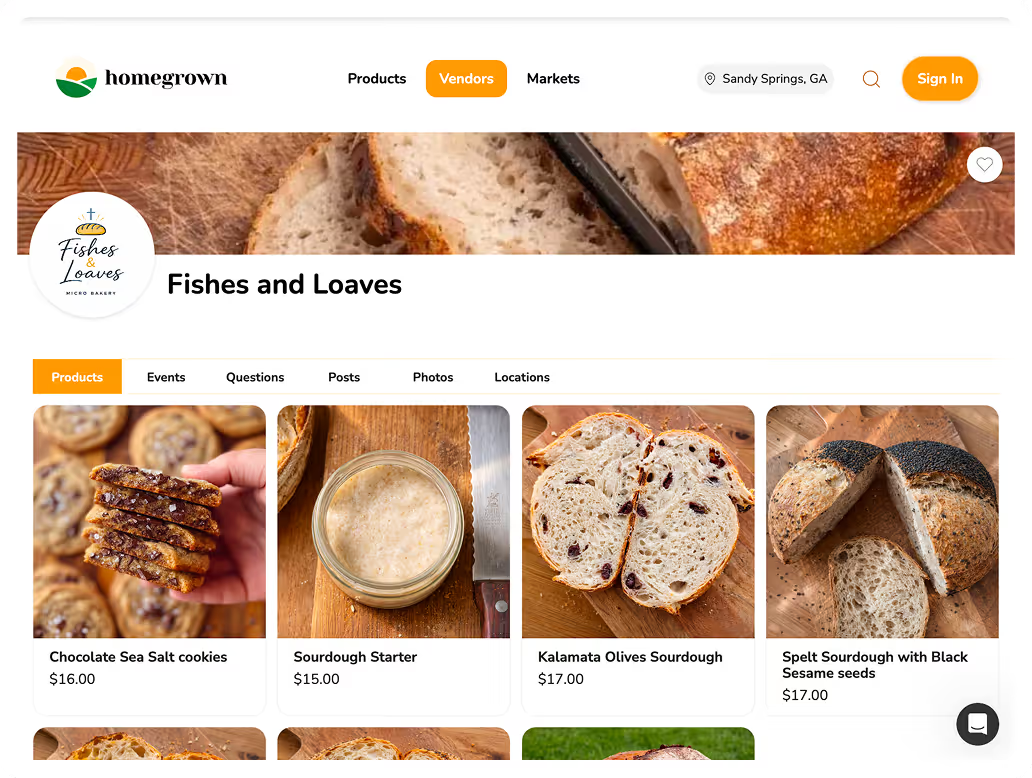
A local food marketplace is an online platform where multiple food vendors list products, and customers in your area browse, order, and pick up locally. It works like a digital farmers market — the platform brings customers to you instead of you driving traffic to a standalone store.
Why this works for small vendors:
Best for: Vendors who want online orders without building and marketing their own website. If you've been weighing whether you need a website, marketplace, or just an order form, a local food marketplace is usually the answer for part-time vendors.
Getting started: Sign up for a Homegrown storefront, add your top 10 products, and share the link at your next market. Most vendors are taking orders within a week.
Facebook is quietly one of the best places to sell homemade food locally. Not through Facebook Shops or paid ads — through community groups and Facebook Marketplace listings.
Two channels work especially well:
Why this works:
Best for: Vendors just starting out who want to test demand with zero investment. Also great for seasonal or limited-run products where you want fast local visibility.
The downside: No built-in payment processing (you'll handle payments separately via Venmo, Cash App, or cash on pickup) and no order management system. As volume grows, you'll want to move to a platform with proper ordering. But for your first 10-20 customers, Facebook groups are hard to beat.
This might seem obvious, but farmers markets remain one of the best sales channels for homemade food — and many vendors underestimate how many markets exist in their area. According to Enko Products' research on food selling platforms, farmers markets and local events are still among the most effective channels for cottage food vendors because they combine face-to-face trust-building with immediate sales.
What makes markets special:
Best for: Every food vendor. Markets should be your foundation, not your only channel. The vendors who do best use markets to build their customer base and then add online channels to sell between market days.
Pro tip: Don't just apply to one market. Most areas have 5-15 farmers markets within driving distance, running different days of the week. Apply to 2-3 and see which ones generate the best sales for your products.
Wholesale to local businesses is an overlooked channel that can generate steady, predictable income. A single coffee shop ordering 3 dozen cookies per week at wholesale prices is $150-$300 per month — without you having to set up a booth, manage customers, or spend time at a market.
Where to pitch:
How to approach them:
Best for: Vendors with shelf-stable products (cookies, bread, jam, honey, granola) or items with a 3+ day shelf life. Not ideal for highly perishable products that need to be eaten same-day.
Pricing: Wholesale is typically 50-60% of your retail price. If you sell cookies for $3 each at the market, wholesale to a coffee shop at $1.50-$1.80 each. They mark up to $3.50-$4.00 and you both make money.
A food drop is a pre-order pickup model where customers order online and pick up at a designated location — your front porch, a church parking lot, a friend's house in a busy neighborhood, or a community center. It's like a mini farmers market you control.
How it works:
Why food drops work:
Best for: Vendors in suburban or rural areas where farmers markets are sparse. Also great for vendors who can't commit to full market days due to work schedules or family obligations.
You don't need a website to take pre-orders online. A pre-order page is a single shareable link where customers can see your products, place an order, and pay — all without you building, designing, or maintaining a website.
The difference between a pre-order page and a full website:
| Feature | Pre-Order Page | Full Website |
|---|---|---|
| Setup time | 30-60 minutes | 1-2 weeks |
| Monthly cost | $0-$15 | $29-$79+ |
| Technical skills | None | Moderate |
| Payment processing | Built in | Requires setup |
| Marketing needed | Share the link | SEO, ads, content |
| Order management | Built in | Requires plugins |
According to StackFood's food delivery industry data, direct ordering from food businesses continues to grow year over year, with consumers preferring to order directly rather than through third-party aggregators. A pre-order page gives customers that direct connection without the overhead of a full ecommerce site.
Best for: Vendors who already have customers (from markets, social media, or word of mouth) and need a simple way to take orders and payments. It's the bridge between "texting orders back and forth" and "running a full online store."
Getting started: Set up a Homegrown pre-order page — add your products, set pickup times, and share the link on social media and at your booth.
Beyond traditional farmers markets, there's a growing world of pop-up selling opportunities that most food vendors overlook:
Best for: Vendors who enjoy in-person selling and want to diversify beyond traditional farmers markets. Pop-ups also work great for testing new products or new areas before committing to a regular market.
Pro tip: Bring a sign with a QR code to your pre-order page at every pop-up event. Convert one-time pop-up buyers into repeat online customers.
You don't need all seven channels. Most successful small food vendors use 2-3 that complement each other. Here's the simplest starting combination for different situations:
| Your Situation | Start With | Add Next |
|---|---|---|
| Brand new, no customers yet | Farmers market + Facebook groups | Local food marketplace |
| Have market regulars, want online sales | Local food marketplace + pre-order page | Coffee shop wholesale |
| Can't do markets (work schedule) | Food drops + Facebook groups | Pop-up events on weekends |
| Shelf-stable products (jam, honey, granola) | Coffee shop wholesale + marketplace | Holiday pop-up markets |
| Already selling via DMs and texts | Pre-order page (immediately) | Marketplace + food drops |
The key principle: start where customers already exist, then add channels that help those customers order more easily and more often. A marketplace brings you new customers. A pre-order page makes existing customers order more frequently. Wholesale creates predictable baseline revenue. Each channel fills a different gap.
For most of these channels, yes — you need to comply with your state's cottage food laws. The good news is that most states allow cottage food sales at farmers markets, through online pre-orders with local pickup, and at community events. Wholesale to retail stores may require additional permits depending on your state. Check your state's specific rules before starting.
Yes, and you should. Most successful small food vendors use 2-3 channels simultaneously. The key is managing your production capacity — don't overcommit across channels. Start with two and add a third once your production workflow is smooth.
Farmers markets typically generate the most revenue per event for vendors selling perishable products. For shelf-stable products, wholesale to local stores can generate the most consistent monthly revenue because it's predictable and recurring. Online pre-orders through a marketplace are the fastest-growing channel and eventually become the largest revenue source for most vendors because they capture demand 7 days a week, not just on market days.
Most vendors use Venmo, Cash App, or Zelle for Facebook orders. Collect payment at the time of order (not at pickup) to reduce no-shows. For higher volume, switch to a pre-order page with built-in payment processing — it's more professional and saves you the hassle of tracking individual payment app transactions.
Food drops and online pre-orders are your best options. Set up a weekly pickup at your home (check local regulations first) and promote it through Facebook groups and Nextdoor. Many rural vendors also do well with wholesale to local general stores, feed stores, or gift shops that serve as community gathering points.
Give each channel 4-6 weeks of consistent effort before evaluating. If after 6 weeks a channel generates fewer than 3-5 orders per week, it may not be worth the time investment. But before dropping it, make sure you've actually promoted it — a marketplace listing nobody knows about isn't a failed channel, it's an unpromoted one. Tell your existing customers about every channel you're on.
Etsy can work if you sell shelf-stable products that ship well (cookies, candy, spice blends) and you want to reach national customers. Shopify makes sense once you're doing $3,000+ per month in online sales and need full control over your brand. But for most local food vendors making $500-$2,000 per month, neither platform is the best starting point. The channels in this list are cheaper, simpler, and better suited to local food sales.
Etsy and Shopify are fine platforms — for the right businesses at the right stage. But for a part-time food vendor selling locally, they're expensive tools that solve the wrong problem. You don't need a bigger platform. You need customers who can find you and a simple way to take their orders.
Pick 2-3 channels from this list. Set them up this week. Tell your existing customers about them. Within a month, you'll have sales coming from places that actually work for your business — without paying $39 per month for a store nobody visits or 6.5% per sale to a platform that buries your listing.
Try Homegrown's marketplace storefront — list your products on a local food marketplace, share your link, and start getting orders from customers who are already looking for food like yours.