


To start a cottage food business in Connecticut, you complete a food-safety course (~$15), apply for a $50 cottage food license, pass a home-kitchen inspection, label your products, and start selling — with a $50,000 annual sales cap. The Department of Consumer Protection runs the program. This is the step-by-step playbook; for the full legal detail, see our Connecticut cottage food law guide.
The short version: Connecticut is a license-and-inspection state. You complete an approved food-safety training course (~$15), apply for a $50 license, and pass a home-kitchen inspection by the Department of Consumer Protection (DCP). Sales are capped at $50,000/year and you must keep records. You can sell non-perishable foods like breads, cookies, cakes, fruit pies (not pumpkin), jams, and granola — but not acidified foods like pickles or hot sauce. Get licensed, label correctly, and you can sell.
Connecticut has modest upfront costs:
Most Connecticut sellers start for under $250 including the license and course.
Plan for a couple of weeks, driven by the license + inspection scheduling:
Connecticut allows non-perishable foods: breads, cookies, cakes, fruit pies (not pumpkin), jams, jellies, granola, and dry mixes. Acidified foods like pickles and hot sauce aren't allowed. The full allowed/prohibited lists and labeling rules are in our Connecticut cottage food law guide and cottage food labeling guide.
Connecticut cottage food is sold direct to consumers:
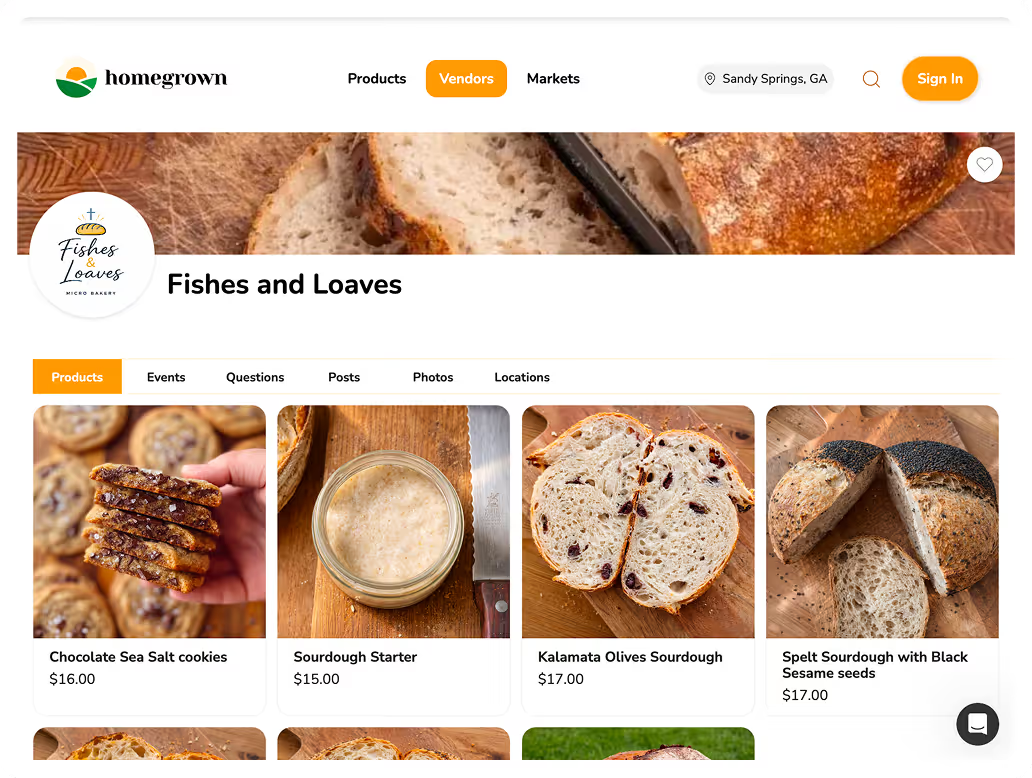
Because Connecticut allows online ordering with local pickup, a real storefront makes selling far easier — and helps you keep the sales records the state requires. Homegrown gives Connecticut cottage food sellers an online storefront with built-in payments and pickup for $10/month at 0% commission — you keep every dollar except standard card processing. Start a free trial and have a Connecticut-ready storefront live in about 15 minutes.
The cap is $50,000 in gross annual sales. To get the most out of it:
Starting a cottage food business doesn't require an LLC, but it's worth understanding the basics: see whether you need an LLC to sell food from home and how cottage food taxes work on Schedule C. In Connecticut you may also need a sales tax permit from the Department of Revenue Services depending on what you sell.
Yes. Connecticut requires a $50 cottage food license, a ~$15 food-safety course, and a home-kitchen inspection by the Department of Consumer Protection before you sell.
About $65 for the license and course, plus labels, packaging, and ingredients — most sellers start under $250. An online storefront adds $10/month.
Up to $50,000 in gross annual sales. You must keep records of all sales.
Non-perishable foods: breads, cookies, cakes, fruit pies (not pumpkin), jams, and granola. Acidified foods like pickles and hot sauce aren't allowed.
Usually a couple of weeks, driven by the license application and home-kitchen inspection.
No. Most sellers start as sole proprietors. An LLC is optional and mainly about liability protection if you scale.
Connecticut asks for a course, a $50 license, and an inspection upfront — then you can sell up to $50,000 a year. Get licensed, label correctly, and set up an easy way for customers to order and pay. Set up a Homegrown storefront to take Connecticut cottage food orders online, see the best platform to sell food from home, read the full Connecticut cottage food law, and compare other states on our cottage food laws by state hub.
*This guide is general information, not legal advice. Cottage food rules change — verify current requirements with the Connecticut Department of Consumer Protection before you start selling. Last verified: June 2026.*
Selling at farmers markets? See our Connecticut farmers market vendor permit guide for the permits you need on market day.