

There is a person who just finished a hot yoga class, walked out sweating, and is craving something to eat. There is another person who just crushed a CrossFit workout and wants a snack that will not undo everything they just did. And right now, neither of them has a convenient option. The studio does not sell food. The nearest healthy option is a 10-minute drive away.
You could be standing right there with a tray of energy bites, a basket of house-made granola, or a cooler of fresh smoothie cups. Wellness venues like yoga studios, gyms, CrossFit boxes, and health-focused event spaces are underused sales channels for food vendors, especially those making clean-ingredient, health-conscious products.
The short version: Yoga studios, gyms, CrossFit boxes, and wellness events are largely untapped sales channels for food vendors who make healthy, clean-ingredient products. These customers are willing to pay a premium for food that fits their lifestyle, often 15 to 25 percent more than general market prices. The best products for these venues are energy bites, granola, protein snacks, raw treats, and other portable, ingredient-transparent options. Approach studio owners directly, propose a trial popup, and emphasize how your products complement their business. Wellness fairs, health expos, and 5K races are additional high-value events to target.
Wellness venues are an excellent sales channel for food vendors because the customer base is pre-qualified. Everyone who walks into a yoga studio or gym has already demonstrated that they care about their health. The International Health, Racquet & Sportsclub Association (IHRSA) tracks over 185 million gym memberships in the U.S. alone, representing a massive addressable market of health-conscious consumers. That means they are far more likely to buy food that aligns with that identity.
Here is what makes these venues valuable:
The products that sell best at yoga studios, gyms, and wellness events are portable, clean-ingredient, and easy to eat right after a workout or class. Heavy, greasy, or overly sweet products will not move in these venues.
Top sellers:
What does not sell well:
Key selling point: ingredient transparency. Wellness customers read labels. They want to know exactly what is in your product. Short ingredient lists with recognizable whole foods are a major advantage. If your energy bites are made with dates, almonds, cacao, and coconut oil, put that front and center on your label and your signage.
| Product Category | Price Range | Best Venue | Why It Works |
|---|---|---|---|
| Energy bites (pack of 4) | $5-$7 | Yoga studios, gyms | Portable, post-workout fuel |
| Granola (8 oz bag) | $7-$10 | All wellness venues | Take-home, repeat purchase |
| Raw treats | $4-$6 each | Yoga studios, wellness fairs | Clean ingredients, no baking needed |
| Protein bars | $4-$6 each | CrossFit, gyms | Post-workout recovery snack |
| Smoothie cups | $7-$10 | Gyms, yoga studios | Refreshing, immediate consumption |
| Trail mix (6 oz bag) | $6-$8 | All wellness venues | Easy grab-and-go, shareable |
Studio and gym owners are usually approachable, community-minded people who want to add value for their members. Most have never been approached by a food vendor, so you are introducing something new rather than competing for an existing slot.
Here is how to approach them:
Studio owners care about five things: whether this adds value for members, whether it looks clean and professional, whether it costs them anything, whether it creates mess or disruption, and whether the food matches their health-conscious values. Address all five in your pitch and you will get a yes more often than not.
Building a recognizable brand helps enormously in these spaces — for guidance on that, check out our article on how to build a brand as a one-person food business.
Wellness customers will pay a premium for clean-ingredient, locally made food. Price your products 15 to 25 percent higher than your farmers market prices. This audience expects premium pricing and will question quality if your products seem too cheap.
Pricing principles for wellness venues:
| Product | Farmers Market Price | Wellness Venue Price | Price Increase |
|---|---|---|---|
| Energy bites (4-pack) | $5.00 | $6.00-$7.00 | 20-40% |
| Granola (8 oz) | $7.00 | $8.00-$10.00 | 14-43% |
| Raw brownie | $4.00 | $5.00-$6.00 | 25-50% |
| Protein bar | $4.00 | $5.00-$6.00 | 25-50% |
| Smoothie cup | $7.00 | $8.00-$10.00 | 14-43% |
Do not feel guilty about premium pricing. You are selling convenience, quality ingredients, and alignment with the customer's values. That combination commands a higher price in every market.
Your setup at a yoga studio or gym needs to match the space: clean, minimal, intentional. A farmers market display with bright banners and cluttered tables will feel out of place. Think spa, not carnival.
Setup essentials:
Timing your setup:
Branding matters more here than anywhere else. Wellness customers associate clean branding with clean products. If your labels are handwritten on masking tape, upgrade to printed labels. If your packaging is generic plastic bags, switch to kraft paper or compostable pouches.
Beyond individual studios and gyms, wellness events are high-volume selling opportunities where you can reach hundreds of health-conscious customers in a single day. These events are worth seeking out.
Types of wellness events to target:
How to find these events:
Booth fees at wellness events range from $50 to $200. Customer volume is higher than a single studio popup, often 200 to 500 attendees. You will likely need a full display setup similar to a farmers market.
Tips for wellness events:
For more ideas on promoting your business at events without spending money, see our guide on how to market your food business with no budget.
A single popup at a yoga studio is a nice payday. A recurring weekly popup is a reliable revenue stream. Here is how to turn a trial into an ongoing partnership.
The goal is to become part of the studio's identity. When members think about their Saturday morning routine, it should be: yoga class, grab energy bites from you, head home.
In most states, you can sell cottage food products at a yoga studio the same way you would at a farmers market — under your state's cottage food law. However, some states restrict cottage food sales to specific venues like farmers markets and fairs. Check your state's cottage food law to confirm that selling at a private business location is allowed. Some studios may also ask you to provide proof of a food handler's permit or liability insurance.
At wellness venues, dietary labels are almost mandatory. At minimum, clearly label whether your products are gluten-free, vegan, dairy-free, nut-free, or paleo. If your products contain common allergens (nuts, soy, wheat, dairy, eggs), list them prominently. The Food Allergy Research & Education (FARE) labeling guidelines explain what allergen disclosures consumers expect to see. Wellness customers often have specific dietary needs or preferences, and clear labeling builds trust and eliminates hesitation at the point of sale.
For a single class with 20 to 30 attendees, bring 15 to 25 units of product. Not everyone will buy, but conversion rates at wellness venues tend to be high — often 40 to 60 percent of attendees. If you are catching multiple classes in one session, scale up accordingly. It is better to bring too much than to sell out early and miss customers from the later class.
Large chain gyms are difficult because purchasing decisions are made at the corporate level, not by the local manager. Independent gyms, CrossFit boxes, boutique fitness studios, and locally owned yoga studios are much better targets. The owner is usually on-site, makes their own decisions, and is motivated to create a community atmosphere. If you are set on a chain gym, ask the local manager if they have any flexibility for local vendor partnerships.
Some studio owners will ask for 10 to 20 percent of your popup sales, similar to how taprooms sometimes operate. This is reasonable and common. Factor that percentage into your pricing before your first popup so your margins stay healthy. If the percentage feels too high, negotiate or offer an alternative: a flat monthly fee for access, or a consignment arrangement where they sell your products from the front desk and keep a markup.
If your products need refrigeration, bring a cooler with ice packs and a food thermometer to verify cold products stay below 41 degrees Fahrenheit. For shelf-stable cottage food products like granola, energy bites, and baked goods, standard room-temperature display is fine. Label perishable products with a "best by" date and take unsold perishable products home.
Yoga studios, gyms, CrossFit boxes, and wellness events are full of people who want exactly what you make: real food with clean ingredients. These customers do not need to be convinced. They need access.
Walk into a local studio this week. Take a class. Talk to the owner. Bring samples. You are solving a problem they already have.
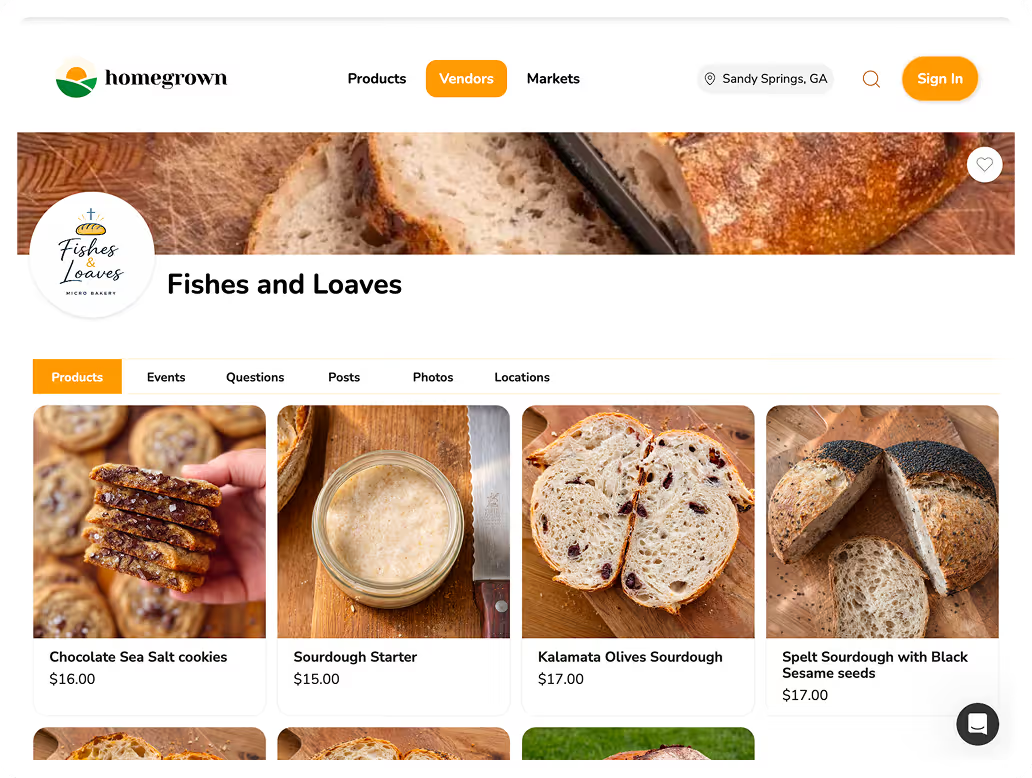
Between popup days, keep your products available online with a Homegrown storefront so your wellness customers can reorder their favorites and share them with friends who were not at class.