

The best way to handle sold-out products is to turn the disappointment into a future sale. When a customer asks for something that is sold out, respond with what you DO have available and when the sold-out item will be back. Then give them a way to order it next time before anyone else — a pre-order link, a waitlist, or first access to your next batch. Selling out is a sign your products are in demand. The goal is to keep that demand alive instead of letting disappointed customers drift away. For production planning that prevents frequent sellouts, understanding your product's shelf life — which Cultures for Health covers in depth for fermented products — helps you stock the right amount without overproducing.
The short version: Selling out is a good problem. The way you handle it determines whether the customer comes back next week or finds another vendor. Never just say "sold out" — always add what you have instead, when the item returns, and how they can secure it next time. The best long-term fix is a pre-order system where customers order and pay before you bake, so you always make exactly what is ordered and nothing sells out unexpectedly. A platform like Homegrown ($10 per month) lets customers pre-order for pickup, which eliminates sold-out situations entirely for your online customers while keeping walk-in availability at the market as a bonus.
Selling out should feel like a win. Your products are so good that demand exceeds supply. But for most vendors, selling out creates three painful situations:
The frustration is not about the sale you lost today. It is about the customer you might lose permanently. A first-time customer who encounters "sold out" on their first interaction has no loyalty to your brand. They will try the vendor next to you. And if that vendor has what they want, they might not come back.
The words you use matter. Here is a framework that turns a sold-out moment into a future sale:
"The cinnamon rolls went fast this morning — they were gone by 9:30." This frames selling out as a positive signal (they are popular) rather than a failure (we ran out). One quick "sorry about that" is fine. Do not over-apologize — it makes the customer feel worse, not better.
"I still have sourdough loaves, chocolate chip cookies, and strawberry jam." Never let the conversation end with "sold out." Always redirect to what is available. Many customers will buy something else if you suggest it.
"Cinnamon rolls will be back next Saturday. I usually bring 24 and they go fast — if you want to guarantee one, I can save you a pre-order spot." This creates urgency and gives the customer a reason to return.
This is the most important step. A sold-out moment is the perfect time to introduce your ordering link: "I have a link where you can pre-order for next week. You pick what you want, pay ahead, and I will have it ready for you when you arrive. That way you never miss out."
Hand them a card with your QR code or text them the ordering link. They order from their phone right there, and you have a guaranteed sale for next week.
The cost of a bad sold-out interaction goes beyond the single lost sale:
The vendors who handle sold-out situations well actually build stronger customer loyalty than vendors who never sell out. When a customer learns they can always pre-order and guarantee their items, they become more committed, not less. The key is giving them that option instead of just saying "sorry."
DM sold-out conversations follow the same framework but with one addition: always end with your ordering link so they can self-serve next time.
Bad response: "Sorry, sold out!"
Good response: "The strawberry jam sold out this morning — it goes fast every week! I still have blueberry and peach if you want either of those. Strawberry will be back next Saturday. If you want to grab it before it sells out, you can pre-order through my ordering link: [your link]. That way you are guaranteed a jar."
The difference is clear. The bad response ends the conversation with disappointment. The good response redirects to available products, promises a return date, and gives the customer a tool to avoid this situation next time.
Selling out at the booth is not entirely preventable — you cannot predict exactly how many walk-up customers will want cinnamon rolls on any given Saturday. But you can dramatically reduce how often it happens.
When customers order and pay before market day, you know exactly how much to make. If 15 people pre-ordered cinnamon rolls and you normally bring 24, you know you have 9 left for walk-ups. You can adjust your production to match demand.
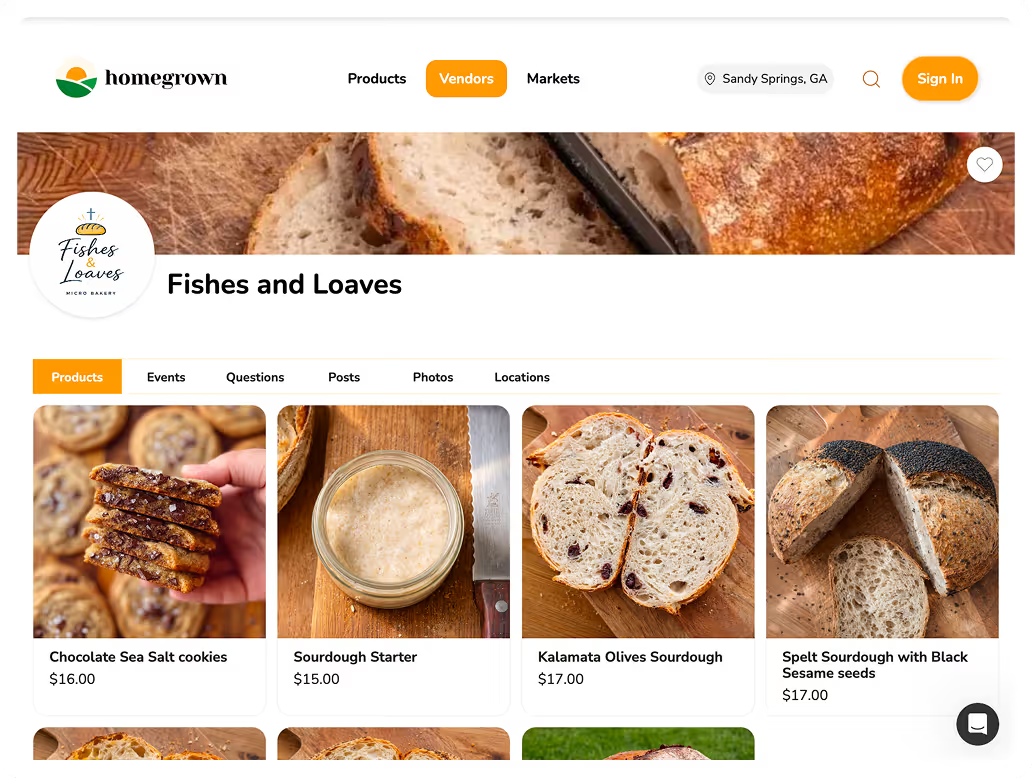
Taking pre-orders through Instagram DMs works for a handful of regulars, but once 10 people are messaging you every Wednesday asking what is available, the thread becomes its own problem. Etsy is designed for shipping, not Saturday farmers market pickup. Homegrown costs $10/month with no percentage fees beyond standard payment processing (2.9 percent plus $0.30 per transaction) — customers see your products, order, pay, and choose pickup or local delivery. You see total orders before you start baking. Pre-ordered items are never "sold out" because they were claimed and paid for in advance. Homegrown does not help you decide how much to produce, manage your booth setup, or handle walk-in customers at the market — it captures the advance orders that prevent sold-out situations.
Keep a simple log: what product, what time it sold out, and how many you brought. After a few weeks, patterns emerge. If sourdough sells out by 10 AM every Saturday when you bring 15 loaves, bring 20 next week. If jam rarely sells out, do not overproduce it.
If you sell an average of 20 cookie boxes per market, bring 25. The extra 5 give you a cushion for unexpectedly high demand. If they do not sell, bring them home and freeze them or offer them at a discount at the end of the day.
Some vendors intentionally produce limited quantities to create urgency. "I only make 12 pies per week" is a scarcity signal that drives customers to order early. This works well when paired with a pre-order system — customers learn that if they want your pie, they need to order by Wednesday.
Post your inventory on Instagram or Facebook the day before market. "Saturday lineup: 20 sourdough loaves, 15 cookie boxes, 10 jam jars. Pre-order to guarantee yours, or come early for walk-in availability." This sets expectations so customers know to arrive early or pre-order. Nobody likes finding out their item is gone after they are already at the market.
A waitlist converts today's sold-out disappointment into next week's guaranteed sale:
The waitlist is simple: a list of names and what they want. Text them when the product is available. The personal touch ("Hey Sarah, cinnamon rolls are up for pre-order for Saturday — I saved you a spot") creates loyalty that no generic email can match.
Some vendors take this further by offering "first access" to waitlisted customers. Open pre-orders to your waitlist on Monday, then to the general public on Wednesday. This rewards loyal customers and guarantees that the people who missed out last week get first priority this week. It is a simple gesture that builds significant goodwill.
You can also use sold-out moments to grow your text or email list. "Can I add you to my text list? I send a message every Monday when pre-orders open so you never miss out." This turns a negative moment into a marketing asset. Every sold-out interaction is an opportunity to build a direct communication channel with a customer who already wants your products.
The long-term fix is shifting your business model from "make first, sell later" to "sell first, make later."
| Model | How It Works | Sold-Out Risk |
|---|---|---|
| Make first, sell at market | You produce, then hope customers buy | High — demand is unpredictable |
| Pre-orders only | Customers order before you produce | Zero — you make exactly what is ordered |
| Hybrid (pre-orders + walk-ins) | Pre-orders set the base, extra for walk-ins | Low — base production is guaranteed |
The hybrid model is the sweet spot for most vendors, and it aligns with how direct-market farms structure their sales — a guaranteed base with walk-in upside. StandScout's cottage food law guides cover the state-by-state rules for this model. Pre-orders guarantee your base revenue and production plan. Walk-in sales at the market add bonus revenue on top. You still bring extra product for impulse buyers, but you never face a situation where you made 50 items and sold 20.
For more on setting up pre-orders alongside your market sales, our guide to DM orders vs online storefronts covers when to make the switch. And if you are comparing platforms for pre-ordering, our best online ordering system for cottage food breaks down the options.
If you want tips on using Instagram to promote your products before market day (so customers pre-order instead of hoping you have it at the booth), our Instagram tips for farmers market vendors covers what to post and when.
Selling out is a positive demand signal, but how you handle it determines the outcome. If customers walk away disappointed with no way to get your product next time, selling out hurts you. If you redirect them to a pre-order link and guarantee availability next week, selling out becomes a growth driver. The goal is to channel the demand, not waste it.
If you consistently sell out within the first hour, your prices may be too low or your production too small. Consider raising prices by 10 to 15 percent and tracking whether you still sell out. If demand stays the same at a higher price, your margins improve without requiring more production. If demand drops slightly, you sell out later in the day instead of early, which means more customers get served.
Frame it as popularity, not shortage. "The cinnamon rolls are our most popular item — they went fast this morning!" is positive. "Sorry, we ran out" is negative. Always follow with what you have available and how they can pre-order next time.
If you brought extra as a buffer and it did not sell, you have a few options: discount it at the end of market day, freeze it for next week (if the product freezes well), donate it to a local food bank, or bring it to a second market later in the week. Do not throw it away — that is lost revenue and wasted ingredients.
Start with 20 to 25 percent extra for your most popular items. If you have 20 pre-orders for cookies, bring 25 boxes. Track how many extras sell versus how many you bring home. Adjust over a few weeks until you find the sweet spot where you sell most extras without over-producing.
Yes. This is one of the most effective tactics. When a customer finishes buying, say: "If you want to guarantee your items next week, you can pre-order through this link." Hand them a card with your QR code. Many customers will order before they leave the market, locking in next week's sales before you even start baking.
Stay calm, acknowledge their frustration, and redirect. "I completely understand — those are one of our most popular items. Let me save you a pre-order spot for next week so you are guaranteed one." Most angry reactions come from the feeling of wasted effort (they came to the market specifically for your product). Giving them a guaranteed way to get it next time resolves the frustration.
When you're ready to move ordering off DMs entirely, see Instagram DM Orders Alternative: How to Stop Selling in DMs — a side-by-side comparison of staying in DMs vs Linktree+Venmo vs Google Forms vs a real storefront, with honest cost-and-time math for each option.
> _If the bigger fix is moving the whole order flow out of DMs, this is the comparison breakdown._