

You already have a farmers market business. You've got products people love, regulars who show up every week, and a setup that works. But you keep hearing that you should be selling online too — and you're not sure how to add that without overcomplicating what's already running smoothly.
Adding online ordering to an existing market business isn't about replacing what you do in person. It's about extending it. The customers who buy from you on Saturday should also be able to order from you on Tuesday. The people who follow you on Instagram but can't make it to the market should be able to buy your products anyway.
This guide shows you how to layer online ordering on top of your existing market business — step by step, without disrupting what already works.
The short version: Adding online ordering means setting up a simple storefront with your existing products, linking it from your social media and market booth, and offering pre-orders for market pickup or local delivery. You don't need a website. You don't need to change how you run your market booth. The whole setup takes 1-2 hours, and most vendors see a 20-40% revenue increase within the first month because customers can now order between markets instead of waiting for Saturday.
Markets work — but they have a ceiling. You can only sell to people who physically show up during market hours. Online ordering removes that ceiling without adding a second job.
Here's what online ordering does for an existing market business:
According to Deliverect's food industry research, 67% of consumers now prefer ordering directly from businesses rather than through third-party platforms. That means your customers want to order from YOU — they just need a way to do it.
If you already sell at farmers markets, you already have everything you need except the platform. Here's the full list:
That's it. You don't need a website, a business plan update, new permits (in most states, if you're already selling at markets), or any technical skills. If you can post on Instagram, you can set up an online storefront. The technology has gotten simple enough that vendors regularly set up their entire product catalog during a single baking session.
For an existing market vendor adding online ordering, you need something that's simple, affordable, and designed for your scale. Here's how the main options compare:
| Platform Type | Monthly Cost | Best For | Setup Time |
|---|---|---|---|
| Google Form | Free | Testing if online orders work for you | 30 minutes |
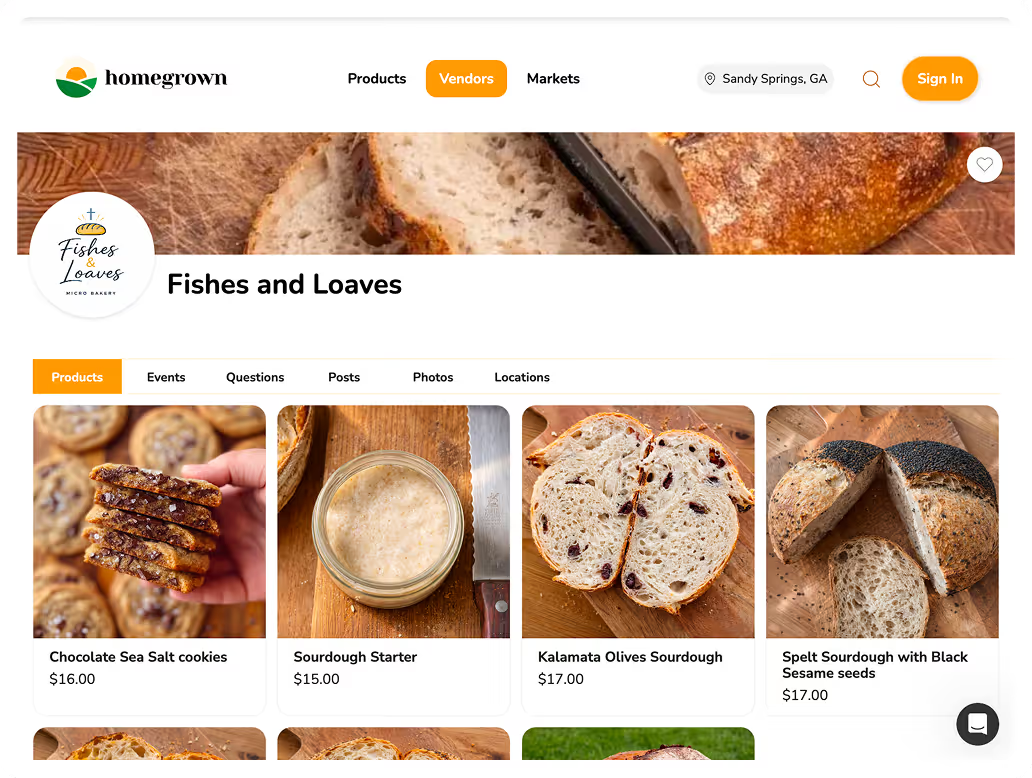
| Storefront (Homegrown) | $10-$12/month | Market vendors wanting payments + product catalog | 1-2 hours |
| Square Online | Free-$29/month | Vendors already using Square at the market | 2-3 hours |
| Shopify | $39+/month | Vendors scaling beyond local (shipping products) | 1-2 weeks |
For most market vendors, a dedicated storefront platform is the right choice. It's designed for exactly your use case: local food, pre-orders, market pickup. If you already have a system for accepting online orders as a market vendor, you can skip ahead to the announcement section.
Here's the step-by-step process. Most vendors finish this in under 2 hours.
Sign up for your platform of choice. Then add your products one by one:
Start with your 5-10 best-selling products. You can add more later. Don't try to list everything on day one.
Most market vendors start with market pickup only. Set your pickup location as your market booth with specific hours:
If you also want to offer home pickup or porch pickup, add that as a second option. Delivery is available from day one if you want it: set your radius, fee, and delivery days and run your own route. Many vendors still start with pickup and add delivery once the pre-order workflow feels comfortable.
This is critical. Set a cutoff so you know what to make before market day.
Pick one and stick with it. Customers learn the rhythm within 2-3 weeks. If you need help building a pre-order workflow, check out our guide on setting up a pre-order page that customers actually use.
Place a test order yourself. Walk through the entire customer experience:
Then ask one regular customer to test it and give you honest feedback. Fix anything confusing before your public launch.
The announcement is where most of the magic happens. Your existing customers are your first online customers — you just need to tell them the option exists.
If you have customer phone numbers or emails, send a short message: "Hey! I just set up online ordering. You can now pre-order for Saturday pickup — everything packed and ready when you arrive. Here's the link: [URL]."
According to MenuTiger's food ordering research, 60% of consumers order food for pickup or delivery at least once a week. Your customers are already comfortable ordering online — they just need to know you offer it.
This is the question every market vendor asks: "How do I handle online orders without messing up my market inventory?" Here's the simple system.
Check how many pre-orders you fulfilled vs. walk-up sales. Over time, you'll see the ratio shift toward pre-orders — which is exactly what you want. Pre-orders mean less waste, better planning, and guaranteed revenue before market day even starts.
Keep a simple tally each week: number of pre-orders, total pre-order revenue, total walk-up revenue, and total products left over. Within a month, you'll see patterns — which products people pre-order most, whether your cutoff time works, and how much waste you're eliminating. Those numbers tell you exactly how to adjust your production planning.
Set realistic expectations for your first month:
The key metric to track: total weekly revenue (market + online). If that number is going up, the online channel is working. Most vendors see a 20-40% increase in total revenue within the first 1-2 months of adding online ordering.
In most states, if you're already permitted to sell at farmers markets, you can take online orders for the same products with the same pickup method. The food itself doesn't change — just how the customer orders it. Check with your state's cottage food law or health department if you're unsure, especially if you plan to ship products or offer delivery.
Yes, keep prices the same for market pickup orders. Customers will compare, and price differences create confusion. If you add delivery, it's reasonable to charge a delivery fee ($5-$10) on top of product prices. Some vendors add a small "convenience fee" for online orders, but most find it's not worth the friction it creates.
Update your storefront immediately when a product sells out through pre-orders. Most platforms let you set inventory limits — if you can only make 20 loaves, set the limit to 20 and the product automatically closes when all slots are taken. This creates urgency and trains customers to order early.
For custom items like decorated cakes or custom cookie boxes, create a "Custom Order Inquiry" product that collects details (event date, flavor preferences, quantity) but doesn't process payment. Then follow up with a quote and payment link. Don't try to automate complex custom orders — keep them personal.
No — it typically increases total sales. Pre-order customers still come to the market and often buy additional items when they pick up. Walk-up customers see your "Order Online" sign and become future pre-order customers. The two channels feed each other rather than competing.
That's the most common setup, and online ordering works perfectly for it. Take pre-orders all week, close ordering 24-48 hours before market, fulfill everything at the market. Even one market per week with online pre-orders can significantly increase your revenue because you're capturing demand from the other six days of the week.
Add "review and manage online orders" to your digital market day checklist. Thursday evening: update products for this week. Friday: review pre-orders and adjust baking plan. Saturday morning: pack pre-orders separately, labeled with customer names. Saturday evening: reconcile orders and note what sold best.
You already have the hard part — great products and loyal customers. Online ordering is just a tool that helps more of those customers buy from you more often. It doesn't replace your market business. It amplifies it.
Set aside 2 hours this week. Add your top 10 products. Share the link at your next market. By the following week, you'll have pre-orders coming in before you even start baking.
The vendors who do best with online ordering don't overthink the launch. They put up their products, share the link, and improve as they go. Your first week won't be perfect — you might get the cutoff time wrong, or forget to update a product. That's fine. The important thing is that the system exists and customers know about it.
Every week you run without online ordering is a week of revenue left on the table. Your regulars want to buy from you between markets. Give them the option.
Set up your Homegrown storefront and start taking online orders alongside your market sales — most vendors are up and running in under an hour.