

A local CSA (community-supported agriculture) farm already has exactly what you want: a base of recurring customers who love local food and receive a regular box. If your bread, jam, granola, or other product could ride along in that box as an add-on, you'd reach dozens or hundreds of ideal customers without building your own audience from scratch. Many CSAs offer add-ons precisely because their members want more local products, and partnering with one can be a powerful, low-effort channel for a small food vendor. This guide explains how CSA add-ons work, how to find and approach the right CSA, how to pitch a partnership that benefits both sides, and how to make it work operationally.
The short version: Many CSA farms offer add-ons, extra local products members can add to their regular box, and getting your product included puts you in front of an established base of local-food-loving customers. To land a CSA add-on partnership, find CSAs whose members fit your product, approach the farm professionally with a pitch that benefits them (more value for their members, a revenue share, or a complementary product they don't make), and make it easy operationally, reliable supply, clear pricing, and fitting their fulfillment. A good CSA partnership is a win-win: the farm offers more to members, and you reach ideal customers through an existing channel. Make it easy for the farm to say yes.
This guide covers how CSA add-ons work, finding the right CSA, pitching a partnership, and making it work.
CSA add-ons are extra products, beyond the farm's own produce, that members can add to their regular CSA box, often from partner vendors. They let CSAs offer more variety and let vendors reach the CSA's customer base.
How CSA add-ons work:
Why CSAs offer add-ons:
Why they're great for vendors:
CSA add-ons work by letting members supplement their regular produce box with extra local products, many of which farms source from partner vendors because they don't produce everything themselves. This creates a natural opening for a food vendor: your bread, jam, or granola can ride along in the box, reaching the CSA's members through their existing fulfillment. It's a powerful channel because CSA members are exactly your ideal customers, people who value local, seasonal, handmade food enough to subscribe, and the CSA has already done the work of acquiring them. Instead of building your own audience, you tap into an established one. Finding channels like this is part of growing your business, which the U.S. Small Business Administration's guidance on growing your business supports.
You find the right CSA by looking for local farms whose members fit your product and whose offerings your product complements without competing. Fit and complementarity are what make a partnership work.
How to find and evaluate CSAs:
Where to find CSAs:
Finding the right CSA partner is about fit and complementarity. You want a local CSA whose members are the kind of customers who'd love your product, and whose offerings your product complements rather than competes with, farms grow produce but don't make bread, jam, or granola, so those fill a natural gap. CSAs that already run add-on programs are especially promising, since they're clearly open to partner products, but a CSA without one might be open to starting. Look for alignment in values and quality too, a partnership between businesses with similar standards is more credible and durable. And consider scale: enough members to make it worthwhile, but within your production capacity. The best partnerships pair complementary, aligned businesses serving the same ideal customers.
You pitch a CSA partnership by approaching the farm professionally with an offer that benefits them, more value for their members, a complementary product, and a fair arrangement, making it a clear win-win. Frame it around their benefit, not just yours.
How to pitch a CSA add-on partnership:
What makes a pitch land:
The key to pitching a CSA partnership is framing it around the farm's benefit, not just your desire to reach their customers. A farm will partner when it clearly helps their business and members: more value and variety in the box, additional revenue, and a quality complementary product they don't make themselves. So lead with what the partnership does for them, emphasize the genuine fit (your product fills a gap, not competes), and propose a fair arrangement that works for both sides. Crucially, make it low-effort for them, promise reliable supply, clear pricing, and that you'll fit their existing fulfillment, since a busy farm won't take on a partner that adds hassle. Offer a sample so your quality speaks for itself, and highlight the shared values that make the partnership natural. Managing these partnerships well is part of running your business, which the U.S. Small Business Administration's guidance on managing your business addresses.
You make a CSA partnership work operationally by providing reliable, consistent supply, clear pricing and terms, and fitting smoothly into the farm's fulfillment and schedule. Reliability and easy integration keep the partnership going.
Operational keys to a successful partnership:
Why operations make or break it:
Once you've landed a CSA partnership, keeping it comes down to operations, specifically reliability and easy integration. The farm is depending on your product being there, in the right quantity and quality, for their members every box cycle, so consistent, dependable supply is non-negotiable; letting them down even once can end the partnership. Fit smoothly into their fulfillment by providing your product ready to include with minimal effort on their part, agree on clear pricing and terms upfront, and communicate proactively about availability or any issues. Only commit to volumes you can genuinely supply, and consistently meet the quality standards that reflect on both of you. A vendor who is reliable, easy to work with, and consistently high-quality becomes a partner the farm wants to keep, and that's how a CSA add-on becomes a durable, valuable channel.
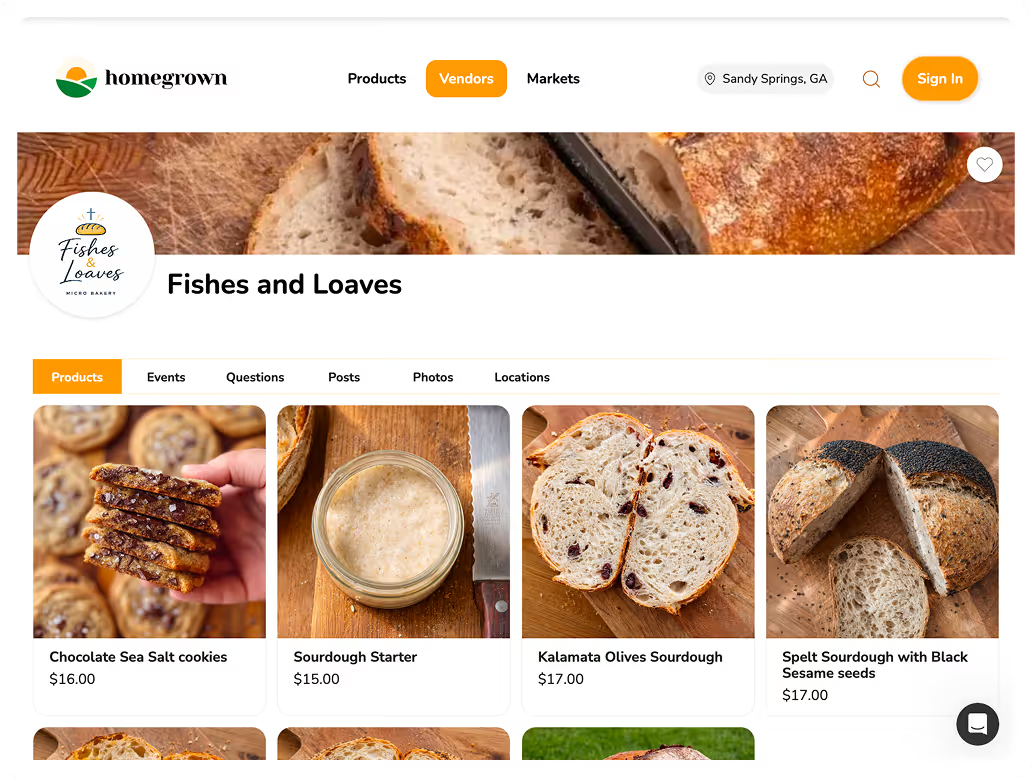
A CSA partnership is one channel, and a direct storefront lets you sell to your own customers alongside it. Homegrown is $10 a month with no percentage fees beyond standard payment processing, giving you a direct channel to complement your CSA and other partnerships.
How it compares to the alternatives:
What Homegrown does well: a direct-to-customer storefront where you keep the full retail margin (beyond standard processing), configurable to your local area, clean payment handling, and a fifteen-minute setup, a channel you own to run alongside partnerships like CSA add-ons. Diversifying your channels makes your business more resilient. When you're ready to build your own direct channel, you can set up your storefront today.
The biggest mistakes are pitching around your benefit instead of the farm's and overcommitting on supply you can't reliably deliver. Because partnerships depend on mutual benefit and reliability, the errors that matter most involve framing and dependability.
Mistakes to avoid:
Getting these right means pitching around mutual benefit, committing only to reliable supply, complementing their offering, and being an easy, dependable, high-quality partner.
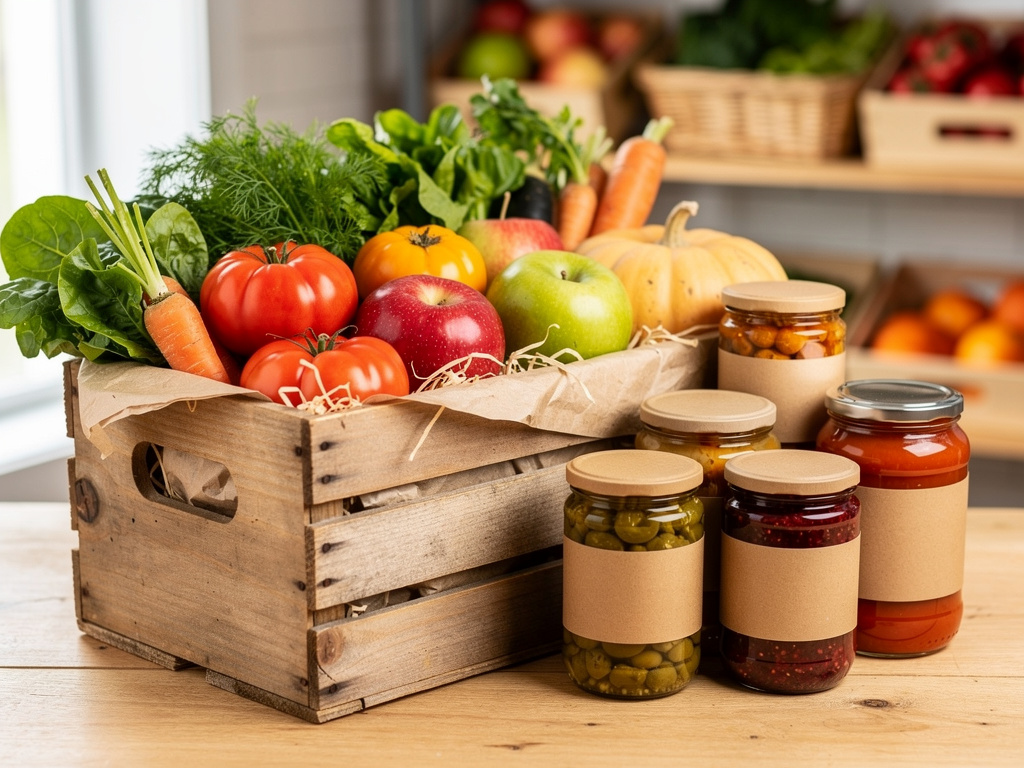
A CSA add-on is an extra product, beyond the farm's own produce, that members can add to their regular CSA (community-supported agriculture) box. Many CSAs offer add-ons like eggs, bread, jam, coffee, or granola, often sourced from partner vendors, since farms grow produce but don't make everything themselves. For a food vendor, getting your product included as an add-on means it rides along in members' boxes, reaching an established base of local-food-loving customers through the CSA's existing fulfillment, without you having to build your own audience or delivery from scratch. It's a powerful, low-effort channel.
Because a CSA gives you access to an established base of your ideal customers, people who value local, seasonal, handmade food enough to subscribe, without the effort of acquiring them yourself. Your product reaches these members through the CSA's existing fulfillment, riding along in their boxes, so you skip both audience-building and building your own delivery. CSAs benefit too: partner add-ons give members more value and variety and generate additional revenue. It's a win-win channel that puts your product in front of the exact customers most likely to love it, through a partner that's already done the hard work of gathering them.
Look for local CSA farms whose members fit your product and whose offerings your product complements rather than competes with, farms grow produce, so bread, jam, granola, or coffee fill natural gaps. CSAs that already offer add-on programs are especially promising since they're clearly open to partners, though a CSA without one might be open to starting. Find CSAs through local farm directories, farmers markets, community and local-food networks, and online searches for CSAs in your region. Prioritize farms whose values and quality align with yours and whose scale fits your production capacity.
Approach the farm professionally and frame the partnership around their benefit: more value and variety for their members, additional revenue, and a quality complementary product they don't make. Emphasize the genuine fit (your product fills a gap, not competes), propose a fair arrangement (like a wholesale price they mark up, or a revenue share), and make it low-effort for them by promising reliable supply, clear pricing, and fitting their fulfillment. Offer a sample so your quality speaks for itself, and highlight shared values (local, quality, handmade). Lead with what's in it for them, not just your desire to reach their customers.
Reliability and easy integration are everything. Deliver your product dependably, in the right quantity and quality, on the farm's box schedule, since they're counting on it for their members, and letting them down can end the partnership. Fit smoothly into their fulfillment by providing your product ready to include with minimal effort on their part, agree on clear pricing and terms upfront, and communicate proactively about availability or any issues. Only commit to volumes you can genuinely supply, and consistently meet quality standards, since your product reflects on the farm too. A reliable, easy, high-quality partner is one the farm wants to keep.
It's wise not to rely on any single channel, including one CSA partnership, as your only source of sales, since that leaves you vulnerable if the partnership ends or changes. A CSA add-on is a valuable channel, but treat it as one part of a diversified approach that also includes your own direct sales (like an online storefront), farmers markets, and potentially other partnerships. Diversifying your channels makes your business more resilient and less dependent on any one relationship. Use the CSA partnership to reach ideal customers while building channels you own, so your business rests on a stable, varied foundation.
Getting your product added as a CSA add-on puts you in front of an established base of ideal, local-food-loving customers through a partner's existing channel, find a CSA whose members fit and whose offerings you complement, pitch around their benefit, and make it work with reliable, easy, high-quality supply. A good CSA partnership is a genuine win-win. And to build a direct channel you own alongside it, set up a Homegrown storefront built for local food vendors.