

In Missouri, you can sell homemade foods with no license, no registration, no inspection, and no sales cap — state law (RSMo § 196.298) expressly bars the state and local governments from requiring any of those. The catch: only three categories of food qualify. This guide covers exactly what you can sell, how to label it, where you can sell it, and how to start this week.
The short version: Missouri removed its $50,000 cap in 2022 (HB 1697), so cottage food sales are now unlimited, and no permit, registration, inspection, or training is allowed to be required. But Missouri keeps a short allowed list — non-perishable baked goods, canned jams and jellies (standard recipes), and dried herbs and herb mixes. You can sell directly to consumers and online within Missouri (pickup or in-state delivery), but not wholesale and not across state lines. Every label needs the home-kitchen disclosure.
No. HB 1697 (effective August 28, 2022) removed Missouri's old $50,000 cap. Under RSMo § 196.298, cottage food operations now have unlimited sales.
| Missouri rule | Detail |
|---|---|
| Annual sales cap | None (old $50,000 cap removed in 2022) |
| License / registration / inspection / training | None — expressly barred by RSMo § 196.298 |
| Allowed foods | Only 3 categories (see below) |
| Where you can sell | Direct to consumers; online within Missouri |
| Out-of-state / wholesale | Not allowed |
| Label statement | "This product is prepared in a kitchen that is not subject to inspection by the Department of Health and Senior Services." |
| Governing law | RSMo § 196.298 (HB 1697) |
No. RSMo § 196.298 expressly prohibits state and local governments from requiring a permit, license, registration, inspection, or food-safety training for qualifying cottage food operations. You can simply start selling approved foods — Missouri is one of the most hands-off states on licensing, with the trade-off being its short allowed-food list.
Missouri keeps a narrow allowed list — only three categories qualify:
Excluded / not allowed:
Confirm specifics with the Missouri Department of Health and Senior Services.
Every Missouri cottage food label must include:
A simple compliant label might read: *"Ozark Apple Butter Bread — [Your Name], [Address]. Ingredients: flour, sugar, apples, cinnamon (contains wheat). Net wt. 14 oz. This product is prepared in a kitchen that is not subject to inspection by the Department of Health and Senior Services."* See our cottage food labeling guide for templates.
Missouri requires sales to be direct to the end consumer. Allowed channels include:
Out-of-state shipping and wholesale/resale to stores or restaurants are not allowed.
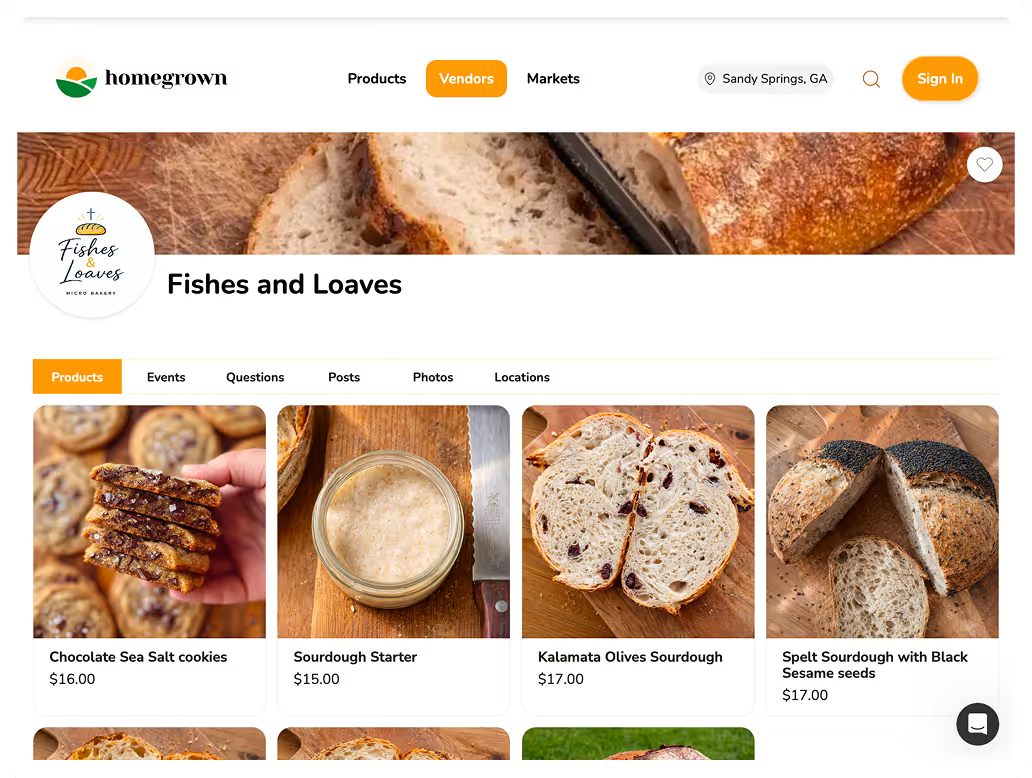
Because Missouri allows in-state online sales with no cap, a real storefront helps you take orders and manage pickup or local delivery without living in your DMs. Homegrown gives Missouri sellers an online storefront with built-in payments and pickup scheduling for $10/month at 0% commission — you keep every dollar except standard card processing. Start a free trial and have a Missouri-ready storefront live in about 15 minutes.
With the $50,000 cap gone, Missouri doesn't limit your income — your ceiling is demand and capacity within the three allowed categories. Most successful Missouri sellers go deep on a few signature baked goods or jams and build a loyal repeat base. A few ways to get the most out of it:
Missouri's three allowed categories reward going deep — a signature bread, a small jam line, or a distinctive herb blend beats a thin, broad menu.
Within Missouri's three allowed categories, the sellers who do best go narrow and deep — a signature bread, a small line of jams, or a distinctive herb blend — rather than spreading across everything. Because there's no cap and no registration, your only real limits are your capacity and your local demand.
Missouri is now very open on cap and licensing — the main constraint is its short three-category food list. Always confirm current rules with the Department of Health and Senior Services.
No. HB 1697 removed the $50,000 cap in 2022. Missouri cottage food sales are now unlimited under RSMo § 196.298.
No. State law expressly bars any permit, license, registration, inspection, or training requirement for qualifying cottage food operations.
Only three categories: non-perishable baked goods, canned jams and jellies (standard recipes), and dried herbs/herb mixes. No-sugar-added and hot-pepper jams are excluded.
Yes, for in-state sales only. Both you and the buyer must be in Missouri, and the order must be picked up or delivered within the state. Out-of-state shipping isn't allowed.
No. Missouri requires direct-to-consumer sales. Wholesale and resale to retail stores or restaurants are not permitted.
Your name and address, product name, ingredients, allergens, net weight, and the statement "This product is prepared in a kitchen that is not subject to inspection by the Department of Health and Senior Services."
Because changes in pH (hot peppers) or water activity (no added sugar) can push those products into potentially-hazardous territory, so they fall outside the standard-recipe jam/jelly category.
No. Registration is expressly barred for qualifying operations. You may still want a local business license for tax purposes, but the state requires no cottage food registration.
Missouri's no-license, no-cap framework makes it easy to start — as long as your product fits the three allowed categories and your labels carry the required disclosure. Set up a Homegrown storefront for Missouri cottage food orders with pickup and in-state delivery, then compare the rules in nearby states like Kansas, Iowa, Arkansas, and Illinois, or see the full cottage food laws by state hub.
*This guide is general information, not legal advice. Cottage food rules change — verify current requirements with the Missouri Department of Health and Senior Services before selling. Last verified: June 2026.*