


In Arizona, you can sell homemade foods with no sales cap and free online registration — and thanks to 2024's "Tamale Bill," you can now sell perishable foods like tamales, prepared meals, dairy, and acidified items, not just baked goods. It's one of the broadest home-food laws in the country. This guide covers exactly what you can sell, how to register, how to label it, and how to start this week.
The short version: Arizona requires you to register online with the Department of Health Services (ADHS) and hold an ANSI/ANAB food-handler card (~$10–$15, valid 3 years) — but there's no license fee and no sales cap. HB 2042 (the "Tamale Bill," effective September 14, 2024) dramatically expanded the allowed list to include tamales, prepared meals, dairy, acidified foods, and USDA-inspected meat — on top of the usual baked goods and confections. Sales are direct to consumers within Arizona, and every label needs the prescribed allergen disclaimer.
No. Arizona imposes no annual revenue limit on cottage food sales.
| Arizona rule | Detail |
|---|---|
| Annual sales cap | None |
| Registration | Required (free online with ADHS; renews every 3 years) |
| Food-handler card | Required (ANSI/ANAB course, ~$10–$15, valid 3 years) |
| Allowed foods | Very broad — incl. perishables (tamales, prepared meals, dairy, meat) after HB 2042 |
| Where you can sell | Direct to consumers within Arizona |
| Label | Name, registration number, ingredients, production date, + disclaimer |
| Key law | HB 2042 "Tamale Bill" (effective Sept 14, 2024) |
There's no license fee, but you must register online with ADHS and complete an ANSI/ANAB-accredited food-handler training course (about $10–$15, valid for three years; registration also renews every three years). Some counties (Maricopa, Pima) issue their own food-handler cards as well, so check your county before you start.
Arizona's allowed list is unusually broad after HB 2042. Commonly sold items include:
This makes Arizona one of the few states allowing many time/temperature-controlled (TCS) foods under its cottage food program. Foods still must be made and packaged in your home kitchen. Confirm specifics with ADHS.
Each Arizona cottage food product must be packaged at home with a label that includes:
See our cottage food labeling guide for templates.
Arizona cottage foods are sold directly to consumers within the state. Allowed channels include:
Because the allowed list now includes perishable foods, proper handling and labeling matter even more.
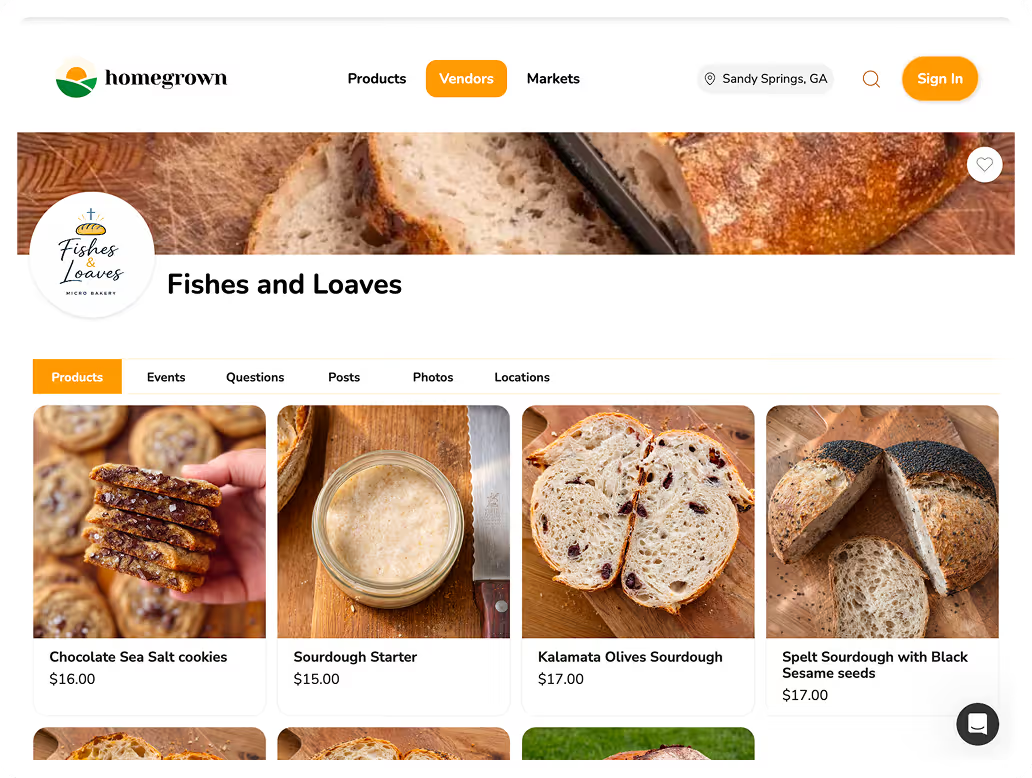
Because Arizona allows a wide product range with no cap, a real storefront helps you take orders and manage pickup without living in your DMs. Homegrown gives Arizona sellers an online storefront with built-in payments and pickup scheduling for $10/month at 0% commission — you keep every dollar except standard card processing. Start a free trial and have an Arizona-ready storefront live in about 15 minutes.
With no cap and one of the broadest allowed lists in the country, Arizona doesn't limit your income — your ceiling is demand and capacity. Most successful Arizona sellers lean into the foods most states can't offer (tamales, prepared meals, dairy) to stand out, then build repeat customers. A few ways to get the most out of it:
Arizona's Tamale-Bill breadth (prepared meals, dairy, tamales) is the differentiator — leaning into foods most states ban is the fastest way to stand out at Phoenix and Tucson markets.
Arizona's biggest advantage is its food list, so the sellers who do best lean into items most states can't legally offer — fresh tamales, prepared meals, and dairy — and pair them with the convenience of online ordering and local pickup. Because there's no cap, the practical limit becomes your kitchen's capacity and how consistently you can produce. Many Arizona sellers start at a single weekly market or a Friday pickup window, build a base of regulars, and only then add products and channels, keeping food safety front and center as they scale perishable items.
The registration and food-handler requirements remain. Always confirm the current allowed-food list with ADHS.
No. Arizona imposes no annual revenue cap on cottage food sales.
No license fee, but you must register online with ADHS and hold an ANSI/ANAB food-handler card (~$10–$15, valid three years). Registration renews every three years.
Yes. HB 2042 (the Tamale Bill, effective September 14, 2024) legalized tamales, prepared meals, dairy, acidified foods, and USDA-inspected meats under Arizona's cottage food program.
Yes. Arizona is one of the few states that allows many perishable (TCS) foods under cottage food, following HB 2042 — with proper handling and labeling.
Your name and registration number, all ingredients, the production date, and the disclaimer "This product was produced in a home kitchen that may come in contact with common food allergens and pet allergens and is not subject to public health inspection."
Directly to consumers within Arizona — at markets, events, from home, and online for local pickup or delivery.
There's no license fee. Your main cost is the food-handler card (about $10–$15, valid three years); ADHS registration itself is free.
Yes. ADHS registration renews every three years, and your food-handler card is also valid for three years.
With no cap, free registration, and one of the broadest allowed-food lists in the country, Arizona is a standout state for home food businesses. Once you're registered and your labels carry the disclaimer, the next step is making it easy for customers to order and pay. Set up a Homegrown storefront for Arizona cottage food orders with local pickup, then compare the rules in nearby states like California, Nevada, Utah, and New Mexico, or see the full cottage food laws by state hub.
*This guide is general information, not legal advice. Cottage food rules change — verify current requirements with ADHS before selling. Last verified: June 2026.*