
A Blog Cover Single Image
A Client Image
Evan Knox
Cofounder, Homegrown
Getting Started

How to Sell Microgreens From a Farm Stand

Microgreens are one of the highest-margin products you can sell at a farm stand. They cost pennies per tray to grow, take 7 to 14 days from seed to harvest, require minimal space (a spare room, garage, or basement works), and sell for $3 to $5 per ounce — or $20 to $40 per pound. For a farm stand vendor looking to add a premium product that grows year-round regardless of outdoor weather, microgreens are hard to beat.

The challenge is not growing them — it is selling them. Most farm stand customers have never bought microgreens and do not know what to do with them. Your job is not just to offer the product — it is to educate customers on what microgreens are, how they taste, and how to use them. The vendors who sell microgreens successfully at farm stands are the ones who offer samples, display them prominently, and explain the product clearly.

The short version: Grow microgreens in trays using seed mix, potting soil, and a growing rack with lights. Harvest at 7 to 14 days, package in clamshell containers or bags, and sell for $3 to $5 per ounce at your farm stand. Cost per tray: $2 to $4. Revenue per tray: $15 to $30. Margin: 75 to 90 percent. The key to selling at a farm stand: offer free samples (customers who taste buy), display at eye level, and include recipe cards that show customers how to use microgreens at home. Keep them in cold storage at the stand — microgreens wilt quickly at room temperature.

Why Microgreens Work at Farm Stands

Several properties make microgreens ideal for farm stand sales:

  • Year-round production. Unlike outdoor produce that is seasonal, microgreens grow indoors under lights. You can have fresh microgreens every week of the year, which fills the gap when outdoor produce is limited.
  • High margins. Raw material cost is $2 to $4 per tray. Each tray produces 6 to 12 ounces of microgreens. At $4 per ounce, that is $24 to $48 per tray in revenue. Even after packaging costs, margins are 75 to 90 percent.
  • Fast turnover. Seed to harvest in 7 to 14 days means fast cash flow. If demand increases, you can scale up production within 2 weeks.
  • Small space requirement. A single shelving rack with four tiers in a spare room can produce 16 to 20 trays per week — enough to supply a busy farm stand.
  • Premium positioning. Microgreens are a specialty product associated with high-end restaurants and health-conscious eating. Selling them positions your farm stand as a cut above the typical produce table.

For the broader product strategy, see our guide to what to sell at a farm stand.

What to Grow: Best Microgreen Varieties for Farm Stands

Not all microgreens sell equally well at farm stands. Start with varieties that are visually appealing, taste familiar, and have broad appeal.

Top Sellers

  • Sunflower microgreens. The most popular variety at farm stands. Thick, crunchy, nutty flavor. Familiar enough that even microgreen newcomers will try them.
  • Pea shoots. Sweet, tender, and large enough to be visually impressive. Great in salads, stir-fries, and sandwiches.
  • Radish microgreens. Spicy, colorful (some varieties have red or purple stems), and distinctive. Appeals to customers who like bold flavors.
  • Broccoli microgreens. Mild, slightly peppery. Marketed as a superfood with high sulforaphane content — health-conscious customers seek these out.
  • Mixed blend. A colorful mix of 3 to 5 varieties in one container. Visually striking and easier to sell because customers get variety without committing to one flavor.

Varieties to Add Later

  • Cilantro microgreens (strong flavor, niche audience)
  • Basil microgreens (herby, fragrant, pairs with Italian food)
  • Wheatgrass (juicing market, not general consumers)
  • Amaranth (beautiful magenta color, mild flavor)

Start with 2 to 3 varieties. Sunflower and pea shoots are the safest starting combination — they are the most universally liked and the easiest to grow.

How to Price Microgreens at a Farm Stand

Farm stand microgreen pricing depends on your local market, but these ranges are standard across most of the US:

Package SizePrice RangeBest For
1 oz container$3–$5First-time buyers, sampling
2 oz container$5–$8Regular customers
4 oz container$8–$14Families, cooks who use microgreens regularly
Living tray (sell the whole tray)$10–$20Customers who want to harvest at home

Pricing tips:

  • Price per ounce, not per container. "$4/oz" is easier for customers to compare than "$8 per container" when container sizes vary.
  • Offer a multi-buy discount: "2 containers for $9" (instead of $5 each). This increases average order size.
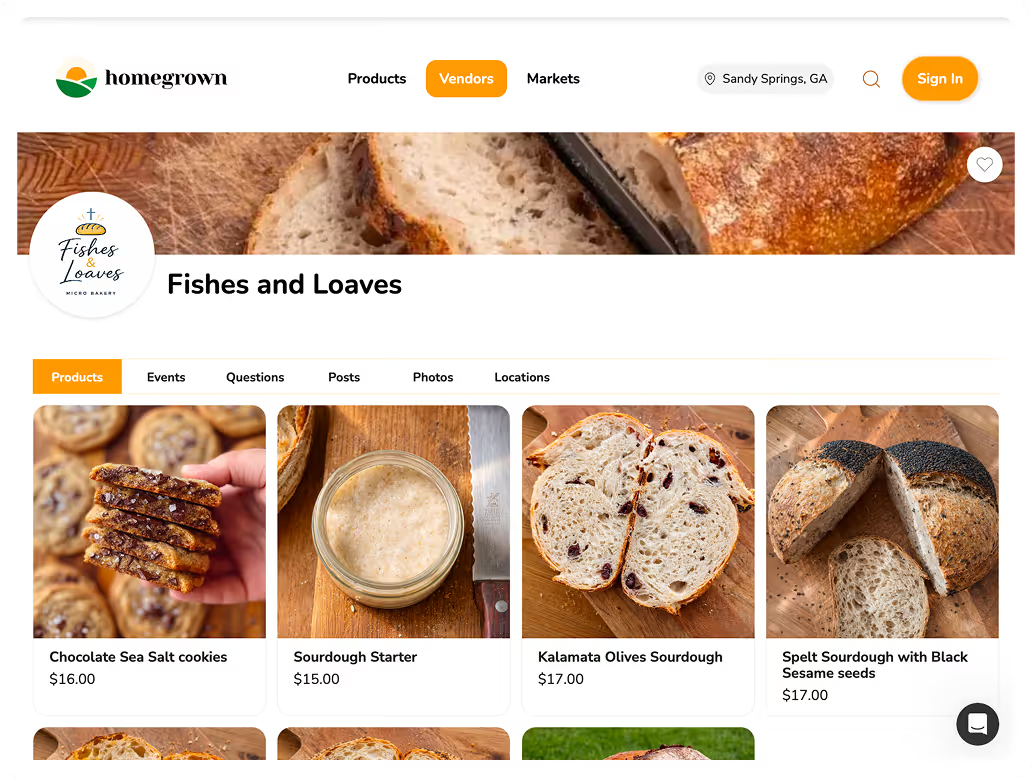
  • Living trays are a premium upsell. A tray that costs you $3 sells for $12 to $18 and appeals to customers who want "the freshest possible" microgreens cut at their own kitchen counter. You can also sell living trays through pre-orders — a Homegrown storefront at $10 per month lets customers order a living tray in advance so you can grow it specifically for them, which eliminates waste and guarantees the sale.
  • Do not underprice. Microgreens at $2/oz look cheap, not like a deal. Farm stand customers expect to pay a premium for fresh, local specialty products.

How to Display and Sell Microgreens at the Stand

Microgreens need a different display strategy than tomatoes or bread. They are unfamiliar to most customers, they wilt if not kept cold, and they need explanation.

Display Rules

  • Cold display only. Microgreens must stay cold (below 40 degrees Fahrenheit) at the stand. Use a cooler, a cold plate, or an ice bed under the containers. Never leave them in direct sun.
  • Eye-level placement. Put microgreens at the front of the stand at eye level, not tucked behind the tomatoes. They are a conversation-starter product — you want customers to notice them.
  • Open one container for display. Let customers see and smell the microgreens. A sealed container does not sell as well as an open one where the product is visible and fragrant.
  • Include signage. A small sign for each variety: name, flavor description, and 2 to 3 use ideas. "SUNFLOWER MICROGREENS — Nutty, crunchy. Add to salads, sandwiches, and avocado toast."

The Sampling Strategy

Sampling is the single most effective sales tool for microgreens at farm stands. Most customers have never tasted microgreens, and the flavor is what converts browsers to buyers.

How to sample:

  • Put a small pile of each variety on a plate with toothpicks or small cups
  • Label each sample with the variety name
  • Let customers taste without pressure: "Try any of these — that's sunflower, pea shoots, and radish"
  • Have containers ready to sell right next to the sample station

Expected conversion rate: 30 to 50 percent of customers who sample will buy. At most farm stands, that is 10 to 20 additional sales per market day — $40 to $100 in incremental revenue from a handful of samples that cost less than $2 in product.

Recipe Cards

Print small cards (business card size or quarter-sheet) with 2 to 3 simple recipes using microgreens. Include them with every purchase. This solves the "I bought it but don't know what to do with it" problem that prevents repeat purchases.

Recipe ideas that work:

  • Microgreen salad with lemon vinaigrette (30-second recipe)
  • Avocado toast topped with sunflower microgreens
  • Smoothie with broccoli microgreens, banana, and berries
  • Sandwich upgrade: add a handful of pea shoots to any sandwich

Customers who know how to use the product come back for more.

Growing Microgreens for Farm Stand Sales

A basic indoor growing setup costs $100 to $300 and produces enough microgreens for a weekly farm stand within 2 weeks of starting.

Equipment

ItemCostNotes
Wire shelving rack (4-tier)$40–$80Holds 16-20 standard trays
Grow lights (T5 or LED)$30–$60 per shelfOne fixture per shelf tier
Growing trays (10x20 inch)$1–$3 eachBuy 20 to start
Seeds (bulk)$10–$30 per poundSunflower and pea are cheapest
Potting soil or coco coir$10–$20 per bagOne bag covers 10-15 trays
Spray bottle$3For watering
Clamshell containers$0.15–$0.30 eachFor packaging
Timer for lights$1012-16 hours of light per day
Total startup$100–$300

The Growing Process (7-14 Days)

  1. Day 1: Fill tray with 1 inch of moist soil. Spread seeds densely (edge to edge, one layer thick). Mist with water. Cover with another tray (blackout phase).
  2. Days 2-4: Keep covered. Mist once daily. Seeds germinate in darkness.
  3. Day 4-5: Remove cover when sprouts are 1 to 2 inches tall. Move to light shelf.
  4. Days 5-10: Water daily. Provide 12 to 16 hours of light. Microgreens grow and develop their first true leaves.
  5. Day 7-14 (variety dependent): Harvest when microgreens are 2 to 4 inches tall with developed cotyledon leaves (and sometimes first true leaves). Cut just above the soil line with sharp scissors.
  6. Package immediately: Rinse gently, dry with a fan or paper towels, and pack into clamshell containers. Refrigerate.

Scaling Production

To determine how many trays you need per week:

  • Each 10x20 tray produces 6 to 12 ounces depending on variety
  • If you sell 40 ounces per week at the stand, you need 4 to 7 trays per week
  • Start 2 to 3 new trays every 3 to 4 days for continuous harvest
  • Scale up in increments of 4 trays as demand grows

A single 4-tier rack running 20 trays in staggered rotation can produce 120 to 240 ounces per week — more than enough for most farm stands. At $4 per ounce, that is $480 to $960 in potential weekly revenue from a single shelving rack in your spare room.

Common Growing Problems and Fixes

  • Mold: The most common issue. Fix by improving airflow (a small fan), reducing watering frequency, and not over-seeding. Discard any tray with visible mold — do not sell from it.
  • Leggy/tall microgreens: Not enough light. Move trays closer to the light source or upgrade to stronger LED panels.
  • Uneven growth: Uneven seed distribution. Practice spreading seeds more uniformly across the tray.
  • Slow germination: Temperature too low. Most microgreens germinate best at 65 to 75 degrees Fahrenheit. Use a heat mat under trays if your growing space is below 60 degrees.
  • Yellow leaves: Too long in blackout or not enough light after uncovering. Transition to light on day 4 to 5.

Food Safety in Production

Even though microgreens are a raw product, basic food safety applies:

  • Wash hands before handling trays, harvesting, or packaging
  • Use clean tools (scissors, trays, containers) for every harvest
  • Rinse microgreens gently in clean water before packaging
  • Refrigerate immediately after packaging — they start losing quality within hours at room temperature
  • Label each package with harvest date and "keep refrigerated"
  • Discard any product older than 7 days from harvest, even if it still looks fresh

For more on adding value-added products to your farm stand lineup alongside microgreens, see our guide to value-added products for farm stands.

Permits and Regulations

Microgreen regulations vary by state and county. In many states, microgreens fall under cottage food or produce exemptions because they are a raw agricultural product. In others, they are classified as a processed food requiring a food handler permit.

Check with your local health department:

  • Are microgreens classified as produce or processed food in your state?
  • Do you need a food handler certification?
  • Do you need a food vendor permit?
  • Are there labeling requirements?

Most states treat microgreens similar to sprouts or fresh-cut herbs. If your farm stand already has permits for selling produce, microgreens usually fall under the same umbrella. For the health department angle, see our guide to farm stand health department permits.

Frequently Asked Questions

How Long Do Microgreens Last After Harvest?

Properly refrigerated microgreens last 5 to 10 days after harvest. Sunflower and pea shoots on the longer end, delicate varieties (basil, cilantro) on the shorter end. At your farm stand, sell only what was harvested in the last 2 to 3 days for best quality.

Can I Sell Microgreens Under Cottage Food Law?

This depends on your state. Some states classify microgreens as a raw agricultural product (no cottage food permit needed, just a standard produce sale). Others classify them as a processed food requiring a food handler permit. A few states have specific microgreen regulations. Check your state's department of agriculture.

How Much Space Do I Need to Grow Microgreens?

A 4-tier wire shelving rack (48 x 24 inches) fits in a corner of a spare room, garage, or basement and holds 16 to 20 trays. That is all you need to start. A dedicated room or closet works even better because you can control temperature and humidity.

What Is the Biggest Mistake New Microgreen Sellers Make?

Growing too many varieties before testing demand. Start with 2 to 3 varieties (sunflower, pea shoots, and a mix), sell them for a month, and see what your customers buy. Then add varieties based on actual demand, not what looks interesting in the seed catalog.

Can I Sell Microgreens Online for Delivery?

Yes, but microgreens are delicate and require insulated packaging with ice packs for shipping. Local delivery or pickup works much better — a Homegrown storefront at $10 per month lets customers pre-order for farm stand pickup, which is the ideal model because the product stays fresh and you avoid shipping complications.

The $3 Product That Changes Your Farm Stand

Microgreens are one of those rare products where the margins, the production timeline, and the customer appeal all line up. A $100 setup produces $200 to $500 per month in additional farm stand revenue with minimal space and effort. The key is not just growing them — it is presenting them in a way that turns curious browsers into repeat buyers. Samples, signage, and recipe cards do the selling. Cold storage keeps the quality. And the year-round production cycle fills the gap when your outdoor produce is seasonal. The SBA's business launch guide has tips on starting food businesses with minimal capital, and the USDA local food directory can help you find additional markets to sell microgreens beyond your farm stand.
About the Author

Evan Knox is the cofounder of Homegrown, where he works with hundreds of small food vendors across the country to sell online. He and his Co-founder David built Homegrown after seeing how many local vendors were stuck taking orders through DMs and cash-only sales.

Your Store Could Be Live Tonight

15 minutes. That's all it takes. Add your products, share your link, and start taking orders. Free for 7 days.
Start Your Free Trial

7-day free trial · $10/mo after · Cancel anytime