


MarketWagon is an online farmers market that handles delivery for local food vendors. The platform connects over 2,500 producers with 45,000 customers across regional delivery networks in the United States. Vendors list products on MarketWagon's marketplace, drop them off at a local fulfillment hub, and MarketWagon delivers to customers for a $6.95 flat delivery fee.
If you are a small food vendor considering MarketWagon — or already using it and looking for an alternative — the core question is whether you want to be a vendor inside someone else's marketplace or whether you want your own ordering page where you control the customer relationship.
This guide compares MarketWagon to alternatives that give small local food vendors more control over their orders, their customers, and their brand.
The short version: MarketWagon is a delivery marketplace where you are one of 2,500+ vendors. You list products, drop them at a hub, and MarketWagon delivers to customers. For small local vendors who sell at farmers markets and want their own ordering page — not a slot in someone else's marketplace — Homegrown ($10/month flat, no transaction fees) gives you a storefront you control. Google Forms (free) works for testing demand. Square Online (free + standard fees) fits Square POS users. MarketWagon works best for vendors who want delivery logistics handled for them and do not mind giving up control of the customer experience.
MarketWagon is an online farmers market with a hub-and-spoke delivery model. The platform was founded in 2017 by a farmer and a logistics engineer who wanted to make local food delivery scalable.
Here is how the platform works for vendors:
MarketWagon's pricing model:
| Component | Cost | Who Pays |
|---|---|---|
| Listing fee | $0 (free to list) | — |
| Vendor commission | Undisclosed % of retail price | Vendor (deducted from payout) |
| Delivery fee | $6.95 flat | Customer |
| Minimum order | None | — |
MarketWagon does not publicly disclose the exact commission percentage it retains from each sale. The vendor agreement states that "a discount of the retail sale price shall be retained by Market Wagon in exchange for Vendor's use of Market Wagon Services." Vendors can mark up their prices to cover this commission, but the lack of transparency about the rate is a concern for vendors planning their margins.
MarketWagon solves a real problem — it handles delivery logistics so vendors do not have to. But the marketplace model creates issues for small local vendors who want more control.
Here are the main reasons vendors look for alternatives:
For a part-time vendor who sells at one or two farmers markets and wants to take pre-orders between markets, MarketWagon's full delivery infrastructure is more than you need — and less control than you want.
Here are three alternatives that give small local food vendors their own ordering system without the marketplace commission.
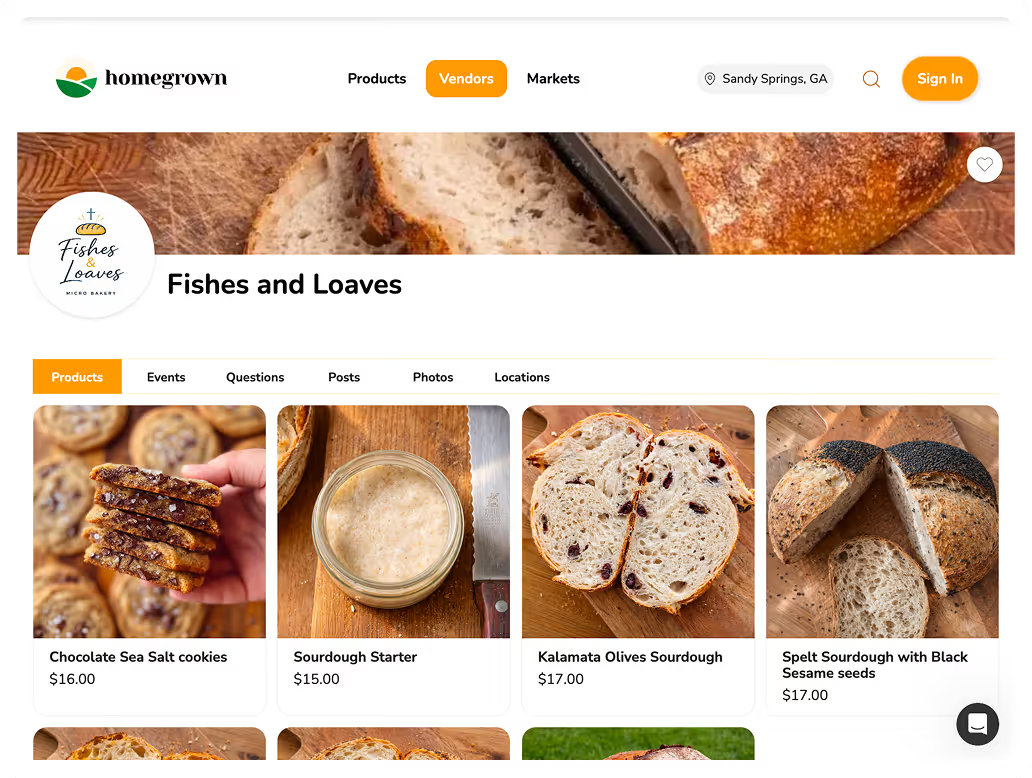
Homegrown is built for small local vendors who sell at farmers markets and want customers to pre-order online for market pickup. Where MarketWagon is a delivery marketplace, Homegrown is your own storefront.
Here is what Homegrown gives you:
The key difference: MarketWagon takes a commission on every sale and controls the customer experience. Homegrown charges a flat fee and gives you full control. At $500/month in sales, MarketWagon's commission (even at a conservative 15%) would cost $75. Homegrown costs $10 total. At $1,000/month, the gap widens further.
Homegrown also gives you a shareable link — one URL you can put on your Instagram bio, your market signage, or a text to regulars. Customers go to your page, see your products, and order. No browsing past other vendors, no marketplace comparison shopping.
If you are looking to add online ordering to your existing market business, Homegrown handles the complete workflow — product listing, order collection, payment processing, and pickup day summaries.
Start your free trial at Homegrown
Google Forms works for vendors testing pre-orders before committing to any platform. It is the simplest possible approach.
Here is the setup:
What works:
What does not work:
Google Forms is better than MarketWagon if you want zero cost and full control. But it creates manual overhead that grows with every new customer.
Square Online offers a free online store with standard processing fees (2.9% + 30 cents per transaction). If you already use Square at your market booth, the integration syncs your in-person and online sales.
What Square Online includes:
Where it falls short:
Square Online works best for vendors who already accept Square payments at the market and want to add online ordering without switching ecosystems. The processing fees are transparent and predictable.
| Feature | MarketWagon | Homegrown | Google Forms | Square Online |
|---|---|---|---|---|
| Model | Delivery marketplace | Ordering storefront | Order form | Online store |
| Monthly cost | Free to list | $10/mo (annual) | Free | Free |
| Commission/fees | Undisclosed % | None | None | 2.9% + 30¢ |
| Your own ordering page | No | Yes | Partially | Yes |
| Customer pays you directly | No (via platform) | Yes | Manual | Yes |
| Delivery handled | Yes (hub model) | No (pickup) | No | Optional |
| Customer discovery | Yes (marketplace) | Yes (marketplace) | No | No |
| You own customer data | Limited | Yes | Via spreadsheet | Yes |
| Food-vendor specific | Yes | Yes | No | No |
| Available everywhere | No (regional) | Yes | Yes | Yes |
| Setup time | Application + approval | 15 minutes | 15 minutes | 1-2 hours |
| Best for | Vendors wanting delivery logistics | Market vendors wanting pre-orders | Testing demand | Square POS users |
The biggest difference is the business model. MarketWagon is a marketplace where you are a vendor. Homegrown is a tool where you are the business. That distinction matters as you grow — owning your customer list, your ordering URL, and your pricing strategy gives you leverage that a marketplace slot does not.
Research from UC Agriculture and Natural Resources confirms that choosing the right online sales platform depends on whether a farm needs marketplace exposure or direct-to-consumer ordering — most small producers benefit from direct channels where they control the customer relationship.
If you have been selling food through channels other than farmers markets, having your own ordering page lets you consolidate sales from every channel into one system you control.
MarketWagon is not a bad platform — it is a specific solution for a specific type of vendor. It makes sense when:
MarketWagon does not make sense when you already sell at a local market and just want pre-orders, when you need a shareable ordering link you control, or when you are a part-time vendor who cannot commit to weekly hub drop-offs.
For most small, part-time food vendors, the math favors a flat-fee ordering page over a marketplace commission — especially when you already have customers who know you.
If you are currently on MarketWagon and want to move to your own ordering system, here is a simple transition plan:
The goal is not to eliminate every marketplace — it is to make sure your best customers are ordering from you directly, where you keep more of the revenue and own the relationship.
If you are trying to turn one farmers market into a full week of orders, your own ordering page is the tool that makes that possible — not a marketplace where customers browse 2,500 other vendors alongside you.
Start your free trial at Homegrown
MarketWagon does not publicly disclose its vendor commission rate. The vendor agreement states that MarketWagon retains "a discount of the retail sale price" from each sale, but the exact percentage is not published on their website. Vendors can mark up their prices to cover this commission. To find the current rate, you need to apply and get approved as a vendor.
MarketWagon operates through regional delivery networks, not nationwide coverage. You can check availability by entering your zip code on marketwagon.com. If your area does not have an active network, you cannot use the platform. Networks can also be added or removed over time, so availability is not guaranteed long-term.
For farmers market vendors who want their own ordering page instead of a slot in a marketplace, Homegrown is the best MarketWagon alternative. It costs $10 per month with no commission, takes 15 minutes to set up, and gives you an ordering page where customers pay your exact prices. You own the customer list and control the entire experience.
Yes. MarketWagon's main value proposition is its hub-and-spoke delivery model. Vendors drop products at a local fulfillment hub, and MarketWagon assembles customer orders and delivers them. Customers pay a $6.95 flat delivery fee. However, vendors still need to transport their products to the hub, which adds labor and logistics.
Yes. Some vendors use MarketWagon as a discovery and delivery channel while also maintaining their own ordering page for direct sales to repeat customers. This lets you reach new customers through MarketWagon's marketplace while keeping more revenue from customers who already know you.
MarketWagon is a delivery marketplace where you are one of 2,500+ vendors. Customers shop MarketWagon's marketplace, and the platform handles delivery. Homegrown is a storefront tool that gives you your own ordering page — customers visit your link, see only your products, and order directly from you. MarketWagon focuses on delivery logistics. Homegrown focuses on vendor ownership and simplicity.
MarketWagon manages the customer relationship through its own platform. Vendors have limited access to customer data compared to running their own storefront. If you want to build a direct email list, send order updates, or communicate with customers outside the platform, your own ordering page gives you that control.
MarketWagon is a delivery marketplace. Homegrown is your ordering page. They solve different problems. If you need someone to handle delivery logistics, MarketWagon may be worth the commission. If you need a simple way for customers to pre-order and pay, your own storefront gives you more control at a lower cost.
Homegrown charges $10/month flat with no commission. Set up your ordering page in 15 minutes. Own your customers, your prices, and your brand.
Start your free trial at Homegrown
The right sales tool for your food business depends on how much control you want over your customer relationships and your margins. Marketplace platforms bring traffic, but they also take a cut and own the customer data. A standalone storefront costs less per transaction and lets you build a direct relationship with every buyer. Consider where most of your customers come from. If they already know you from markets or social media, you do not need a marketplace to introduce you. You need a simple way to take their orders on your own terms.