

You found a market you want to sell at. You pulled up the vendor application, and now you're staring at a form wondering what to write that'll get you in. Most vendors approach this like a job application — trying to sound impressive. But market managers aren't looking for impressive. They're building a lineup.
Understanding what a market manager is actually evaluating when they read your application changes everything about how you fill it out. It's not about being the biggest or the best. It's about being the right fit for what's missing.
This guide walks you through what market managers prioritize, what gets applications rejected, and exactly how to fill out your application so you stand out — even if you've never sold at a market before.
The short version: Market managers care most about three things: whether your products fill a gap in their current vendor lineup, whether you'll show up consistently, and whether your booth will look professional enough to maintain the market's reputation. They're not looking for the fanciest business — they're looking for reliable vendors who bring something the market doesn't already have. Contact the manager before you apply, include product photos, explain what makes your products different, and show that you'll be a dependable presence every market day.
Market managers are curating a customer experience. Every vendor they accept or reject changes the mix of products, the visual feel of the market, and whether shoppers find a reason to come back next week.
When a manager reads your application, they're asking five questions:
Understanding these five criteria means you can structure your application to answer each one directly, instead of hoping the manager figures it out from a generic description.
The single best thing you can do before applying is contact the market manager directly. This is the step most applicants skip, and it's the one that matters most.
A quick email or phone call lets you ask:
This conversation does two things. First, it tells you whether applying is worth your time — if they already have five cookie vendors and you sell cookies, you'll need a strong differentiator. Second, it puts your name in the manager's memory before your application arrives. When they see your name on the form, they'll remember the conversation.
The Virginia Farmers Market Association recommends that managers actively recruit vendors who fill product gaps. That means if you're offering something the market lacks, the manager may be hoping you apply. Your pre-application call helps you figure out if that's the case.
Most applications ask for basic information: your name, business name, products, and contact info. But the vendors who get accepted go beyond the minimum. Here's what to include, section by section.
"Baked goods" is too vague. Every manager reads a dozen applications that say "baked goods." Tell them exactly what you make, what makes it different, and who buys it.
Weak: "I sell homemade baked goods including cookies, brownies, and cakes."
Strong: "I make small-batch shortbread cookies in six flavors (lavender lemon, espresso, rosemary sea salt, classic butter, chocolate hazelnut, and brown sugar pecan). All ingredients are sourced locally when possible. My cookies are individually wrapped in compostable packaging and priced at $3 each or 4 for $10. I currently sell through pre-orders and at two other local markets."
The strong version tells the manager exactly what you bring, how you're different from other bakers, and that you have experience selling. That's what gets an application pulled from the stack.
Include photos of your products — not stock photos, not someone else's work, your actual products. Managers want to see what their customers will see. If your cookies look professional and appealing in photos, the manager knows they'll look good at the market.
Take 3-5 photos showing:
Use natural light. A kitchen table near a window works fine. The goal is honest, appealing representation of what you actually sell.
If you've sold at markets before, include a photo of your booth. Managers look at this carefully — it tells them immediately whether your display will fit the market's aesthetic.
If you've never sold at a market and don't have booth photos, that's fine. Business Impact NW suggests setting up a mock booth at home the way you plan to at the market and photographing that. Show your tent, table, tablecloth, signage, and product display. It doesn't have to be perfect — it just needs to show that you've thought about presentation.
State clearly which days you're available and whether you can commit to the full season. If you're wondering how to decide what to sell at your first market, figure that out before applying so your application is specific. If you can only do every other week, say so upfront — some markets allow it, others don't.
Managers strongly prefer vendors who commit to every market day. Inconsistent attendance creates empty booths, which frustrate customers and hurt the market's reputation. If you can commit to the full season, say it clearly: "I'm available every Saturday from May through October and will attend every market day."
Every market has a documentation checklist. Common requirements include:
Have these ready before you apply. An incomplete application signals to the manager that you're not organized enough to be a reliable vendor. If you're unsure about what insurance you need, research it before applying.
Knowing what managers reject is just as useful as knowing what they accept. Here are the most common reasons applications don't make it.
| Rejection Reason | What the Manager Is Thinking |
|---|---|
| Product overlap with existing vendors | "I already have three jam vendors — I don't need a fourth unless it's something completely different" |
| No product photos | "I can't evaluate what I can't see" |
| Vague product description | "Baked goods tells me nothing — what specifically?" |
| Can't commit to full season | "Empty booths make the market look bad" |
| Missing permits or insurance | "I can't risk the market's legal standing" |
| Unprofessional communication | "If they can't write a clear email, how will they handle customers?" |
| No booth setup plan | "Will this booth bring down the row?" |
The most common reason is product overlap. If the market already has your product category well covered, you need a strong differentiator. That doesn't mean you can't apply — it means your application needs to clearly explain what makes your version different.
First-time vendors worry that having no market experience will disqualify them. It usually doesn't. Managers accept new vendors all the time — they just want to see that you're prepared.
Here's how to stand out without a track record:
Show you've done your homework. Mention that you visited the market, noticed they don't currently have a [specific product] vendor, and explain why you'd be a good fit for that gap. This tells the manager you understand how a market works.
Have your booth setup planned. Even if you've never set up a booth, describe your plan: "I'll use a 10x10 pop-up tent with white sidewalls, a 6-foot table with a natural linen tablecloth, tiered wooden display crates for products, and a chalkboard menu sign with pricing." That level of detail shows you're serious.
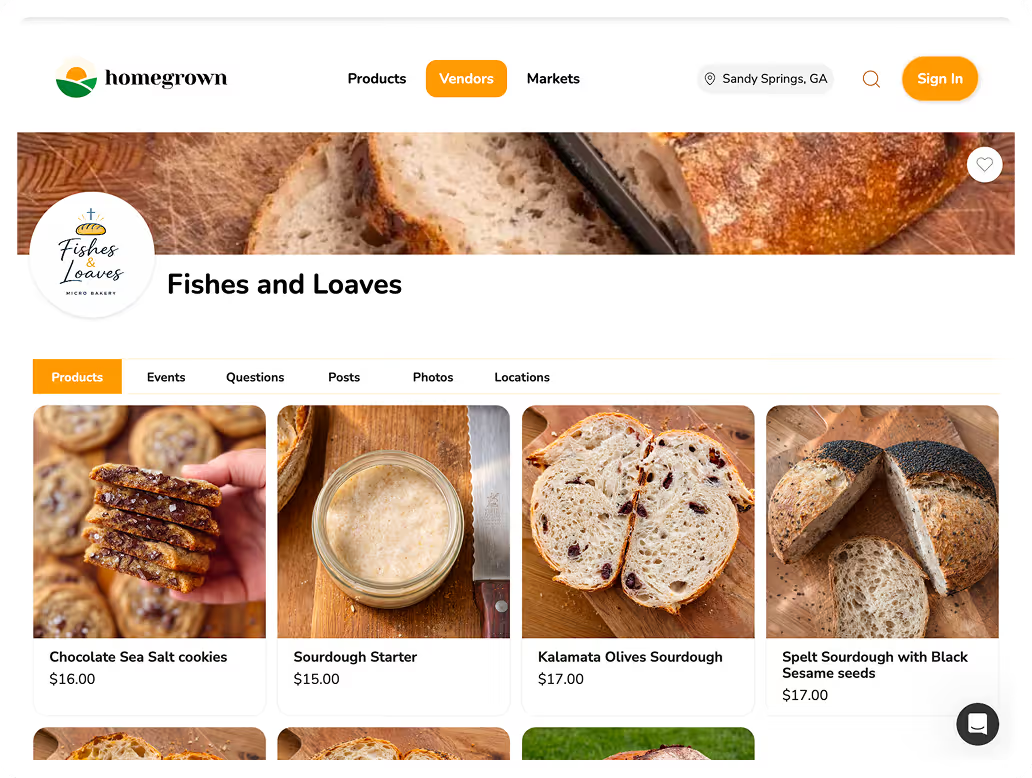
Include your online presence. If you have an ordering page, an Instagram page, or any online ordering system, include the link. It shows the manager you're running a real operation, not just testing a hobby. Homegrown is $10/month with no percentage fees beyond standard payment processing and gives you a professional ordering page you can set up in 15 minutes — well before your application deadline. A market manager clicking through to a page with your product photos, descriptions, and pricing sees a vendor who is already organized and selling. Compare that to linking an Instagram page where they see a feed of photos but no product catalog, or an Etsy shop where 6.5% transaction fees signal you are building on someone else's platform. Homegrown does not help you write your application or get accepted to a market — it gives you the online storefront that makes your application stand out from vendors who have no web presence at all.
Offer to do a trial. Some markets offer trial periods or guest vendor spots. If the application asks for a commitment you're not ready for, ask the manager about a trial day. It lowers their risk and gives you a chance to prove yourself.
Be honest about your experience level. Don't pretend you've been selling at markets for years. Say: "This would be my first farmers market, but I've been selling through [pre-orders, online orders, word of mouth] for [X months/years] and I'm ready to expand to in-person selling." Honesty paired with preparation is more compelling than a bluff.
Application timelines vary by market, but here's what to typically expect:
If your application is rejected, ask for feedback. Most managers will tell you why. The most common response: "We're full in your product category right now, but try again next season." That's not a permanent no — it's a timing issue.
Applying to more than one market is smart, especially if you're new. Different markets have different vibes, different customer bases, and different vendor needs. Here's how to handle multiple applications.
The best approach to selling at a farmers market starts with choosing the right market. A strong application to the right market beats a perfect application to the wrong one.
Most markets open applications 2-4 months before the season starts. Winter markets may accept rolling applications year-round. Apply as early as possible — popular markets fill up fast, and early applicants get first priority at many markets. Check the market's website in January or February for spring/summer season applications.
Ask the manager for feedback. The most common reason is product overlap, not a problem with you or your products. If the market already has your category covered, ask to be put on the waitlist and try again next season. Meanwhile, apply to other markets — different markets have different gaps.
Most markets require general liability insurance, typically $1 million in coverage. You can get a policy through providers like FLIP (Farmers and Liability Insurance Program) for around $299-$399 per year, or sometimes per-event for $75-$100. Some cottage food vendors may be exempt in certain states, but having insurance strengthens your application regardless.
Yes, and you should. Different markets have different vendor needs, customer demographics, and fee structures. Applying to 3-5 markets increases your chances of getting accepted somewhere. Just customize each application and be honest about your availability if markets overlap on the same day.
Set up a mock booth at home and photograph it. Lay out your products on a table the way you'd display them at market. Show your tent (if you have one), tablecloth, signage, and product arrangement. A mock booth photo is better than no photo, and it shows the manager you've planned your setup.
Booth fees typically range from $20 to $75 per week for most community markets. High-traffic urban markets can charge $100 to $200 or more. Some markets charge a seasonal fee instead of weekly — often $300 to $800 for the full season. The fee usually includes your booth space but not a tent, table, or any equipment.
Requirements vary by state. Most states allow cottage food vendors to sell certain homemade products directly to consumers without a commercial kitchen. However, some states require a business license, food handler's permit, or cottage food registration. Check your state's cottage food law and the specific market's requirements before applying.
Market managers see dozens of applications every season. The ones that stand out aren't the flashiest — they're the most complete, specific, and honest.
Contact the manager before applying. Include product photos and a booth setup plan. Explain clearly what you sell, what makes it different, and that you'll show up every single market day. Have your permits and insurance ready to go.
If you're building an online presence for your food business, include your ordering page link in your application. It shows the manager you're running a real business — not just testing an idea. That kind of credibility matters when spots are competitive.