

You do not need to be 18 to start a food business. You do not need a restaurant, a business degree, or thousands of dollars. If you can follow a recipe, you can start a real food business from your family kitchen. Thousands of teenagers across the country are doing exactly that right now, selling baked goods, granola, candy, dog treats, and more under cottage food laws that exist in all 50 states.
This is not a lemonade stand. This is a real business that teaches you skills most adults never learn: how to make a product, find customers, manage money, and build something from scratch. And you can start for under $150.
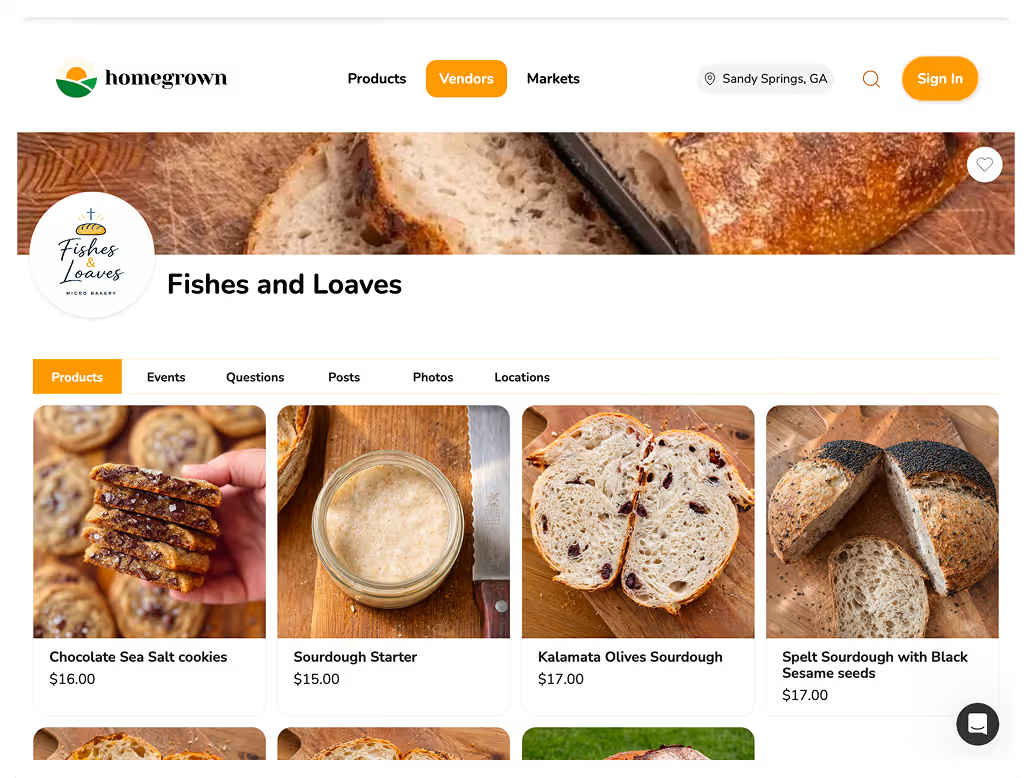
The short version: Teenagers can legally start a food business in most states under cottage food laws, which often have no minimum age requirement. The best teen food businesses are baked goods, candy, granola, lemonade, and dog treats because they require low startup costs, use simple recipes, and sell well at farmers markets and online. You can get started for $50 to $150 with ingredients, basic packaging, and labels. Most states require a parent or guardian to supervise, and you will need to follow labeling rules for your state. A Homegrown storefront gives you a professional way to take orders online instead of relying on social media DMs.
Yes, teenagers can legally sell food from home in most states. Cottage food laws, which allow people to make and sell certain foods from a home kitchen without a commercial license, rarely include a minimum age requirement. The legal framework focuses on what products you can sell, how you label them, and how much you can earn per year, not on how old you are.
Here is what you need to know:
The National Conference of State Legislatures maintains a state-by-state overview of cottage food regulations that can help you and your parents find the specific rules for your state.
Bottom line: If your parent is willing to be involved and your state's cottage food law covers your product, your age is almost never a barrier.
The best teen food businesses use simple recipes, require inexpensive ingredients, and make products that are easy to package and sell. You want something you can make in your family kitchen without specialized equipment, and something people will buy regularly.
Top teen food business ideas:
How to choose: Pick something you already enjoy making, confirm it is on your state's allowed cottage food product list, test it with friends and family, and calculate the cost per unit to make sure you can price it profitably.
Most teen food businesses cost between $50 and $150 to launch. That covers your first batch of ingredients, basic packaging, and labels. You do not need expensive equipment, a commercial kitchen, or a big inventory to get started.
Startup cost breakdown:
| Expense | Estimated Cost |
|---|---|
| First batch of ingredients | $15 to $30 |
| Packaging (bags, boxes, or containers) | $10 to $25 |
| Labels (printed at home or ordered) | $5 to $15 |
| Food safety course (if required) | $0 to $25 |
| Farmers market booth fee (first week) | $15 to $40 |
| Business license (if required) | $0 to $50 |
| Total | $45 to $185 |
What you probably already have: mixing bowls, baking sheets, measuring cups, an oven, a phone for photos and customer communication, and access to a printer for labels. Compare that to other teen businesses. A lawn care business needs a $300 mower. A food business has one of the lowest barriers to entry of any real business you can start.
How to fund your startup:
Before you sell your first product, you need four things: a tested recipe, proper labels, a way to take payment, and at least one place to sell.
Pre-launch checklist:
Price your products based on what they cost to make, multiplied by three to four. This standard formula gives you enough margin to cover ingredients, packaging, and time while still making a profit. Many teen vendors underprice because they feel awkward charging "real" prices. Do not do this.
The pricing formula:
Example pricing:
| Product | Cost to Make | Retail Price (3.5x) |
|---|---|---|
| Dozen cookies | $2.50 | $8 to $9 |
| Bag of granola (8 oz) | $1.75 | $6 to $7 |
| Box of fudge (6 pieces) | $1.50 | $5 to $6 |
| Bag of dog treats (12 count) | $1.25 | $4 to $5 |
| Jar of seasoning blend | $1.00 | $4 to $5 |
For more on getting comfortable with what you charge, read Pricing Guilt: Why Charging What You're Worth Feels Wrong. It is one of the biggest mental hurdles for new vendors at any age.
Pricing tips for teen vendors:
The best first sales venue for a teen food vendor is a local farmers market. Markets give you face-to-face customer experience, immediate feedback, and a chance to practice every part of running a business in one afternoon.
Best places for teen vendors to sell:
Read The Real Cost of Selling at Farmers Markets before committing so you know what to budget for.
Starting with one channel is smart. Do not try to sell at markets, online, and at school events all at once. Pick one, get good at it, and add a second channel once you are comfortable.
Starting a food business as a teenager teaches you skills that most people do not learn until their careers. These transfer directly to any job or venture you take on later.
Business skills you will build:
What this looks like on a college application or resume: "Founded and operated a cottage food business serving 30 or more regular customers, generating $X in revenue over Y months." Colleges and employers notice this. Running an actual business, even a small one, stands out far more than most extracurricular activities.
Managing the business side as a minor requires help from a parent, but do as much of the work yourself as possible. The more you handle now, the more you learn.
Money management:
Record keeping:
Tax considerations: Income from a food business is taxable even for minors, though most teen vendors earn below the filing threshold. Your parent can help determine if you need to file. Sales tax may apply depending on your state.
Scaling responsibly: Do not take on more orders than you can fill. Do not skip homework for your food business. Set clear boundaries for production days and off days.
New teen vendors make the same mistakes that adult vendors make, plus a few that are unique to being younger. Avoid these and you will be ahead of most first-time vendors.
Common mistakes:
Most states have no minimum age in their cottage food laws. The law applies to anyone making allowed food products in a home kitchen. Minors will need a parent or guardian to help with permits and supervision. In practice, teen vendors as young as 13 and 14 are running cottage food businesses with parental involvement.
Yes, practically speaking. You will need a parent to help with registration forms, supervise kitchen use, handle financial accounts, and potentially drive you to sales venues. Most teen food businesses work best as a partnership with a supportive parent who handles the administrative side while you handle products and sales.
A teen vendor selling at one farmers market per week can earn $75 to $200 per market day. Over a 30-week season, that is $2,250 to $6,000 in gross revenue. After subtracting costs, net profit is typically 40 to 55 percent. A teen selling both at markets and through an online storefront can earn more by adding weekday sales.
Most cottage food laws prohibit products requiring refrigeration, including those with meat, dairy-based fillings, and custards. Low-acid canned goods like salsa are usually not allowed either. Each state has its own list, so check your state's cottage food law for exact rules before choosing your product.
Some states require a food safety course or food handler's card for all cottage food vendors, including minors. Even if your state does not require it, taking a basic food safety course is a smart move. Many extension services offer free online courses that take two to four hours. Having a food safety certification makes you more credible and teaches you important habits about sanitation, allergen handling, and safe food storage.
Selling food at school depends on your school's policies, not cottage food law. Some schools allow student entrepreneurs to sell at events and fundraisers. Others have strict rules about outside food. Talk to your school administration before planning any on-campus sales. Sports games, dances, and fairs are often excellent opportunities when the school allows it.